Matsuyama Castle
松山城
松山市 · JP
Japan's youngest original tenshu crowning Shikoku's largest surviving connected-keep castle.
Perched on Mount Katsuyama in Matsuyama, Ehime, Iyo-Matsuyama Castle was begun by Katō Yoshiaki in 1602 and crowned in 1854 by Matsudaira Katsuyoshi's rebuilt great keep. Twenty-one original structures survive within a connected-keep complex of Japan's three great flatland-mountain castles.
Best Season & Time
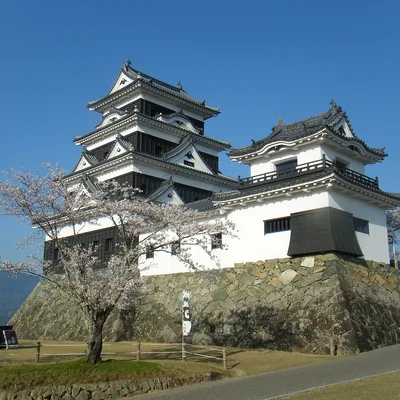
Blossoms framing the white-plastered great keep make the year's most photographed scene on the hill.
★★★★★
Autumn colour pairs with crisp panoramas; the Seto Inland Sea view from the great keep is at its annual best.
★★★★☆
Thinner crowds and quiet light favour close study of the Ansei detailing and the shadows of the stone walls.
★★★☆☆
Shaded forested paths and evening illumination favour cooler photographs; daytime heat care essential.
★★★☆☆
Top 3 Highlights
1.The Youngest Surviving Tenshu in Japan
Seventy years after lightning consumed the keep in 1784, the three-story, three-tiered great keep with a single basement was completed in 1854 from first-grade camphor, zelkova and hemlock, standing as the newest of Japan's twelve original tenshu.
From the southeast edge of the Honmaru plaza, frame the great keep with its linked small keep.
2.Connected-Keep Complex of the Hondan
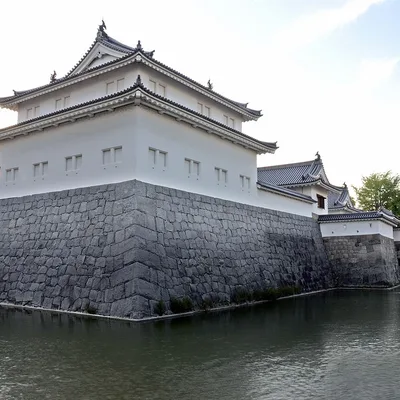
Great keep, small keep and the south and north corner yagura are joined by three watari-yagura into a square-loop connected-keep complex. Ranked with Himeji and Wakayama as one of Japan's three great flatland-mountain castles.
From the west near Shichikumon gate, morning light reads the linked silhouette in clear depth.
3.Ninomaru Garden and 44-Metre Honmaru Well
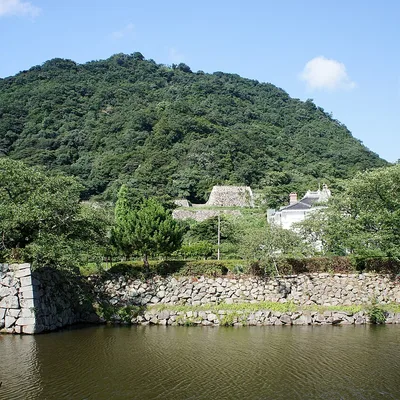
Opened in 1992, the Ninomaru Historical Garden traces the lord's residence on the ground plane with the great well, tea house and palace foundations. In the Honmaru a 44-metre-deep working well still survives, rare for any Japanese mountain castle.
Look past the great well north of the Ninomaru garden toward the hilltop keep.
Stories & Legends
Recommended For
Insider Tips
- 1.A ropeway and parallel chair-lift both run to the Honmaru, but the lift sometimes operates one-way only; many locals ride up by lift and back down by ropeway for two viewpoints. On foot, five separate approach paths each offer their own pace and scenery.
- 2.Nohara-yagura is a rare two-story watari-yagura on a large irimoya hip-and-gable roof, cited as evidence that tenshu grew out of lookouts on great roofs. From the outer path northwest of the Hondan the stepped roof-and-lookout relation reads clearly.
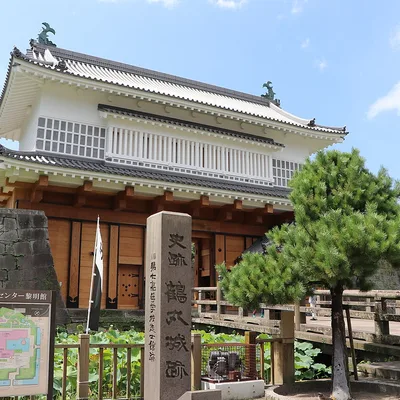
- 3.Tonashimon, the doorless gate, has carried no door panel since the Keichō era; the passage just inside under the Taiko-yagura splits attackers between a dead-end toward Inumon and the Tonashimon route. Step off the visitor path and look back to see this trick.
Visit Information
- Access
- From JR Matsuyama Station take a city bus about fifteen minutes to Ōkaidō, then walk five minutes along Ropeway-gai to the boarding station. The Honmaru is roughly three minutes by ropeway or twenty minutes on foot via the Shinonome-guchi approach.
- Time Required
- About 2 hours for the Honmaru keep; 3-4 hours including the Ninomaru Historical Garden.
- Budget Guide
- Plan for a tenshu admission ticket plus a round-trip ropeway or lift fare; the city tram uses a flat-rate fare. Check the official website for current prices.
Nearby Attractions
About twenty minutes by city tram, Dōgō Onsen is one of Japan's oldest hot springs and its main building is a National Important Cultural Property. Within walking distance lie the Shiki Museum on Masaoka Shiki, the Saka no Ue no Kumo Museum on Ryōtarō Shiba's novel, and Bansuisō villa beside the Ninomaru garden.
Go Deeper
Deeper details for those with the time to read on.
Timeline
- 1602
Construction begins
Granted a 200,000-koku domain after the Battle of Sekigahara, Katō Yoshiaki begins building Matsuyama Castle on Mount Katsuyama with Adachi Shigenobu as his construction commissioner.
- 1603
Naming of Matsuyama
Yoshiaki gives the surrounding land the name Matsuyama, so that the place-name enters the official record together with the new castle on the hill.
- 1627
Yoshiaki reassigned to Aizu
Yoshiaki is transferred to Aizu Domain before Matsuyama Castle is complete, and Gamō Tadatomo becomes lord of Matsuyama at 240,000 koku.
- 1634
Gamō line ends, interim lordship
Gamō Tadatomo dies suddenly on a sankin-kōtai journey and the Iyo Gamō line ends without an heir; Katō Yasuoki of Ōzu takes the castle in interim charge.
- 1635
Matsudaira Sadayuki enters
Matsudaira Sadayuki of the Hisamatsu-Matsudaira line is installed at 150,000 koku, founding the lordship that will hold the castle until the Meiji Restoration.
- 1642
Keep rebuilt at three tiers
Sadayuki reduces the original five-tier tenshu to three tiers, reportedly because of weak foundations and out of regard for the Buke Shohatto regulations on the military class.
- 1784
Lightning destroys the Hondan
On New Year's Day, Tenmei 4, lightning sets the Hondan ablaze and consumes the great keep with the surrounding main structures; financial troubles draw out reconstruction for decades.
- 1854
Present great keep completed
The twelfth lord Matsudaira Katsuyoshi dedicates the rebuilt great keep on 8 February 1854 (Ansei 1), the youngest of Japan's twelve surviving original tenshu.
- 1873
Castle Abolition Decree
The Meiji government's Castle Abolition Decree marks many buildings for sale and demolition, but no bids are received and most of the Honmaru and Hondan structures miraculously survive.
- 1923
Donated to Matsuyama City
The Honmaru is transferred from the former lord's Hisamatsu family to Matsuyama City, and the castle becomes city property from that point on.
- 1933
Arson destroys Hondan rebuilds
On 9 July an arson attack destroys the rebuilt buildings of the Hondan, sparing only the great keep, which escapes damage by chance.
- July 1945
Matsuyama Air Raid
During the Matsuyama Air Raid of 26 July the Tenjin-yagura and ten other surviving buildings burn down, sharply reducing the number of original structures on the Honmaru.
- 1950
Important Cultural Property listing
Under the new Cultural Properties Protection Law the remaining twenty-one buildings are designated National Important Cultural Properties of Japan.
- 1952
National Historic Site designation
Matsuyama Castle Mountain Park, including the Ninomaru and Sannomaru, is registered as a National Historic Site, placing the surviving castle remains under national protection.
- 1968
Wooden reconstruction of Hondan
The Hondan buildings lost in the 1933 arson are faithfully rebuilt in wood, restoring the visible mass and the connected-keep silhouette of the central hilltop.
Detailed History
Matsuyama Castle was begun in 1602 (Keichō 7) by Katō Yoshiaki, who had been raised from 100,000 koku at Masaki in Iyo to 200,000 koku in reward for service at the Battle of Sekigahara. He chose Mount Katsuyama and named Adachi Shigenobu as construction commissioner. In October 1603 he formally christened the surrounding land Matsuyama, so the place-name itself entered the records together with the castle. In 1627 (Kan'ei 4), before completion, Yoshiaki was transferred to Aizu and replaced by Gamō Tadatomo, grandson of Gamō Ujisato, at 240,000 koku. Tadatomo is associated with completion of an original five-tier tenshu, but in 1634 he died suddenly while travelling for sankin-kōtai, and the Iyo branch of the Gamō house ended without an heir; the castle was held in interim by Katō Yasuoki, lord of nearby Ōzu Domain. In 1635 (Kan'ei 12) Matsudaira Sadayuki of the Hisamatsu-Matsudaira line entered with 150,000 koku and his descendants held the domain until the Meiji Restoration. In 1642 Sadayuki rebuilt the five-tier keep as a three-tier structure, owing both to weak foundations and to regard for the Buke Shohatto. On New Year's Day 1784 (Tenmei 4) lightning destroyed the main buildings of the Hondan. Reconstruction stretched on through financial hardship until the twelfth lord Matsudaira Katsuyoshi finished the stone foundation work in 1852 and dedicated the new great keep on 8 February 1854 (Ansei 1), the youngest of Japan's twelve original tenshu still standing. Many gates, palaces and yagura at the foot of the castle were dismantled or sold under the 1873 Castle Abolition Decree, yet the buildings on the Honmaru and Hondan came through almost intact because no one bid for them at auction. In 1933 an arson attack destroyed the rebuilt structures of the Hondan apart from the great keep; the Matsuyama air raid of July 1945 took the Tenjin-yagura and ten more buildings; another fire in 1949 claimed the Tsutsui-mon and its east and west extensions. The twenty-one structures that endured were designated National Important Cultural Properties under the 1950 Cultural Properties Protection Law, and the castle grounds became a National Historic Site in 1952.
Cultural Significance
Matsuyama Castle is counted among Japan's twelve original tenshu and is the largest castle complex in Shikoku, with twenty-one National Important Cultural Properties and castle remains designated as a National Historic Site. Despite air raids, arson and accidental fires from the Meiji era onward, the site preserves the second-largest number of surviving original castle buildings in the country, after Nijō Castle. Its alternative names Kinkijō (Golden Tortoise Castle) and Katsuyamajō derive from local lore and from Mount Katsuyama itself. The castle is a classic hirayama-jō (flatland-mountain castle), with the Honmaru on the summit and the Ninomaru and Sannomaru on the lower slopes, and is ranked together with Himeji and Wakayama as one of Japan's three great connected-keep flatland-mountain castles. In 1989 the castle park was named one of Japan's 100 best cherry-blossom sites, and in 2006 it was added to the list of Japan's 100 famous castles as number 81 and chosen as one of Japan's 100 historic parks. The poet Masaoka Shiki, born in Matsuyama, embedded the great keep in modern Matsuyama's literary identity through such haiku as "Matsuyama ya / aki yori takaki / tenshukaku."
Architectural Details
Matsuyama Castle is laid out around the Honmaru on the summit of Mount Katsuyama, with Ninomaru on the south-western slope, Sannomaru below it, and the Kita-kuruwa and Higashi-kuruwa enclosures on the lower faces, all knit by climbing stone walls (nobori-ishigaki) that deny easy access along the main approach. The Hondan in the north of the Honmaru is the keep enclosure proper, where great keep, small keep and the south and north corner yagura are joined by three watari-yagura into a square-loop connected-keep complex. The great keep is a layer-type tenshu with three stories, three tiers and a single basement, twenty metres high to the eaves and 21.3 metres including the shachihoko ornaments, on a Hondan plinth that itself rises 8.3 metres. Camphor, zelkova and hemlock of the finest grade were used in the rebuild, and the carpentry shows unusually high precision for late-Edo work. The Ansei-era buildings carry the three-leaved aoi crest of the Hisamatsu-Matsudaira house on their roof tiles. Tonashimon, Kakuremon, Inui-yagura and Nohara-yagura survive from the early Edo period rather than from the Ansei rebuild; Nohara-yagura in particular is one of very few remaining examples of a watchtower-on-roof structure cited as evidence of tenshu evolution.