Sunpu Castle
駿府城
葵区 · JP
Tokugawa Ieyasu's retirement castle where the shadow shogunate forged Edo Japan
In central Shizuoka City, Sunpu Castle is the flat-land fortress where Tokugawa Ieyasu retired as Ogosho in 1607 and ran a shadow government until his death in 1616. A nationwide daimyo levy rebuilt it with a triple moat and a seven-story donjon on Japan's largest castle plinth.
Best Season & Time
Some 500 cherry trees frame the Ninomaru and Tatsumi Yagura, lit by lanterns for evening hanami
★★★★★
Fresh greenery contrasts with white plaster yagura; lotus flowers bloom in the Ninomaru moat in June and July
★★★☆☆
Maples beside stone walls glow red; crowds are thinner than spring, perfect for keep-plinth dig site visits
★★★★☆
Early red plum blossoms appear beside white plaster yagura; on clear days Mount Fuji backdrop becomes possible
★★★☆☆
Top 3 Highlights
1.East Gate and Tatsumi Yagura watchtower complex
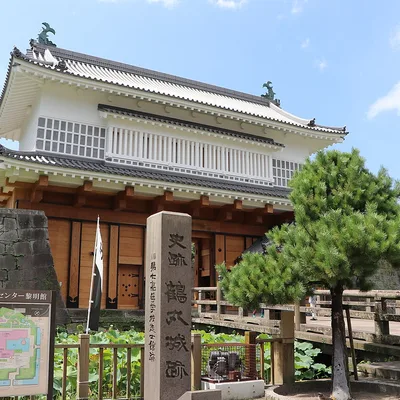
The 1996 East Gate (yagura-mon plus connected tamon-yagura) and the 1989 Tatsumi Yagura form the southeast masugata-style entrance to the Ninomaru, both reconstructed in traditional joinery. Their interiors house museums on Ieyasu's Ogosho era and the Sunpu castle town.
Frame the East Gate from Ninomaru Bridge in morning light to catch the masugata and stone walls
2.Tatsumi Yagura and the Ninomaru moat reflection
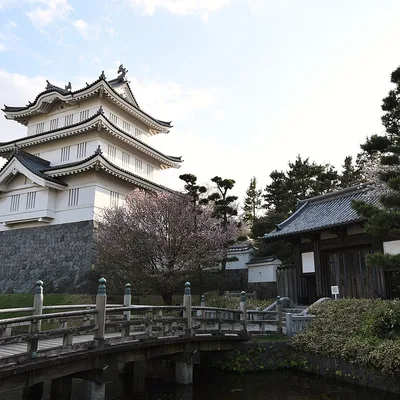
Restored in 1989 as the first Sunpu reconstruction for Shizuoka City's centennial, the three-tier two-story Tatsumi Yagura on the Ninomaru's southeast corner is the park's most-photographed point. Its white-plaster finish mirrored in the moat composes a textbook castle scene.
Shoot from the southwest promenade along the Ninomaru moat at dawn when the water is still
3.Hitsujisaru Yagura and keep-plinth dig site
The 2014 Hitsujisaru Yagura at the southwest corner unusually exposes its interior wooden framework as a study exhibit. Adjacent 2016-2020 excavations uncovered a pre-Keicho keep plinth and gold-leaf tiles, revealing the lost form of Ieyasu's 1585 castle now shown in situ.
Photograph from the northeast plaza; inside, capture the exposed timber ceiling structure from below
Stories & Legends
Recommended For
Insider Tips
- 1.A common pass for the three museums (East Gate, Tatsumi Yagura, Hitsujisaru Yagura) costs around 360 yen and saves roughly 30 percent over individual tickets; buy at the park information centre or any watchtower window, current as of 2024
- 2.The keep-plinth dig site is free with continuous access; volunteer guides explain pre-Keicho findings and gold-leaf tile discoveries on weekends from 10am to 3pm (2024), offering rare access to the latest research directly from interpreters on site
- 3.Sunpu Castle Park opens at 5am and remains free to wander throughout the day; the 7-8am window on the Ninomaru moat is ideal for windless reflection photography, a routine for Shizuoka Station hotel guests and locals
Visit Information
- Access
- From JR Shizuoka Station, walk ten minutes north or take the Sunpu Roman loop bus about five minutes. By car the Tomei Expressway Shizuoka IC is about fifteen minutes away, with several Shizuoka City paid car parks around the moats.
- Time Required
- One hour for a park stroll; 2-3 hours including the watchtower museums and dig site.
- Budget Guide
- Three-museum common pass around 360 yen plus free park access; total roughly 500-1000 yen including food, walkable from Shizuoka Station. (As of 2024.)
Nearby Attractions
A five-minute walk reaches the Shizuoka City History Museum (opened 2023, with Ieyasu-focused exhibits) and Shizuoka Sengen Shrine (where Ieyasu underwent his coming-of-age ceremony). The Sunpu Roman loop bus links nearby Sunpu teahouses, Sengen Shrine, and the Toro Yayoi-era ruins, weaving an Ieyasu-themed circuit through central Shizuoka.
Go Deeper
Deeper details for those with the time to read on.
Timeline
- 1585
Ieyasu begins construction
Tokugawa Ieyasu starts rebuilding Sunpu as an early-modern castle in Tensho 13, including plans for the first donjon on the site
- 1586
Headquarters relocated
Ieyasu moves his base from Hamamatsu Castle in Totomi after seventeen years there; the donjon and main enclosures are completed by 1589
- 1590
Nakamura takes Sunpu
Following Hideyoshi's Odawara campaign Ieyasu is transferred to the Kanto and Toyotomi retainer Nakamura Kazuichi takes over Sunpu Castle
- 1607
Ogosho Ieyasu returns
Ieyasu hands the shogunate to Hidetada and retires to Sunpu as Ogosho; a nationwide tenka-bushin levy rebuilds the castle on a vastly larger plan
- 1610
Donjon completed
A seven-story donjon on the largest castle plinth in Japanese history (about 55 by 48 metres) and the distinctive tenshu-kuruwa enclosure are finished
- 1613
Saris and Adams visit
English East India Company envoy John Saris with William Adams (Miura Anjin) meets Ieyasu at Sunpu and secures a trading privilege red-seal letter for England
- 1616
Ieyasu dies
Ogosho Ieyasu dies at Sunpu Castle aged 75, ending the role of Sunpu as effective political capital of early Edo Japan
- 1632
Shogunal demesne
After Tokugawa Tadanaga's attainder and seppuku the castle becomes shogunal demesne governed by Sunpu-jodai wardens, with no resident daimyo
- 1638
Donjon not rebuilt
Buildings lost in the 1635 town fire are restored except the donjon, which is left unrebuilt because no daimyo holds the castle any longer
- 1854
Ansei earthquake
The Ansei 1 earthquake levels virtually all buildings and stone walls at Sunpu; reconstruction continues until 1858 over four years
- 1896
Army garrison
The inner moat is filled and remaining structures dismantled to host the Imperial Japanese Army 34th Infantry Regiment garrison through the Meiji period
- 1989
Tatsumi Yagura rebuilt
The Tatsumi Yagura at the southeast corner of the Ninomaru is reconstructed in traditional methods as the first restored Sunpu structure for the city centennial
- 1996
East Gate rebuilt
The Ninomaru main entrance yagura-mon and connected tamon-yagura are reconstructed in traditional joinery, becoming an interior museum on Ieyasu-era Sunpu
- 2014
Hitsujisaru rebuilt
The Hitsujisaru Yagura is reconstructed at the southwest corner of the Ninomaru with exposed interior framing, completing the three current restorations
- 2018
Keep-plinth findings
Excavations uncover a pre-Keicho-era keep plinth with gold-leaf tiles and a small subsidiary keep platform, forcing a revision of Ieyasu's Tensho-era castle
Detailed History
Sunpu's origins lie in the 14th-century Imagawa-yakata residence built by the Imagawa, Muromachi-period shugo of Suruga Province. After Imagawa Yoshitada's death in 1476 and the ensuing succession dispute, Imagawa Yoshimoto became lord in 1536 (Tenbun 5), making Sunpu the centre of Sengoku-era Suruga. The residence burned in 1568 (Eiroku 11) during Takeda Shingen's invasion of Suruga, and after the Takeda fell in 1582 Tokugawa Ieyasu took control of Suruga. From 1585 (Tensho 13) Ieyasu rebuilt Sunpu as a true early-modern castle, moving his headquarters here from Hamamatsu in 1586 and completing the keep and outer enclosures by 1589. The 1590 Odawara campaign reassigned Ieyasu to the Kanto, and Toyotomi retainer Nakamura Kazuichi held Sunpu until shortly after Sekigahara, when Naito Nobunari took over. In 1607 (Keicho 12) Ieyasu handed the shogunal title to Hidetada and retired to Sunpu as Ogosho, ordering a nationwide tenka-bushin levy that rebuilt Sunpu in 1607 with a triple moat, keep and palace. The 1610 (Keicho 15) fire destroyed the newly completed structure, but reconstruction was immediate, this time with a seven-story keep standing on a plinth measuring roughly 55 by 48 metres at its top — the largest in Japanese castle history — with the unusual tenshu-kuruwa layout where the central donjon was ringed by corner and tamon yagura. In 1609 (Keicho 14) Ieyasu's tenth son Tokugawa Yorinobu received Sunpu Domain at 500,000 koku, but after his transfer to Wakayama in 1619 (Genna 5) and the 1632 (Kan'ei 9) attainder and seppuku of Tokugawa Tadanaga (Hidetada's second son), Sunpu became shogunal demesne until the Meiji Restoration, administered by appointed castle wardens. Severe damage came from the 1707 (Hoei 4) Hoei earthquake and the catastrophic 1854 (Ansei 1) Ansei quake, which nearly destroyed all structures. The 1871 (Meiji 4) abolition of domains saw the buildings dismantled, and in 1896 (Meiji 29) the inner moat was filled in for the Imperial Japanese Army 34th Infantry Regiment garrison. Returned to Shizuoka City in 1949, the grounds were reborn as a public park, with the Tatsumi Yagura reconstructed in 1989, the East Gate in 1996, and the Hitsujisaru Yagura in 2014. Excavations of the keep plinth from 2016 to 2020 uncovered a pre-Keicho keep platform and gold-leaf tiles, transforming our understanding of Ieyasu's original Tensho-era castle.
Cultural Significance
Sunpu Castle stands as the central stage of Tokugawa Ieyasu's late years and the headquarters of Ogosho seiji, the shadow government that effectively ruled Japan from 1607 to 1616 alongside his son Hidetada in Edo. Many institutional foundations of the 260-year Tokugawa shogunate were drafted at Sunpu: strategy for the 1614-1615 Osaka campaigns, regulation of red-seal trade, the Buke shohatto governing samurai houses, and the Kinchu narabini kuge shohatto for the imperial court. In 1613 John Saris of the English East India Company arrived at Sunpu with William Adams (Miura Anjin) to meet Ieyasu and negotiate trading privileges, briefly opening English commerce with Japan and making Sunpu the front line of early-17th-century Japanese diplomacy. Designated number 41 of Japan's Top 100 Castles in 2006, Sunpu gained renewed attention after the 2018 excavation finds of a pre-Keicho keep plinth and gold-leaf roof tiles, forcing a revision of the long-standing picture of Ieyasu's Tensho-era construction. The 2023 NHK historical drama Dosuru Ieyasu drove a tourism surge, and Sunpu Castle Park together with the new Shizuoka City History Museum (opened 2023) now anchors a substantial Ieyasu-themed tourism circuit in central Shizuoka.
Architectural Details
Sunpu Castle is a kakaku-shiki flat-land castle on the Shizuoka plain, sited where the southerly extensions of Mount Shizuhata and Mount Yatsu intersect. Its plan places the Honmaru at the centre with the Ninomaru and Sannomaru as concentric enclosures, bounded by stone walls and water moats. Of the Keicho triple moat, the outer survives only in fragments, the middle moat remains though earthquake-damaged walls have collapsed into embankments in places, and the inner moat was filled for the 1896 army garrison but partially restored post-war. The Keicho keep plinth measured about 55 by 48 metres at its top, the largest in Japanese castle history, supporting a seven-story donjon at the centre of a tenshu-kuruwa enclosure where the keep was ringed by corner and tamon yagura along the plinth's perimeter, a layout nearly unique to Sunpu. Three reconstructions stand today: the Tatsumi Yagura at the Ninomaru southeast corner (1989, three-tier two-story, white-plaster finish), the East Gate at the main entrance (1996, yagura-mon plus connected tamon-yagura), and the Hitsujisaru Yagura at the southwest corner (2014, exposed interior framing). Construction relied on Izu stone from the Izu Peninsula, with Numazu City records documenting the stone-cutting yards that supplied Sunpu, Kunozan, and Edo Castle.