Tottori Castle
鳥取城
鳥取市 · JP
Castle of the Starvation Siege — and home to Japan's only spherical stone wall
Crowning Mount Kyusho in Tottori City, Tottori Castle layers a Sengoku-era yamashiro on the 263-meter summit with an early-modern hilltop bailey below. Its grounds preserve the 1581 'starvation killing' siege site and the country's sole surviving spherical stone wall at Tenkyumaru.
Best Season & Time
Cherry blossoms framing stone walls and Jinpukaku — peak season with night illuminations at the hill's foot
★★★★★
Fresh greens cool the Mount Kyusho climb, and summit views over the Sea of Japan and dunes peak now
★★★★☆
Maple foliage and stone walls contrast beautifully — quieter than spring with calm strolls through the grounds
★★★★☆
Snow-dusted spherical wall and keep platform feel mystical, but the summit climb requires proper winter gear
★★☆☆☆
Top 3 Highlights
1.Tenkyumaru's Spherical Stone Wall — One of a Kind
Built in the late Edo period to brace a bulging older wall, this half-dome 'maki-ishigaki' is the only sphere-shaped stone wall surviving in Japan. Restored in May 2011, its smooth curvature and rare masonry have turned it into a pilgrimage spot for castle fans.
Shoot from below Tenkyumaru in morning light to emphasize the curved shadow of the dome
2.Sweeping Panorama from the Mount Kyusho Summit Keep
The keep platform and bailey walls atop 263-metre Mount Kyusho yield a 360-degree view across the Tottori Sand Dunes, the Sea of Japan, and the city below. The 30-minute climb traces the Sengoku-era ascent path, passing outer baileys and watch posts along the ridge.
From the keep platform's NW corner, frame the Sea of Japan wide; sea fog at dawn is otherworldly
3.Bailey Walls Beside the White Jinpukaku Mansion
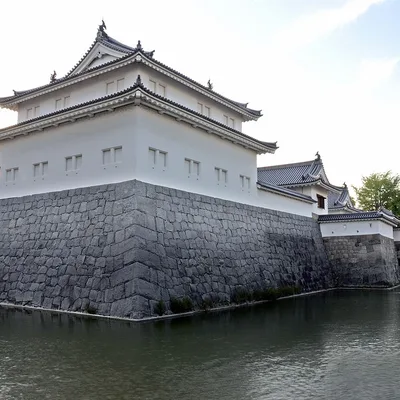
The Ninomaru and Sannomaru ruins below preserve the Ikeda-era high stone walls and water moats. Paired with the adjacent Meiji Jinpukaku mansion (Important Cultural Property), the view captures Tottori's East-West juxtaposition — and is a beloved cherry blossom spot.
From Sannomaru plaza, layer Jinpukaku's white facade behind the stone walls; add cherries in spring
Stories & Legends
Recommended For
Insider Tips
- 1.The lower Tenkyumaru, Ninomaru, and Sannomaru areas stay open for free at all hours, while the summit keep is a 30-minute uphill walk that demands sturdy shoes and water — far fewer tourists make it up, leaving the ridge ruins peacefully empty.
- 2.The neighbouring Jinpukaku, a 1907 white western-style mansion now an Important Cultural Property, charges JPY 150 and shows Ikeda-family records plus a detailed castle model — pairing perfectly with the ruins for a three-dimensional grasp of the site.
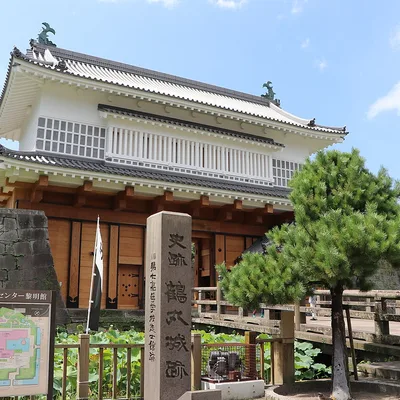
- 3.Early April's Kyusho cherry blossom festival lights up the Ninomaru plaza after dark; the freshly restored timber Otemon gate (completed in 2021) paired with the cherry rows has quickly become the new signature Tottori Castle shot for night photographers.
Visit Information
- Access
- From JR Tottori Station, take the Kururi green-line loop bus (JPY 100 flat) about 8 minutes to the Jinpukaku / Prefectural Museum stop. A walk from the station takes about 30 minutes; a taxi runs around JPY 1,200 and takes 10 minutes.
- Time Required
- 1 hour for Ninomaru and Tenkyumaru, or 2-3 hours including the climb to the summit keep.
- Budget Guide
- Castle grounds are free; Jinpukaku JPY 150 and the Prefectural Museum JPY 180. Bus fares JPY 100 each way; budget around JPY 2,000 per person with a meal. (Prices as of 2024.)
Nearby Attractions
The Tottori Sand Dunes (Japan's largest, a National Natural Monument within the San'in Kaigan Geopark) sit 20 minutes by car. The adjacent Jinpukaku mansion and Prefectural Museum complete the Ikeda narrative. Hakuto Beach — setting of the White Hare of Inaba myth — is a 30-minute drive west, and the hot-spring town of Misasa Onsen lies an hour southeast.
Go Deeper
Deeper details for those with the time to read on.
Timeline
- 1532-1555
Founding by the Yamana clan
During the Tenbun era, the Yamana shugo of Inaba Province construct a yamashiro on Mount Kyusho, exploiting its steep natural slopes for defense.
- 1573
Yamana Toyokuni becomes castle lord
Allied with Amago remnants, Yamana Toyokuni forces Takeda Takanobu to surrender, and the Inaba Yamana clan moves its seat to Tottori Castle.
- 1580
Hideyoshi's first siege
Hashiba Hideyoshi's three-month investment ends when Yamana Toyokuni accepts terms and pledges fealty to Oda Nobunaga.
- 1581
Starvation siege and Tsuneie's seppuku
After a four-month food blockade, the Mori-aligned lord Kikkawa Tsuneie commits seppuku to spare his garrison, and the castle falls in the campaign's most brutal episode.
- 1600
Ikeda Nagayoshi takes possession
Following Sekigahara, Ikeda Nagayoshi receives a 60,000-koku domain and begins a thorough rebuild as an early-modern castle.
- 1617
Ikeda Mitsumasa's grand expansion
With a 325,000-koku domain spanning Inaba and Hoki, Ikeda Mitsumasa expands Tottori Castle to a scale fit for a major daimyo.
- 1692
Keep lost to lightning
A lightning strike destroys the two-story keep on the summit bailey, and no replacement was ever built.
- 1873
Abolition of castles
Transferred to the Ministry of the Army, the castle was largely demolished after Tottori Prefecture was folded into Shimane Prefecture in 1876.
- 1943
Great Tottori Earthquake
The earthquake collapses the north face of the keep platform's stone wall — a section that remains unrestored to this day.
- 1957
National Historic Site designation
Designated a National Historic Site, with the protected area expanded in 1987 to include the Taikoganaru siege encirclement.
- 2006
Top 100 Castles selection
The Japan Castle Foundation lists Tottori Castle as No. 63 in Japan's Top 100 Castles, and a 30-year timber-restoration program is launched.
- 2011
Spherical stone wall restored
Conservation of Tenkyumaru's late-Edo spherical reinforcement wall — Japan's only surviving example — is completed in May.
- 2021
Otemon main gate reconstructed in timber
After construction from November 2019, the wooden Otemon main gate is opened to the public on 13 March 2021.
Detailed History
Tottori Castle's origins trace to the Tenbun era (1532-1555), when the Yamana clan — shugo of Inaba Province — built a yamashiro exploiting the natural defenses of Mount Kyusho. The first verified castellan is Takeda Takanobu in the Genki era, a Yamana retainer who carried out gekokujo (low-overthrows-high) and made Tottori his power base. In 1573, Yamana Toyokuni, allied with Amago remnants, took the castle and the seat of the Yamana clan moved here. The 1575 Geitan truce extended the Mori clan's reach over Inaba, and in 1580 Hashiba Hideyoshi's first siege ended with Toyokuni's surrender to Oda Nobunaga after a three-month investment. In 1581 the Mori dispatched their senior retainer Kikkawa Tsuneie as new castle lord, but Hideyoshi applied the food-cutoff tactics he had perfected at Miki Castle in Harima. He bought up surrounding rice at premium prices and constructed a 12-kilometre semi-circular encampment, the Taikoganaru, that severed every route into the castle. After three months the interior descended into famine, in a campaign posterity called the 'Tottori starvation killing'. On 25 October 1581 Tsuneie committed seppuku in exchange for his men's lives, and the castle fell. Miyabe Keijun then took control as castle warden and began converting the summit bailey into an early modern castle. After the 1600 Battle of Sekigahara, Miyabe Nagafusa was attainted as a Western Army adherent, and Ikeda Nagayoshi was installed with a 60,000-koku domain to lead a full early-modern reconstruction. In 1616 Ikeda Mitsumasa arrived with a vast 325,000-koku domain over Inaba and Hoki, expanding Tottori Castle to a scale befitting a major daimyo. The Ikeda line of Mitsunaka and his successors then ruled for twelve generations down to the Meiji Restoration. The 1873 abolition of castles transferred the site to the Ministry of the Army, and after Tottori Prefecture was folded into Shimane in 1876, the army demolished nearly every structure between 1877 and 1879, leaving only the Nakajikirimon gate and the makeup chamber of the Ogi-goten. The site was designated a National Historic Site in 1957, expanded in 1987 to include the Taikoganaru siege camp, and chosen as one of Japan's Top 100 Castles (No. 63) in 2006.
Cultural Significance
Tottori Castle is nicknamed the 'Museum of Castle Architecture' because it preserves layers of construction technique from the Sengoku period through the end of the Edo era in a single site. Walking the grounds traces three centuries of evolution: the Sengoku yamashiro at the summit, the late-16th-century early-modern conversion under Miyabe Keijun, and the Ikeda-era stone walls, moats, and the spherical wall of Tenkyumaru below. The Tenkyumaru maki-ishigaki — a half-dome reinforcement built in the late Edo period to brace a bulging older wall — is Japan's only known surviving example, and its 2011 restoration has drawn castle scholars and tourists alike. The 1581 starvation siege ranks among the three signature food-cutoff campaigns of Hideyoshi's Chugoku conquest, alongside the siege of Miki Castle and the flooding of Bitchu-Takamatsu, and is widely considered the most harrowing. Cannibalism passages in the Shincho-koki chronicle are now re-read by medical historians as evidence of acute starvation followed by refeeding syndrome. A bronze statue of Kikkawa Tsuneie erected at the main entrance in 1993 anchors local memorialization. Since 2006 a 30-year, 5.1-billion-yen plan has been underway to restore the castle to its late Edo timber appearance, and in March 2021 the wooden Otemon main gate was opened to the public.
Architectural Details
Tottori Castle is a tier-bailey fortress combining a mountain section on the 263-metre summit of Mount Kyusho with a hilltop section at the base — Tenkyumaru, Ninomaru, Sannomaru, and Uzenmaru — laid out in a 'teikaku' radial plan. Sengoku earthworks remain along the western, central, and eastern ridges, so visitors can read the entire arc from medieval yamashiro to early-modern citadel in a single visit. The summit keep platform measures roughly 20 metres north-south by 19 metres east-west — the largest turret base in the castle. The original three-story keep was reportedly relocated here from Fuse-Tenjinyama Castle; Ikeda Nagayoshi later reduced it to two stories to resist high winds, and a 1692 lightning strike burned it down for good. A 2.4-metre-deep cellar sits at the centre of the platform. The only surviving original gate, the Nakajikirimon, collapsed in a 1975 windstorm and was reconstructed in timber that autumn. Below, the Tenkyumaru maki-ishigaki is Japan's only surviving spherical stone wall, perfectly circular from above. Stonework throughout the site reads as a textbook progression: rough nozura-zumi from the Sengoku era, semi-dressed uchikomihagi, and precision-cut kirikomihagi of the Edo period. The Taikoganaru encirclement camp from Hideyoshi's 1581 siege is part of the protected historic site.