Ōzu Castle
大洲城
大洲市 · JP
Ōzu Castle: a four-tier timber keep reborn above the Hiji River through citizen donations in 2004
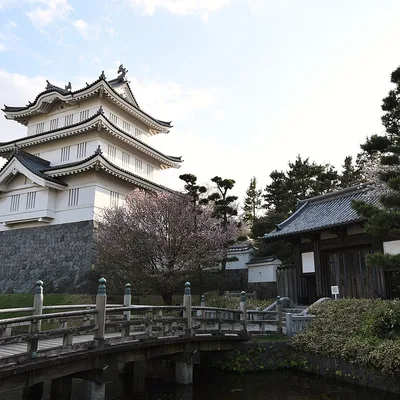
Perched above the Hiji River in Ōzu, Ehime, the castle traces back to Utsunomiya Toyofusa in 1331 and reached full form under Tōdō Takatora. Demolished in 1888, the keep was rebuilt in 2004 in authentic Edo-era timber — Japan's first postwar all-timber tenshu.
Best Season & Time
Cherry blossoms frame the keep and turrets, then run as a tunnel of pink from Honmaru down the Hiji riverbank
★★★★★
Cormorant fishing and riverside fireworks; the keep illuminated at night from a yakatabune is unforgettable
★★★★☆
The Hijikawa-arashi morning mist envelops the keep in a sea of cloud; autumn foliage adds color around Honmaru
★★★★★
Snow caps the white-plastered keep in silence; few visitors mean you can savor the interior at your own pace
★★★☆☆
Top 3 Highlights
1.Four-tier timber tenshu rebuilt in 2004
Dismantled in 1888 after structural decay, the keep was rebuilt in 2004 from Meiji photos and an Edo wooden scale model kept by the Nakamura family of castle carpenters. At 19.15 m it is Japan's tallest postwar timber building, granted a rare Building Standards Law exemption.
Frame the keep, turrets, and river from the Hiji right bank; east face lights up around 8-9 AM
2.Four Edo-period yagura, Important Cultural Properties
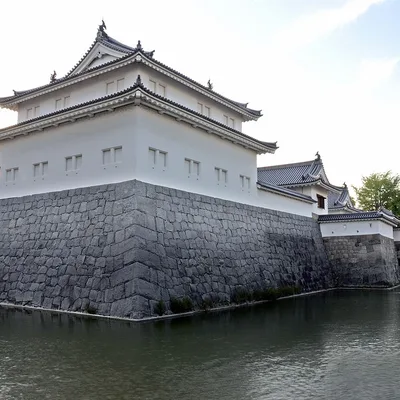
The Daidokoro (1859), Kōran (1860), Owata (1843) and Sannomaru Minami-sumi (1766) yagura survived demolition and were designated Important Cultural Properties in 1957. Each is a two-story tile-roofed turret; the Kōran has west and south balconies, with hidden loopholes inside.
Shoot Kōran-yagura with the keep from below the stone base; Owata-yagura stands on the embankment
3.Sweeping panorama of the Hiji River and castle town
From the keep's top floor, south windows capture the meandering Hiji and Mt. Tomisu; the north view sweeps over Ōzu's old castle town. August brings cormorant boats and riverside fireworks; autumn delivers the Hijikawa-arashi mist; winter dusts the white walls with snow.
Use top-floor windows to include river and town; around 5 PM the river glows gold
Stories & Legends
Recommended For
Insider Tips
- 1.The Castle Stay program lets you reserve the keep overnight as a private guest, limited to about 30 nights per year and priced from 1.32 million yen per party. Booked via Value Management Co., it offers a rare chance to sleep where a feudal lord once lived.
- 2.Buy the combined ticket with Garyū Sansō for 800 yen — saves 400 yen versus separate admission. Garyū Sansō is widely considered the finest Meiji-era sukiya residence in Japan, and the 15-minute walk passes the photogenic Ohanahan-dōri street.
- 3.The Hijikawa-arashi mist, when cold air races down the river valley on autumn-winter mornings, is best seen from the Mt. Tomisu observation deck. Probability spikes around 7 AM on calm, sharply cold days from late October through February.
Visit Information
- Access
- From JR Yosan Line Iyo-Ōzu Station: about 20 minutes on foot, or a 5-minute bicycle ride. The Gururin Ōzu loop bus stops at Ōzu-jō-mae, a 5-minute walk to Honmaru. By car: about 10 minutes from the Ōzu IC on the Matsuyama Expressway, with on-site parking.
- Time Required
- 1.5 to 2 hours for keep and four turrets; half a day including the castle town
- Budget Guide
- Keep admission 500 yen, combined ticket with Garyū Sansō 800 yen. Limited express from Matsuyama to Iyo-Ōzu takes 35 minutes for 2,280 yen. Total with a meal: from about 5,000 yen.
Nearby Attractions
A 15-minute walk away, Garyū Sansō is widely regarded as the finest Meiji-era sukiya villa in Japan — pair it with the castle for the classic Ōzu route. The Ohanahan-dōri street (an NHK drama location) and Ōzu Red Brick Hall sit nearby. Forty minutes by train, Uchiko's preservation district with kabuki playhouse Uchiko-za completes the southern Iyo loop.
Go Deeper
Deeper details for those with the time to read on.
Timeline
- 1331
Founding by Utsunomiya Toyofusa
Newly appointed shugo of Iyo Province, Utsunomiya Toyofusa raised a mountain fort on Mt. Jizōgatake at the confluence of the Hiji and Kume rivers — originally called Jizōgatake Castle.
- 1585
Kobayakawa Takakage enters Iyo
Acting on Toyotomi Hideyoshi's command, Kobayakawa Takakage destroyed the rebellious Ōno Naoyuki and took the castle with a 350,000-koku fief, reducing Ōzu Castle to a branch fortress.
- 1595
Tōdō Takatora modernizes the castle
The renowned castle-builder Tōdō Takatora took command of Ōzu and began a sweeping conversion from medieval mountain fort to a modern fortified complex with new stonework and outworks.
- 1609
Wakisaka Yasuharu completes the tenshu
Reassigned from Sumoto on Awaji, Wakisaka Yasuharu combined his work with Takatora's earlier effort to complete the keep and main structures, formally renaming the place from Ōtsu to Ōzu.
- 1617
Katō clan begins 13-generation rule
Katō Sadayasu arrived from Yonago in Hōki with a 60,000-koku fief, and the Katō family governed Ōzu Domain across thirteen generations and roughly 270 years until the Meiji Restoration.
- 1843
Owata-yagura rebuilt
The Owata turret on the Hiji River embankment was rebuilt in Tenpō 14 — a two-story tile-roofed structure with a distinctive trapezoidal stone-drop chute at its outer corner.
- 1859-1860
Daidokoro and Kōran turrets rebuilt
In Ansei 6 the Daidokoro-yagura was rebuilt and in Man'en 1 the Kōran-yagura followed — the last castle architecture of the Edo period and the only Honmaru turrets to survive intact.
- 1888
Original keep demolished
In Meiji 21, the main keep was torn down due to structural decay and aging, but local preservation efforts spared four of the surrounding turrets from the same fate.
- 1957
Important Cultural Property designation
In Shōwa 32, the Daidokoro, Kōran, Owata, and Sannomaru Minami-sumi turrets were designated National Important Cultural Properties by the Agency for Cultural Affairs.
- 1994
Keep reconstruction committee formed
In Heisei 6, the keep-reconstruction committee launched its planning work, sparking a public donation campaign led by Ōzu citizens that would eventually gather 500 million yen.
- 2004
Timber keep reconstruction completed
In July of Heisei 16, the all-timber reconstruction was finished — the first postwar Japanese castle keep granted a special exemption from the Building Standards Law.
- 2006
Selected as Top 100 Castles No. 82
In Heisei 18, Ōzu Castle was selected as number 82 on the Japan's Top 100 Castles list, securing recognition as a landmark of the postwar castle-reconstruction movement.
Detailed History
Ōzu Castle's origins reach back to 1331 (Genkō 1 / Gentoku 3), when Utsunomiya Toyofusa, newly appointed shugo of Iyo Province, raised a mountain fort on Mt. Jizōgatake at the confluence of the Hiji and Kume rivers — then called Jizōgatake Castle. The Iyo Utsunomiya clan held southern Iyo for over two and a half centuries, but in the late Eiroku era (around 1568), a Mōri clan invasion forced their surrender. In the early Tenshō years a senior retainer named Ōno Naoyuki, secretly aligned with Chōsokabe Motochika of Tosa, seized the castle. In 1585 (Tenshō 13), Kobayakawa Takakage, acting on Toyotomi Hideyoshi's order, eliminated Ōno and entered Iyo with a 350,000-koku fief, reducing Ōzu to a branch castle. Toda Katsutaka followed, and in 1595 (Bunroku 4) the renowned castle architect Tōdō Takatora took command and began a sweeping modernization. In 1609 (Keichō 14), Wakisaka Yasuharu was transferred in from Sumoto on Awaji Island, and during his tenure together with Takatora's earlier work the keep and principal buildings were completed; the place name was formally changed from Ōtsu to Ōzu. In 1617 (Genna 3), Katō Sadayasu was reassigned from Yonago in Hōki Province with a 60,000-koku fief, and the Katō clan governed Ōzu Domain for thirteen generations across some 270 years until the Meiji Restoration. After the 1873 castle-abolition order, most structures were dismantled, but local residents campaigned to preserve the keep and parts of the turrets. The keep itself suffered structural decay and was torn down in 1888 (Meiji 21). The Daidokoro, Kōran, Owata, and Sannomaru Minami-sumi turrets were designated National Important Cultural Properties in 1957 (Shōwa 32). A keep-reconstruction committee formed in 1994 (Heisei 6), citizen donations raised 500 million yen of the 1.3-billion-yen total, construction broke ground in 2001, and in July 2004 (Heisei 16) the timber reconstruction was completed — the first such postwar achievement in Japan, recognized by the Japan Institute of Construction Engineering's National Award. The castle was selected as number 82 of Japan's Top 100 Castles in 2006.
Cultural Significance
Ōzu Castle's cultural significance crystallizes around its status as the flagship of postwar Japanese castle reconstruction. Under the Building Standards Law, a 19.15-meter timber keep would normally be prohibited, but after nearly two years of negotiation Ōzu City secured a special exemption — recognizing the structure as a preservation building — and achieved the first authentic timber reconstruction of a castle keep in postwar Japan. The financing was equally remarkable: 500 million yen flowed in from local donors, a testament to civic attachment to the castle as common heritage; contributors' names are preserved as reliefs inside the keep. The site's cultural-property layout is multi-layered: four Important Cultural Properties (Daidokoro, Kōran, Owata, and Sannomaru Minami-sumi turrets), one Ehime Prefecture Tangible Cultural Property, and the entire site is designated an Ehime Prefecture Historic Site — preserving late-Edo turrets and the Heisei-era keep side by side. In cinema, Ōzu Castle appeared in the Tora-san film Tora-jirō to Tonosama, and more recently as a fleeting Yosan Line scene in Makoto Shinkai's 2022 anime Suzume. In 2007 the castle was inscribed on the Beautiful Japan Historic Landscape Sub-100 list with the Kawabe Eight Bridges and Nagahama Bridge.
Architectural Details
Ōzu Castle's keep stands on the southeast corner of Honmaru as a four-tier, four-story composite-connected tower-type structure, linked by corridor turrets to the Kōran-yagura on the north and the Daidokoro-yagura on the west. The corridor between the keep and Daidokoro-yagura conceals square hidden loopholes for matchlocks, while the keep's first floor incorporates triangular and square hidden loopholes around a central pillar — a rare interior layout shared only with Hikone Castle (floors 1-3) and Nagoya Castle's main keep (floors 1-4). The exterior is clad in lower-story plank siding, ornamented with paired chidori gables, simple chidori gables, and a karahafu cusped gable at the front roof; the second floor displays exclusively katō-mado bell-shaped windows. The stonework, largely laid during Katō Sadayasu's tenure, combines uchikomi-hagi roughly squared blocks with random-coursed rubble, using river-stones from the Hiji embankment to achieve both graceful curves and defensive strength. The four Important Cultural Property turrets are all two-story tile-roofed structures: Daidokoro and Kōran form the defensive core directly linked to the keep, Owata stands in isolation on the Hiji River embankment, and the Sannomaru Minami-sumi, built in 1766 (Meiwa 3), is the oldest surviving structure on the site.