Kagoshima Castle
鹿児島城
鹿児島県 · JP
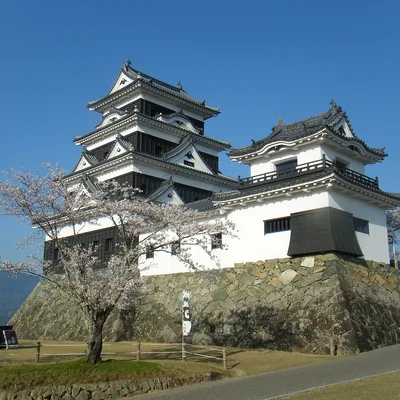
A castle without a keep — the restored Goromon guards Satsuma's soul at Tsurumaru
Built in 1601 below Mount Shiroyama by Shimazu Tadatsune, Kagoshima Castle is a flatland stronghold without a tenshu keep. Bullet scars from the 1877 Satsuma Rebellion mark Saigo Takamori's Shigakko walls, and the 2020 timber-reconstructed Goromon returns Satsuma's dignity to the Top 100 Castles.
Best Season & Time
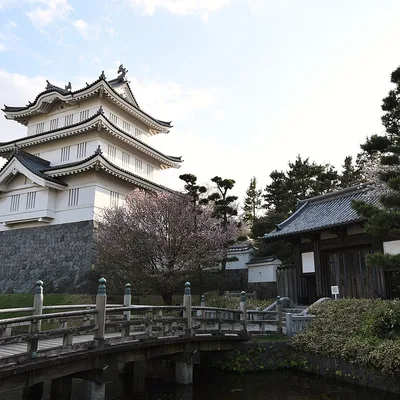
Cherry blossoms across Mount Shiroyama set off the bare timber of the Goromon and frame city panoramas
★★★★☆
Lotuses bloom across the outer moat — pale pink water and stone wall reflections at 6 AM
★★★★☆
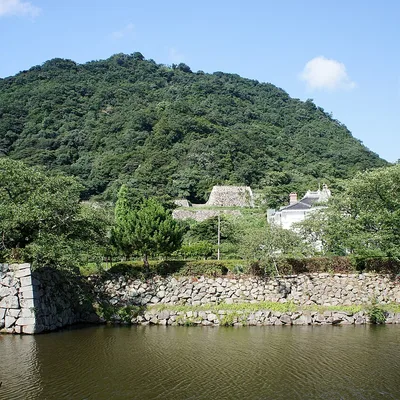
Evergreen foliage on Mount Shiroyama frames the stone walls; cool, comfortable, quieter than peak
★★★★☆
Distant snow-capped Sakurajima rises in crisp morning air; the Goromon stands out in clear light
★★★☆☆
Top 3 Highlights
1.The 2020-Reconstructed Goromon Main Gate Turret
Some 20 meters tall and 20 meters wide, this colossal turret gate was rebuilt in 2020 by public-private partnership. After 147 years lost since the 1873 fire, traditional timber joinery revives the dignity of 770,000-koku Satsuma — the unmistakable icon of the castle.
Frame the gate head-on across the stone bridge in early morning for crisp beam shadows
2.Bullet Scars of the Satsuma Rebellion on Shigakko Wall
The stone wall of the former Shigakko, founded by Saigo Takamori in 1874, is pocked with government-army bullet marks from the 1877 Satsuma Rebellion. Each deep pit testifies to the violent end of the samurai era — an essential pilgrimage stop for history travelers.
Approach the wall in afternoon sunlight to bring out the bullet-pit shadows
3.The Lotus-Famed Outer Moat
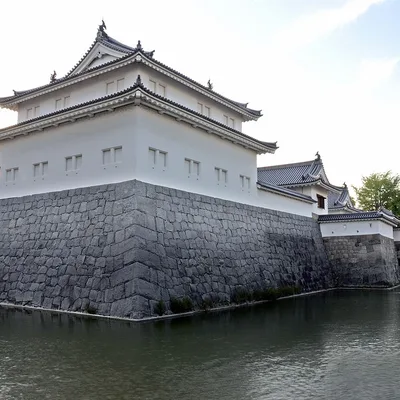
The outer moat in front of the Goromon is famed for the Meiji-era lotuses that dye the water pale pink in midsummer. The reflection of the gate and stone walls on the still water is breathtaking — best in the early morning during the mid-July to early-August bloom.
Compose vertically from the bridge west of the Goromon to catch the reflection
Stories & Legends
Recommended For
Insider Tips
- 1.The Goromon interior is not normally open, but Kagoshima Prefecture holds special opening events a few times a year where visitors can examine the timber jointing up close and view restoration-technique exhibits — worth tracking before your trip.
- 2.A 20-minute trail to Mount Shiroyama Observatory starts behind Reimeikan, with panoramic views of Sakurajima and the city center. The cave where Saigo Takamori met his end lies along the route — the classic Satsuma history walking loop.
- 3.Reimeikan's permanent exhibition is an outstanding deep-dive into Satsuma domain life, Ryukyu trade, and the Satsuma Rebellion — a half-day's content for just 410 yen. Closed on the third Monday of the month, so always check ahead for Monday visits.
Visit Information
- Access
- About 15 minutes from Kagoshima-Chuo Station on tram line 2 to the City Hall (Shiyakusho-mae) stop, then a 5-minute walk. From Kagoshima Airport, the limousine bus runs about 40 minutes via Tenmonkan to the same tram stop.
- Time Required
- About 2 hours for the Goromon and Reimeikan; half a day with Mount Shiroyama Observatory.
- Budget Guide
- Goromon and stone walls are free to view. Reimeikan admission is 410 yen for adults. (Prices as of 2024; verify with the official site.)
Nearby Attractions
A 20-minute hike behind Reimeikan reaches Mount Shiroyama Observatory with panoramic views of Sakurajima, passing the cave where Saigo Takamori made his last stand. Combine with a 15-minute walk to the Saigo Takamori bronze statue, or a 15-minute drive to Sengan-en (Shimazu family villa garden) — a perfect Satsuma history loop.
Go Deeper
Deeper details for those with the time to read on.
Timeline
- 1601
Construction begins
Shimazu Tadatsune (Iehisa), the new Satsuma lord after the Sekigahara defeat, breaks ground on Tsurumaru Castle at the eastern foot of Mount Shiroyama by shijinsoo geomancy.
- 1604
Castle completed
The yakata-zukuri castle is finished without a tenshu or high walls — an anomaly that embodies submission to the Tokugawa and Satsuma's tojo defense system.
- 1612
Goromon gate raised
The single-story two-floor Goromon turret gate is built at the main entrance, becoming the icon of 770,000-koku Satsuma's dignity.
- 1863
Anglo-Satsuma War shelling
Just as Yoshihiro warned, British warships shell the Okugoten residences from offshore — the castle's coastal vulnerability becomes historical fact.
- 1873
Main bailey and Goromon lost
A fire under the Meiji Imperial Army's Chinzei Garrison destroys the main bailey along with the Goromon turret gate.
- 1874
Shigakko founded
Saigo Takamori founds the Shigakko private school on the demaru bailey, training the future core of the Satsuma rebel forces.
- 1877
Satsuma Rebellion: bailey burns
In the final phase of the Satsuma Rebellion, the secondary bailey burns and countless government-army bullet marks are left on the Shigakko stone wall.
- 1983
Reimeikan opens
The Kagoshima Prefectural Center for Historical Material opens on the main bailey site, becoming southern Kyushu's principal history exhibition venue.
- April 2006
Top 100 Castles designation
Selected as No. 97 of Japan's Top 100 Castles by the Japan Castle Foundation, lifting Kagoshima Castle into national tourism prominence.
- April 2020
Goromon reconstruction opens
The public-private Tsurumaru Castle Goromon Reconstruction Council completes the timber reconstruction; public opening begins on April 11.
- 2023
National Historic Site
Kagoshima (Tsurumaru) Castle ruins are formally designated a National Historic Site, bringing the bullet-scarred walls and full castle area under protection.
Detailed History
Kagoshima Castle dates from Keicho 6 (1601), when the 17th-generation Shimazu lord Tadatsune (Iehisa) — heir to Shimazu Yoshihiro, who had retired after the Western Army's defeat at Sekigahara in 1600 — began building a new family seat. Mount Shiroyama, formerly Ueyama, had hosted Kamiyama Castle of the Ueyama clan in the Nanboku-cho period before passing to the Shimazu. Tadatsune chose the site by shijinsoo geomancy and built a residence at the eastern foot of the mountain. Construction was completed in Keicho 9 (1604), but his father Yoshihiro had opposed the project, judging the coastal site militarily indefensible. The result was extraordinary for a 770,000-koku daimyo — a yakata-zukuri castle without a tenshu or high stone walls, governed both by political submission to the Tokugawa and by Satsuma's tojo defensive doctrine of 113 fortified villages distributing defense across the entire domain. In Keicho 11 (1606) the bridge across the entrance moat was completed, and in Keicho 17 (1612) the Goromon turret gate rose at the main entrance. Through the Edo period the castle served as the Shimazu seat, but fires, typhoons, and termites required repeated rebuilding. In Bunkyu 3 (1863), Yoshihiro's warning came true: British warships shelled the Okugoten during the Anglo-Satsuma War. After the abolition of domains in Meiji 4 (1871), the Imperial Army's Chinzei Garrison Second Division was stationed here, but a fire in Meiji 6 (1873) destroyed the main bailey along with the Goromon. In Meiji 7 (1874) Saigo Takamori founded the Shigakko private school on the demaru bailey, training the men who would lead the Satsuma side in the rebellion of Meiji 10 (1877), during which the secondary bailey burned and government bullets scarred the Shigakko walls. From Meiji 34 (1901) the site housed the Seventh High School Zoshikan, and after the war it became Kagoshima University's Letters and Sciences and then Medical School until 1974. In Showa 59 (1984), the Kagoshima Prefectural Center for Historical Material (Reimeikan) opened on the main bailey site. On April 6, 2006 the castle was selected as No. 97 of Japan's Top 100 Castles. The Tsurumaru Castle Goromon Reconstruction Council was established in February 2015 through public-private partnership, with timber reconstruction from September 2017 to March 2020 and public opening from April 11, 2020.
Cultural Significance
Although Kagoshima Castle's formal name in old maps and documents is Kagoshima-jo, it is more popularly known as Tsurumaru-jo (Crane-Circle Castle). The nickname comes from the spreading-crane-wing silhouette of Mount Shiroyama seen from the Hara side, which gave the mountain the local name Tsurumaru-yama, and the yakata at its foot likewise resembled a crane spreading its wings. The ruins were formally designated a National Historic Site in 2023. The castle's deepest cultural significance lies in being a 'strange castle' — as Meiji observer Motomi Yasushiro put it in his Satsuma Kenmonki — that physically embodies Satsuma's unique tojo defensive system and political submission to the bakufu. The doctrine that 113 outlying castles defended the domain while the lord's residence remained symbolic stands in sharp contrast to the keep-centered ethos of other contemporary daimyo. The bullet-scarred Shigakko wall is a rare physical witness to the climactic clash of Meiji modernity and Satsuma samurai — a turning point in Japan's transformation. Kagoshima Prefectural Tsurumaru High School draws its name from the castle, a quiet pillar of regional identity. The 2020 Goromon timber reconstruction has been studied across Japan as a flagship example of authentic castle gate restoration.
Architectural Details
Kagoshima Castle's layout backs Mount Shiroyama (108 meters) to the west, with the main bailey to the north and the secondary bailey to the south on the eastern flatland — a renkaku-shiki connected-bailey hirayama-jiro castle. Yet its 'yakata-zukuri' construction was extraordinary: the low walls and modest moats describe a residence, not a fortress, with no tenshu, no tenshu-dai, and no high stone walls. Defense relied on Mount Shiroyama at the rear as the 'redoubt castle'; the first castle warden Shimazu Tsuneshige lived on the mountain, but after his early death the entire mountain became a sacred area placed off-limits. The Goromon main gate, built in Keicho 17 (1612), was a single-story two-floor turret gate roughly 20 meters tall and 20 meters wide — among the largest in Japan. Multiple photographs survive from before the 1873 fire, and these together with maps and written records guided the 2020 reconstruction. The rebuilders employed traditional nuki post-and-beam joints, komisen pegging, and sumitsuke layout marking, with main timbers in native Japanese cypress and zelkova. Structural members were assembled without modern nails, joinery alone. The stone walls are mostly uncoursed nozura-zumi; on the Shigakko wall, bullet marks of varying size still record the rebellion's last day. The original Keicho-era stone bridge in front of the Goromon survives.