Shuri Castle
首里城
那覇市 · JP
Rising from five fires across six centuries — the vermilion palace of the Ryukyu Kingdom reborn.
Standing on a hillside in Naha, Okinawa, Shuri Castle was the royal palace of the Ryukyu Kingdom from 1429 to 1879. Its vermilion-lacquered main hall, a fusion of Chinese, Japanese and Ryukyuan styles, was lost to fire in October 2019 and is now being rebuilt in wood for completion by autumn 2026.
Best Season & Time
Early-blooming kanhizakura cherry trees line the walls; recreated New Year court rituals mark the peak season.
★★★★★
As humidity drops, the vermilion glows richest; sunset turning the limestone walls red is the moment to catch.
★★★★★
Warmer than the mainland and less crowded; the recovery illumination casts a dreamlike night atmosphere.
★★★★☆
Strong sunlight makes the vermilion gleam, but typhoons overlap, so early-morning visits are recommended.
★★★☆☆
Top 3 Highlights
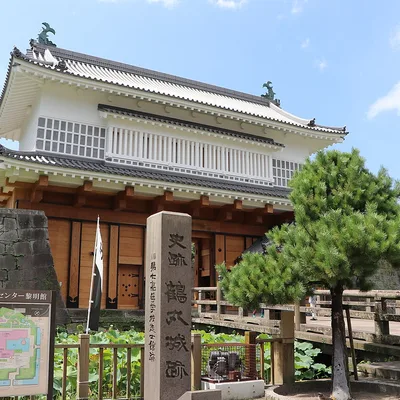
1.Shureimon, the Vermilion Gate on the 2,000-Yen Note
A two-tiered gate marrying Chinese pailou form with the red tile of Ryukyu rooftops. Its plaque reading Shurei no Kuni (Land of Propriety) embodies the kingdom's diplomatic ethos, and this 1958 reconstruction survived both wartime and the 2019 fire.
Frame from the approach below; morning front-lighting brings out the vermilion vividly.
2.Seiden Main Hall Before the Flames
Chinese vermilion-lacquered timber framing crowned by a Japanese hip-and-gable roof and a Ryukyuan karahafu gable — an East Asian synthesis at its peak. Though lost in the 2019 fire, photographs preserve the brick-paved Una courtyard in all its majesty.
Frame the Seiden Main Hall head-on from the central ukimichi path; light around 10 a.m. is ideal.
3.Kankaimon and the Curving Walls of Ryukyu Limestone
Kankaimon (Amae-Ujō), the castle's main outer gate, opens into walls of Ryukyu limestone curving along the hill, far from mainland Japan's straight ramparts. Carved shisa guardian lions watch over arriving visitors in a uniquely Ryukyuan idiom.
Wide-angle composition looking up at the curving wall; clear afternoon sky contrasts pale stone.
Stories & Legends
Recommended For
Insider Tips
- 1.While the Seiden is under reconstruction, a free 'visible recovery' zone shows full-scale models and live wood-processing through glass — a behind-the-scenes view of Ryukyu red-tile firing that will vanish once the hall is complete.
- 2.Across the street from Shureimon stands Sonohyan-utaki Ishimon, another World Heritage component. Built in 1519, it is authentic surviving Ryukyu stone architecture that escaped every fire, yet most visitors walk past it.
- 3.Beneath the castle still lies the underground bunker of the Imperial Japanese 32nd Army headquarters; entrance traces and shell scars can be seen near Ryūtan Pond, revealing Shuri's true historical depth.
Visit Information
- Access
- From Naha Airport take the Yui Rail (Okinawa Urban Monorail) about 27 minutes to Shuri Station, then walk roughly 15 minutes. From central Naha a taxi takes about 20 minutes; city bus routes 7 and 8 stop at Shurijō-mae. Parking is available.
- Time Required
- Allow 2 to 3 hours to tour the reconstruction works and walk the castle grounds.
- Budget Guide
- Adult admission about 400 yen during reconstruction (check official site). Yui Rail round-trip plus entry: about 1,500 yen; half-day plan with lunch: 3,000-4,000 yen (2024).
Nearby Attractions
Within walking distance are the World Heritage components Sonohyan-utaki Ishimon and the royal mausoleum Tamaudun, the ruins of Enkaku-ji (temple of the Second Shō dynasty), and Ryūtan Pond with its Bezaiten-dō hall, while the royal villa garden of Shikinaen sits about a fifteen-minute drive away.
Go Deeper
Deeper details for those with the time to read on.
Timeline
- late 14th century
Founding period
Archaeological surveys place the oldest remains at Shuri Castle in the late 14th century, when the site served as the seat of the Chūzan kings during the Sanzan period.
- 1429
Ryukyu Kingdom founded
Shō Hashi unified the three principalities of Okinawa to found the Ryukyu Kingdom, making Shuri Castle the royal residence and turning Shuri into the flourishing capital.
- 1453
First destruction (Shiro-Furi rebellion)
After the death of King Shō Kinpuku, a succession dispute known as the Shiro–Furi rebellion broke out and the castle was completely destroyed; the rebuilt fabric is recorded in the Joseon wangjo sillok.
- 1469
Second Shō dynasty established
Shō En founded the Second Shō dynasty, and for nineteen generations until 1879 the kings of this line ruled the kingdom from Shuri Castle.
- 1609
Satsuma invasion, dual-allegiance
King Shō Nei was forced to surrender to the Satsuma domain; thereafter Ryukyu was placed under Satsuma's suzerainty while continuing tribute to China in a dual-allegiance arrangement.
- 1660
Second fire
Shuri Castle was destroyed by fire for the second time; reconstruction took eleven full years, placing a heavy burden on the kingdom's already strained finances.
- 1709
Third fire, Satsuma timber aid
The Seiden, north hall and south hall all burned in a third fire; in 1712 Satsuma shipped nearly twenty thousand logs to the kingdom, and reconstruction was completed by 1715.
- 1879
Ryukyu Disposition, end of kingdom
Under the Ryukyu Disposition by the Meiji government, the kingdom was abolished and the last king, Shō Tai, was relocated to Tokyo, so the castle lost its role as the seat of government.
- 1929
Designated a National Treasure
With the National Treasure Preservation Law, the Seiden of Shuri Castle — preserved as the worship hall of Okinawa Shrine — was designated a National Treasure of Japan.
- May 1945
Fourth destruction in Battle of Okinawa
During the Battle of Okinawa the U.S. battleship Mississippi shelled the castle for three days, and by 27 May it had burned to the ground; many lives were lost in the 32nd Army bunker beneath the hill.
- 1992
Postwar restoration and national park
Following the full-scale restoration begun in 1989, the Seiden and surrounding halls were rebuilt with vermilion as the dominant colour, and the Shuri Castle precinct of the national park opened.
- December 2000
World Heritage inscription
The site of Shuri Castle was inscribed on the UNESCO World Heritage List as a component of the Gusuku Sites and Related Properties of the Kingdom of Ryukyu.
- 31 October 2019
Fifth fire
An early-morning fire destroyed the Seiden, north hall, south hall and four other principal structures; support for recovery soon arrived from around the world and a long-term reconstruction plan was set in motion.
- Autumn 2026
Scheduled wooden Seiden completion
Wooden reconstruction of the Seiden, begun in 2022, is scheduled for completion in autumn 2026, after which rebuilding of the south and north halls will follow in turn.
Detailed History
The exact founding date is unknown, but excavations place the oldest remains in the late 14th century, when the site served as the seat of the Chūzan kings during the Sanzan period (1322-1429). In 1429 (Eikyō 1) Shō Hashi unified the three principalities and founded the Ryukyu Kingdom, making Shuri Castle the royal residence. In 1453 (Kyōtoku 2), a succession dispute following the death of King Shō Kinpuku — the Shiro–Furi rebellion — left the castle utterly destroyed, the first of its five great losses. The rebuilt castle is described in the Veritable Records of the Joseon Dynasty as having three concentric citadels: outer, middle and inner. In 1469 (Bunmei 1) the Second Shō dynasty was founded, and under King Shō Shin, who acceded in 1477 (Bunmei 9), the kingdom reached its zenith. In 1609 (Keichō 14), during the Shimazu clan's invasion, King Shō Nei was forced to surrender temporarily; thereafter Ryukyu lived under Satsuma's suzerainty while continuing tributary relations with Ming and Qing China, in a dual-allegiance system that endured for some two and a half centuries. The second fire came in 1660 (Manji 3), requiring eleven years to rebuild, and the third in 1709 (Hōei 6); nearly twenty thousand logs sent from Satsuma in 1712 made reconstruction possible by 1715 (Shōtoku 5). With the Ryukyu Disposition of 1879 (Meiji 12) the kingdom was abolished and the last king, Shō Tai, was relocated to Tokyo. The castle fell into disrepair, serving as army barracks and a girls' school, until in 1925 (Taishō 14) the Seiden was designated a Specially Protected Building, and in 1929 (Shōwa 4) a National Treasure. In May 1945, during the Battle of Okinawa, the U.S. battleship Mississippi shelled the castle for three days and by 27 May the Seiden had burned to the ground — its fourth destruction. After the war the site was occupied by the University of the Ryukyus, but once the university relocated in 1979, full-scale restoration began in 1989 and the Seiden was completed in 1992. In December 2000 the ruins were inscribed on the UNESCO World Heritage List as a component of the Gusuku Sites and Related Properties of the Kingdom of Ryukyu. Then before dawn on 31 October 2019 a fifth fire consumed the Seiden and six other principal structures. Wooden reconstruction began in 2022, and completion of the Seiden is scheduled for autumn 2026 (Reiwa 8).
Cultural Significance
Shuri Castle served as the central seat of the Ryukyu Kingdom for four and a half centuries and symbolises a distinctive diplomatic stance: tributary ties with Ming and Qing China alongside parallel allegiance to the Satsuma domain. The vermilion lacquer, dragon pillars and karahafu gable of the Seiden echo Ming palace architecture, the hip-and-gable roof reflects Japanese practice, and the red tiles and curving stone walls embody an aesthetic belonging to the Ryukyus alone — the apex of East Asian cultural exchange. In December 2000 the castle was inscribed on the World Heritage List as part of the Gusuku Sites and Related Properties of the Kingdom of Ryukyu, in a serial nomination with Nakijin-jō, Zakimi-jō, Katsuren-jō and Nakagusuku-jō, along with Sonohyan-utaki Ishimon, the royal mausoleum Tamaudun and the garden of Shikinaen. Unlike most other World Heritage castles, however, the inscription covers only the underground archaeological remains; the reconstructed buildings lie outside the protected zone. National recognition spread when NHK's Taiga drama Ryūkyū no Kaze aired in 1993 and when Shureimon was chosen for the 2,000-yen banknote. After the 2019 fire, support poured in worldwide, with timber and technical aid from Taiwan and Germany in particular, confirming that Shuri Castle is a shared cultural inheritance of the wider East Asian world.
Architectural Details
Shuri Castle stands on a hill some 120 to 130 metres above sea level and is a gusuku in the Ryukyuan tradition, with no tenshu keep of the mainland Japanese kind. Instead it consists of palace buildings centred on the Seiden, ringed by an enclosure wall some 1,080 metres long. The wall is built of Ryukyu limestone using a combination of nozurazumi (rough-stacked) and aikatazumi (interlocking) masonry, hugging the natural contours of the hill in elegant curves quite unlike the rectilinear ramparts of mainland castles. Before its destruction, the Seiden was a two-storey, three-tier hall about 29 metres east-to-west, 17 metres north-to-south and 16 metres to the ridge, with an irimoya hip-and-gable roof clad in Ryukyu red tile and walls coated in vermilion (bengara) lacquer. A karahafu gable projected from the centre of the roof and two pairs of dragon columns faced one another across the façade. The columns were of hard local timbers such as okinawaurajirogashi (Okinawa ring-cupped oak), finished in alternating layers of urushi lacquer and tung oil. The gates lead inward in stages from Kankaimon (Amae-Ujō) on the outer wall, through Zuisenmon, Rōkokumon, Kōfukumon and finally Hōshinmon. In front of the Seiden lies the Una, the ceremonial courtyard roughly 40 by 44 metres, paved in vertical stripes of brick and tile and crossed by the central ukimichi path reserved for the king.