Nagoya Castle
名古屋城
中区 · JP
Where the Golden Shachi gleam — the Tokugawa shogunate's flagship castle of Owari
Standing in Naka Ward of Nagoya, Aichi Prefecture, Nagoya Castle was raised in 1610 by Tokugawa Ieyasu under a tenka-bushin levy of twenty western daimyo as seat of the Owari Tokugawa. Counted among Japan's Three Great Castles with Osaka and Kumamoto, its gilded shachihoko still crowns the skyline.
Best Season & Time
About 1,000 Somei-yoshino cherries frame the keep and golden shachi; illumination keeps grounds open to 21:00
★★★★★
Fresh greenery in the Ninomaru garden plus turret openings; Golden Week early opening keeps mornings cool
★★★☆☆
Ginkgo and maples color the stone walls; thinner crowds than spring make this the connoisseur's photo window
★★★★☆
A snow-dusted keep and gilded shachi are a rare sight; with few visitors you can linger in the Honmaru Palace
★★★☆☆
Top 3 Highlights
1.Great Keep crowned by the Golden Shachi
The five-story keep, raised in 1612 and lost to firebombing in 1945, was rebuilt in 1959 in ferroconcrete with its outer profile faithfully preserved. The paired shachihoko on its roof, together 88kg in 18-karat gold leaf, remain the emblem of Nagoya.
Frontal view from the main-gate plaza; gold scales catch the direct morning sun around 09:00-10:00
2.Honmaru Palace and its Kano-school paintings
Rebuilt in wood from 2009 to 2018 at around JPY 15 billion, Honmaru Palace ranks with Nijo's Ninomaru as the twin masterpiece of warrior-class shoin architecture. Its 1,047 Kano-school panels, evacuated before the raid, are originals — not reproductions.
From the Omote-shoin tatami, frame the painted sliding doors wide enough to fill the screen
3.Six surviving turrets and gates
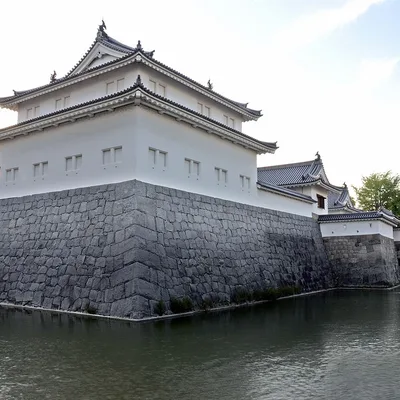
Six structures including the Southwest, Southeast and Northwest turrets and the Omote-ninomon gate escaped the 1945 raid and are Important Cultural Properties. Their 1612 plaster walls and stone-drop openings give an authentic early-Edo counterpoint to the rebuilt keep.
Shoot across the south outer moat to frame the turret with cherry blossoms and stonework
Stories & Legends
Recommended For
Insider Tips
- 1.Time Honmaru Palace for the 09:00 opening. Within an hour tour groups crowd the Omote-shoin and block the upper-tier panels; first through the gate you can take the Genkan, Omote-shoin and Taimenjo essentially to yourself.
- 2.The main keep has been closed since May 2018 pending wooden reconstruction, but the Southwest and Northwest turrets open only during the spring and autumn special-viewing weeks. Check the official dates; no extra fee is charged.
- 3.The golden shachihoko were brought to ground level in March 2021 for a rare touchable display. Day-to-day they sit far above on the roof and require a telephoto; the on-site Kinshachi Yokocho arcade offers life-size replicas for free photos.
Visit Information
- Access
- 5-minute walk from Exit 7 of Nagoyajo Station on the Meijo Subway Line, or 7 minutes from Shiyakusho Station. From JR Nagoya Station the castle is roughly 15 minutes by taxi, or 20 minutes via two subway transfers.
- Time Required
- Allow 2 hours for Honmaru Palace and the outer circuit; half a day with Ninomaru.
- Budget Guide
- Admission JPY 500 for adults, free for junior-high students and younger; annual pass JPY 2,000 (2024). Verify current rates on the official site.
Nearby Attractions
A 15-minute walk away, Tokugawaen — the strolling pond garden on the former Owari Tokugawa Ozone mansion grounds — pairs with the Tokugawa Art Museum on a combination ticket. One subway transfer brings you in about 20 minutes to Atsuta Jingu, the shrine enshrining the Kusanagi sword.
Go Deeper
Deeper details for those with the time to read on.
Timeline
- 1532
Nagoya Castle of Oda Nobuhide
Oda Nobuhide seized Yanagi-no-maru from Imagawa Ujitoyo and renamed it Nagoya Castle; it later passed to his son Nobunaga
- 1555
Abandonment of the old fort
Oda Nobunaga moved his seat to Kiyosu Castle and the old Nagoya fort was eventually abandoned, leaving only ruins
- 1609
Ieyasu's relocation order
Tokugawa Ieyasu chose Nagoya over flood-prone Kiyosu as the new seat of Owari for his ninth son Yoshinao
- 1610
Tenka-bushin levy begins
Twenty western daimyo were levied to build the castle; Kato Kiyomasa undertook the keep foundation, completed by late August
- 1612
Great Keep completed
Master carpenter Nakai Masakiyo's crash schedule raised the five-story tenshu within the year, then Japan's largest castle tower
- 1615
Honmaru Palace completed
Palace finished in February; in 1634 it was greatly enlarged for Shogun Iemitsu and Kano Tan'yu painted new panels
- 1870
Demolition petition averted
Yoshikatsu petitioned to raze the castle and melt the golden shachi, but Brandt and Colonel Nakamura secured preservation
- 1930
First castle named National Treasure
Twenty-four buildings became the first castle designation under the old National Treasure Law; site granted to Nagoya City
- July 1945
Lost in the Nagoya air raid
On 14 May the keep and Honmaru Palace burned; the 1,047 painted panels survived thanks to evacuation in late 1944
- 1959
Keep exteriorly rebuilt
The great keep and small keep were rebuilt in ferroconcrete and the golden shachi were reproduced and reinstalled on the roof
- 2009-2018
Honmaru Palace rebuilt in wood
Painstaking wooden reconstruction of the Honmaru Palace was completed at around JPY 15 billion, twin to Nijo Ninomaru
- May 2018
Keep interior closed
Due to the wooden-reconstruction project, the ferroconcrete keep's interior is closed to visitors; only the exterior is viewable
Detailed History
Nagoya Castle's story begins in the early 16th century with Yanagi-no-maru, a precursor fort that Imagawa Ujichika built between 1521 and 1528 in what would later become the Ninomaru. In 1532 Oda Nobuhide seized it from Imagawa Ujitoyo and renamed it Nagoya Castle; his son Nobunaga is traditionally said to have been born there in 1534, though recent scholarship favors nearby Shobata. After Nobunaga moved to Kiyosu in 1555, the old fort was abandoned. After Sekigahara, Tokugawa Ieyasu decided in November 1609 to relocate the Owari capital from waterlogged Kiyosu to Nagoya for his ninth son Tokugawa Yoshinao. In January 1610 the site was roped off and twenty daimyo from the western provinces were levied under the tenka-bushin system: Kato Kiyomasa undertook the demanding tenshu-dai stonework, while Fukushima Masanori, Maeda Toshimitsu and Kuroda Nagamasa took on individual stretches whose carved house marks remain visible. The stone foundation was completed by August 1610, and under master carpenter Nakai Masakiyo, also responsible for Edo and Sunpu castles, the great keep was completed in December 1612 (Keichō 17). Honmaru Palace construction began in mid-1612 and was completed by February 1615 and extended in 1634 for Shogun Iemitsu, when Kano Tan'yu added new panels in the Jorakuden and Oyudonoshoin chambers. Throughout the Edo period the castle housed seventeen generations of the Owari Tokugawa and ranked with Osaka and Kumamoto among Japan's Three Great Castles. After the Meiji Restoration Tokugawa Yoshikatsu petitioned in 1870 to demolish the castle and melt down the golden shachi, but lobbying by German envoy Max von Brandt and Engineer Colonel Nakamura Shigeto persuaded Yamagata Aritomo in 1879 to preserve Nagoya and Himeji jointly. In April 1930 twenty-four buildings became National Treasure under the old preservation law — the first castle so designated — and the site opened in 1931. On 14 May 1945 the keep, Honmaru Palace and the Northwest Turret were destroyed in the Nagoya air raid, but the 1,047 painted panels had been evacuated to temple storehouses in Inuyama, Komaki, Kasugai and Toyota. The keep was rebuilt in ferroconcrete in 1959, and Honmaru Palace was reconstructed in wood between 2009 and 2018 at around JPY 15 billion. A wooden reconstruction of the keep itself is under planning, and as of 2025 the keep interior remains closed.
Cultural Significance
Nagoya Castle holds a foundational place in Japanese heritage law: in April 1930 twenty-four of its structures became the very first castle designation under the old National Treasure Protection Law, the equivalent of today's National Treasure status. Even after the 1945 air raid destroyed the keep, six surviving buildings — the Southwest, Southeast and Northwest turrets, the Omote-ninomon and Kyu-Ninomaru-Higashi-Ninomon gates — together with the rescued 1,047 panel paintings remain Important Cultural Properties, and the entire site is a Special Historic Site of Japan. The alternative names Kinko-jo (Golden Shachi Castle) and Kinjo (Golden Castle) derive from the paired shachihoko on the great keep, the current male-female pair weighing about 88 kilograms in total and gilded in 18-karat gold leaf during the 1959 reconstruction. Another alias, Meijo, lends its name to Nagoya's Meijo subway line, Meijo Park and Meijo University, attesting to the castle's grip on civic identity. The Ise Ondo folk song proclaims 'Ise is sustained by Tsu, Tsu by Ise, and Nagoya in Owari is sustained by its castle' — an Edo verse still familiar to Nagoyans. Castle historian Masayuki Miura has ranked Honmaru Palace alongside Nijo's National Treasure Ninomaru Palace as the twin masterpieces of warrior-class shoin architecture.
Architectural Details
Nagoya Castle is laid out as a flatland castle in a concentric-ring (rinkaku-shiki) plan, with the Honmaru ringed in turn by the Ninomaru, Nishinomaru, Ofukemaru and Sannomaru enceintes. The great keep is a five-story, basement-bearing tower-type tenshu about 36.1 meters tall (55.6 meters including its stone base); at its construction in 1612 it was Japan's largest tenshu, and the 1959 ferroconcrete rebuild remains the largest castle-tower reconstruction in the country. The keep foundation was raised by Kato Kiyomasa in rough-cut nozura-zumi technique, with the steep-batter cornerwork known as Kiyomasa-ryu — one of his signature contributions to Japanese fortification. About 2,000 carved clan marks survive across the stonework, with the marks of Fukushima Masanori, Maeda Toshimitsu, Kuroda Nagamasa and Hachisuka Yoshishige all identifiable. The roof balances irimoya, chidori and kara gables in carefully calculated symmetry, and the gilded shachihoko at the top ridge ends extend the tenshu authority dating back to Nobunaga's Azuchi. The wooden-reconstruction project launched in 2018 must source 400-year-old large-diameter shin-bashira posts and reconcile traditional joinery with modern seismic and fire codes. Honmaru Palace, rebuilt in wood in 2018, links six halls — Genkan, Omote-shoin, Taimenjo, Jorakuden, Yudonoshoin and Kuroki-shoin.