Akō Castle
赤穂城
赤穂市 · JP
Stage of the Forty-seven Ronin tale — a rare Edo-era seacoast castle in Akō
Built from 1648 by lord Asano Naganao on Akō's southern shore, this irregular-concentric flatland castle, scene of the Genroku Akō Incident and home to two nationally designated gardens, sits in a Seto Inland salt town as Number 60 of Japan's Top 100 Castles.
Best Season & Time
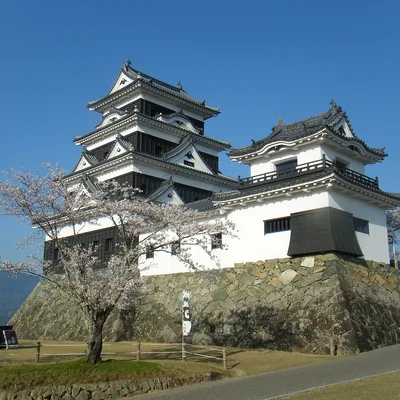
Cherry blossoms ringing the Ni-no-Maru gardens burst open against restored stone walls
★★★★★
The Akō Gishi-sai costumed procession and tenshu-base illumination draw the busiest crowds of the year
★★★★★
Maple foliage in the Honmaru garden plays against the stone walls, ideal for quiet strolls
★★★★☆
Seto Inland breezes sweep through the castle at dusk while lotus and greenery sway in the gardens
★★★☆☆
Top 3 Highlights
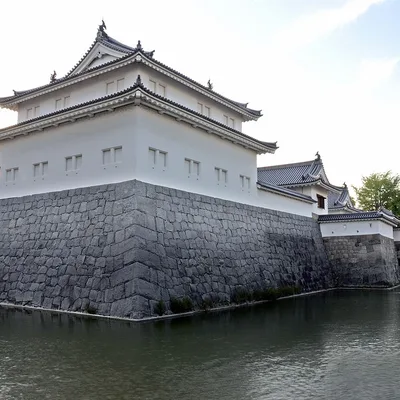
1.Reconstructed Otemon gate and corner yagura
Rebuilt in 1955 from period photographs, the Otemon and its corner yagura form the visitor's first encounter with Ako Castle. White plastered walls, a masugata enclosure and stonework mirrored in the moat present a dignified threshold for the Forty-seven Ronin pilgrimage.
Frame the corner yagura and gate from the southeast moat corner in morning side light
2.Honmaru and Ni-no-Maru gardens
Restored from 1990 onward, these two gardens contrast a shoin pond-viewing plan with a rinsen strolling design and were collectively designated a National Place of Scenic Beauty in 2002. Their plantings and stones quietly evoke the Edo landscape across the seasons.
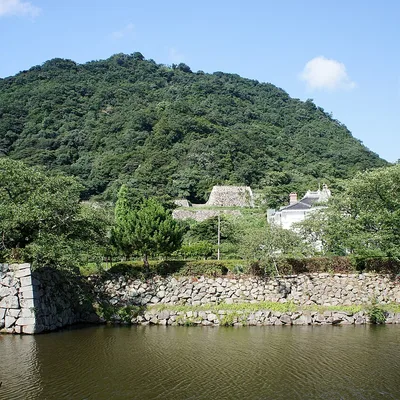
From the west bank of the Honmaru pond, afternoon raking light renders water and stones in relief
3.Honmaru gate and palace floor plan
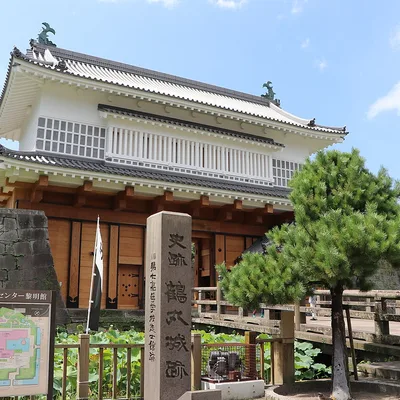
Pass through the 1996 Honmaru gate masugata and the palace floor plan, mapped from excavation, opens on the ground. Tatami-mat margins mark each room, allowing visitors to grasp the lord's daily life and the mass of the tenshu base in one sweeping view of the inner bailey.
From the tenshu base top, the inscribed palace layout reads in a single overhead frame
Stories & Legends
Recommended For
Insider Tips
- 1.The castle grounds are free and effectively open around the clock, so a dawn walk from the Otemon to the Honmaru tenshu base lets you experience mist over restored stonework and dry moats in solitude.
- 2.The December 14 Gishi-sai festival is crowded, but the previous evening's Hikari-no-Tenshukaku illumination eve event is far quieter and lets you contemplate the five-tier silhouette at your own pace.
- 3.A ten-minute walk from the castle, Kakuhō-ji temple holds the graves of the forty-seven retainers beside the Asano and Mori family memorials, completing the Chūshingura pilgrimage in one afternoon visit.
Visit Information
- Access
- About a 15-minute walk from Banshū-Akō Station on the JR West Akō Line. The Special Rapid Service from Osaka takes about 1 hour 40 minutes; from Himeji it is roughly 25 minutes. By car take the Sanyo Expressway to the Akō IC, with a free west-side lot ten minutes away.
- Time Required
- About 1.5 hours for the castle, half a day including Oishi Shrine and Kakuhō-ji temple
- Budget Guide
- Castle grounds free; Oishi Shrine treasure hall admission charged separately. Round-trip rail from Osaka plus lunch suggests budgeting roughly 6,000 to 8,000 yen for the day.
Nearby Attractions
A ten-minute walk away, Kakuhō-ji temple holds the graves of the forty-seven retainers alongside the Asano and Mori family memorials, forming the standard Chūshingura pilgrimage route. Within the castle grounds visitors can also view the Old Akō Waterworks excavation site where bamboo pipes from one of Japan's three great Edo-era water systems are displayed.
Go Deeper
Deeper details for those with the time to read on.
Timeline
- 1600
Kakiage-jo built
After the Battle of Sekigahara, Ikeda Nagamasa, younger brother of Himeji lord Ikeda Terumasa, raised the Kakiage-jō on roughly the same site as the later Honmaru and Ni-no-Maru, the direct predecessor of Akō Castle.
- 1615
Ako Domain founded
Ikeda Masatsuna received 35,000 koku and formally established Akō Domain. A residence was built and the surrounding castle town began to take shape under his administration.
- 1645
Asano Naganao arrives
Following the dispossession of the previous lord Ikeda Teruoki in the Shōhō Akō Incident, Asano Naganao transferred from Kasama in Hitachi with 53,000 koku and began planning a full-scale castle.
- 1648
Construction begins
Asano submitted a building application and broke ground the same year using the layout of Kondō Masazumi, a rare case of new castle construction more than thirty years after the Genna Buei peace.
- 1652
Yamaga Soko invited
The scholar Yamaga Sokō was invited to Akō and during a seven-month residence offered design advice on the Ni-no-Maru area, traces of which excavation has since confirmed.
- 1661
Castle completed
Thirteen years of construction concluded with twelve gates, ten yagura towers and a 2,847-meter enclosure perimeter, though only the tenshu base was built and no keep was ever raised upon it.
- 1701
Pine Corridor incident
Lord Asano Naganori drew his sword against Kira Yoshinaka in the Pine Corridor of Edo Castle and was ordered to commit seppuku, leading to dispossession of the Asano house and surrender of Akō Castle.
- 1702
Genroku Ako Incident
On the fourteenth day of the twelfth month Ōishi Kuranosuke and forty-six retainers stormed Kira's Edo mansion to avenge their lord, the event later immortalized as the Chūshingura saga of the Forty-seven Ronin.
- 1706
Mori clan arrives
Mori Naganao transferred from Nishi-Ehara in Bitchū with 20,000 koku, beginning a tenure of twelve generations spanning 165 years that lasted until the Meiji abolition of domains.
- 1862
Bunkyu Ako Incident
Thirteen lower-ranking samurai of the pro-imperial reform faction killed chief elder Mori Chikara within the castle grounds, a violent surfacing of late-Edo factional strife inside Akō Domain.
- 1873
Castle Abolition Edict
Under the Meiji Castle Abolition Edict the castle was sold and most buildings demolished; the 1892 Chikusa River flood led to further loss of moat-wall stone diverted to embankment construction.
- 1912
Oishi Shrine completed
Begun in 1897 amid opposition from nationalist commentators, Oishi Shrine was completed and enshrines the forty-seven loyal retainers as deities on the western edge of the castle grounds.
- 1971
National Historic Site
The Akō Castle ruins received National Historic Site designation, opening the path to systematic restoration once the local high school relocated from the Honmaru in 1981.
- 2002
National Scenic Beauty
The Honmaru garden restored in 1990 and the gradually restored Ni-no-Maru garden were collectively designated a National Place of Scenic Beauty as Former Akō Castle Garden.
- 2006
Top 100 Castle list
Akō Castle was selected as Number 60 of Japan's Top 100 Castles by the Japan Castle Foundation; the same year the Akō Junior Chamber began the annual tenshu-base illumination.
Detailed History
The history of Akō Castle traces back to a fifteenth-century fortification by Oka Mitsuhiro on the Akō shore, but the direct predecessor of the present castle is the Kakiage-jō raised in 1600 by Ikeda Nagamasa, younger brother of Himeji lord Ikeda Terumasa, after Sekigahara. In 1615 his nephew Ikeda Masatsuna received 35,000 koku and Akō Domain was formally founded; rule passed to his younger brother Ikeda Teruoki, who went insane in 1645 and murdered his concubine and ladies-in-waiting before being dispossessed in the Shōhō Akō Incident. The same year Asano Naganao moved from Kasama with 53,000 koku and began the construction of a full early-modern castle. He submitted an application to the Tokugawa shogunate in 1648 and broke ground using the layout of the Kōshū-style strategist Kondō Masazumi, a rare case of new castle construction more than thirty years after the Genna Buei peace of 1615. In 1652 the scholar Yamaga Sokō was invited to Akō and during a seven-month residence offered design advice around the Ni-no-Maru. After thirteen years the castle was completed in 1661 with twelve gates, ten yagura towers and a 2,847-meter perimeter; a five-tier tenshu base was built but no keep was ever raised on it, the base alone serving as a symbol of family rank. In 1701 the third Asano lord Naganori drew his sword in the Pine Corridor of Edo Castle, was ordered to commit seppuku and the Asano house was dispossessed; in the twelfth month of 1702 Ōishi Kuranosuke and forty-six retainers carried out the Genroku Akō Incident vendetta. The castle then passed briefly to Wakisaka Yasuteru of Tatsuno, then Nagai Naohiro in 1702, and from 1706 the Mori clan held Akō for twelve generations across 165 years until the Meiji abolition of domains. In 1862 thirteen lower-ranking samurai of the pro-imperial faction killed chief elder Mori Chikara within the grounds in the Bunkyū Akō Incident. The 1873 Castle Abolition Edict led to demolition of most buildings, and the 1892 Chikusa flood caused further loss of moat-wall stone diverted to embankments. A former middle school was built on the Honmaru in 1928, the site received National Historic Site designation in 1971, and after the school's 1981 relocation phased reconstruction has continued to the present day.
Cultural Significance
The supreme cultural significance of Ako Castle lies in its role as the stage of the 1701-1702 Genroku Akō Incident, the event behind the Chūshingura narrative. The vendetta of the forty-seven retainers became one of the most repeatedly retold subjects in Japanese arts, beginning with the kabuki play Kanadehon Chūshingura first performed in 1748 and continuing through puppet plays, kōdan, novels and countless twentieth-century films, shaping how Japanese audiences understand loyalty, vengeance and bushido. The Nagayamon of Ōishi Kuranosuke's residence within the grounds was independently designated a National Historic Site in 1923. Oishi Shrine, completed in 1912, enshrines the forty-seven retainers and is a foremost pilgrimage site for Chūshingura devotees, while Kakuhō-ji temple nearby holds their graves beside the Asano and Mori memorials. In broader castle history, Ako is among the few early-modern fortresses built entirely new after the Genna Buei peace of 1615, and its irregular concentric plan with bastion-like yokoya-gakari is sometimes compared with Western star fort design. The Old Akō Waterworks of 1614-1616 is reckoned one of Japan's three great Edo-era water systems. Ako received National Historic Site status in 1971, the gardens a National Place of Scenic Beauty in 2002, and the castle was selected Number 60 of Japan's Top 100 Castles in 2006.
Architectural Details
Ako Castle is an irregular concentric plan seacoast flatland castle in which a Ni-no-Maru rings the central Honmaru and a San-no-Maru extends north in an attached parapet layout, an unusual composition for early-modern Japan. At construction the sea reached close to the southern walls and ships could sail from docks within the precinct. The layout was designed by the Kōshū-style strategist Kondō Masazumi with a clear awareness of firearms, deploying bastion-like yokoya-gakari and yokoya-masugata flanking projections around the perimeter to enable crossfire, features sometimes compared with Western star fort design. In 1652 Yamaga Sokō was invited and during a seven-month stay reshaped the Ni-no-Maru gateway. The Honmaru contains a tenshu base large enough to support a five-tier keep, yet no tenshu was ever raised on it, the base alone serving as a symbol of household rank throughout the Edo period. Ten yagura, twelve gates and a 2,847-meter stone perimeter testify to the original scale, and phased reconstruction has revived the Otemon and corner yagura in 1955, the masugata and Honmaru gate in 1996, the Umayaguchi gate in 2001, the Honmaru garden in 1990 and the western partition gate in 2010. The Honmaru garden is a shoin design viewed from the lord's seat over a central pond, the Ni-no-Maru a strolling rinsen garden.