Sendai Castle
仙台城
青葉区 · JP
Date Masamune's mountain fortress — the citadel of Sendai that never fell
Perched on Aoba mountain in Sendai, Miyagi, the castle was raised in 1601 by the one-eyed warlord Date Masamune. Built without a tower keep yet hailed as 'one of the finest and most impregnable in Japan', it ruled Tohoku for 270 years and reached the Meiji era without a single battle.
Best Season & Time
Cherry blossoms along the honmaru ruins frame the Masamune statue — Sendai's most beloved hanami spot
★★★★★
Deep summer green on Aoba mountain; visits combine well with the Sendai Tanabata Festival on August 6-8
★★★★☆
Autumn foliage with the cityscape view from the honmaru — a quieter window before the December light-up
★★★★★
Snow-dusted honmaru ruins and the Masamune statue, paired with the Sendai Pageant of Starlight in town
★★★☆☆
Top 3 Highlights
1.Bronze Statue of Date Masamune and Honmaru View
The bronze equestrian statue of the one-eyed warlord Date Masamune stands on the honmaru ruins as Sendai's symbol. Behind it an observation deck opens to the whole city, surrounding forests and the Pacific — the panorama Masamune himself chose for his castle in 1600.
Shoot from south-east of the statue in late afternoon with the city skyline in a vertical frame
2.The 17-Meter Honmaru Stone Walls
The northern wall rises up to 17 meters above the cliff face, the masterstroke of Masamune's defensive design. Excavations from 1997 found three earlier phases of stonework inside the current wall — a rare window into how Edo builders rebuilt after each great earthquake.
Look down from the north edge of the honmaru plaza, framing the wall with the Hirose river valley
3.The Reconstructed Otemon Wakiyagura Turret
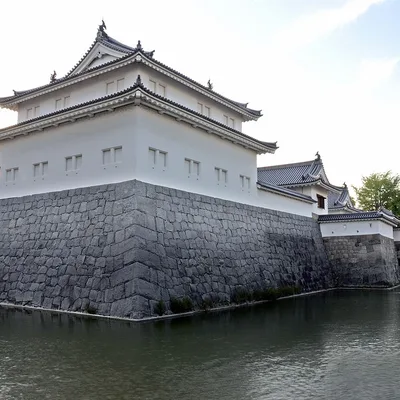
The wooden Wakiyagura side turret, rebuilt in 1967, recreates the gate tower that was a National Treasure until US firebombs destroyed it in 1945. Its white plaster two-story silhouette now rises over Otemon-dori, the only standing structure of the lost Sendai Castle.
Frame the two-story turret horizontally against blue sky from the south side of Otemon-dori
Stories & Legends
Recommended For
Insider Tips
- 1.The Loople Sendai loop bus (one-day pass 630 yen) reaches the honmaru in about 20 minutes from JR Sendai West Exit. The Aoba-jo museum near the statue shows CG reconstructions of the lost castle and pairs naturally with the visit.
- 2.A footpath winds down to the base of the 17-meter north honmaru wall, where you look up at the full height of Masamune's stonework rather than just down from above. The view from below is rarely in guidebooks but is a favorite among serious photographers.
- 3.After the March 2022 Fukushima offshore earthquake, the Masamune statue and parts of the north wall were damaged and have been restored. Park panels explain the damage and repair work — a contemporary view of disaster and heritage care in Japan.
Visit Information
- Access
- Around 20 minutes by Loople Sendai loop bus from Sendai Station West Exit to the Sendai Castle Ruins stop. About 15 minutes by car from Sendai Station, paid parking on site. From Sendai Airport, the rapid train reaches Sendai Station in 20 minutes.
- Time Required
- Roughly 1.5 to 2 hours for the honmaru ruins and museum; half a day with Aoba-yama Park.
- Budget Guide
- Honmaru ruins entry free; Aoba-jo museum around 700 yen for adults, Loople Sendai one-day pass 630 yen. (Prices as of 2024; check official sites for details.)
Nearby Attractions
Within walking distance are the Aoba-jo museum, the Miyagi Gokoku Shrine and Aoba-yama Park. Below at the san-no-maru site is the Sendai City Museum. A 10-minute drive away is Osaki Hachimangu, a National Treasure shrine, and 15 minutes by car takes you to Zuihoden, the mausoleum of Date Masamune himself.
Go Deeper
Deeper details for those with the time to read on.
Timeline
- December 1600
Survey of Aoba mountain
After Sekigahara, Date Masamune climbs Aoba mountain himself with Tokugawa permission to sketch the bailey lines and renames the area Sendai
- 1601
Construction begins
Masamune breaks ground on the honmaru and west bailey as a mountain fortress with a stone tenshu platform but no actual keep tower
- 1611
Vizcaino's visit
Spanish envoy Sebastian Vizcaino reaches Sendai and judges the castle one of the finest and most impregnable in all Japan
- 1638-1639
Ni-no-maru built
Second daimyo Date Tadamune builds the flatland ni-no-maru bailey and moves the working residence there from the honmaru
- 1804
Ni-no-maru fire
The Bunka era fire destroys the ni-no-maru complex; it is rebuilt at a reduced scale by 1809 (Bunka 6)
- 1873
Preserved by Meiji decree
The nationwide castle disposition order keeps Sendai Castle on the preservation list and the ni-no-maru becomes the Tohoku Garrison base
- 1882
Ni-no-maru fire
A large fire in Meiji 15 burns down the remaining ni-no-maru buildings, leaving only the Otemon gate, side turret and Tatsumi gate
- 1931
National Treasure listing
The surviving Otemon main gate and the wakiyagura side turret are designated National Treasures under the old preservation law
- 10 July 1945
Lost in the firebombing
American B-29 firebombs destroy the Otemon gate, side turret, Tatsumi gate and the entire 2nd Division barracks in the bombing of Sendai
- 1967
Wakiyagura rebuilt
A wooden reconstruction of the Otemon wakiyagura side turret is donated to the city, today the only standing castle structure on site
- 2003
National Historic Site
Building on the honmaru wall excavations, the entire castle ruins are designated a National Historic Site by the Japanese government
- 2006
Top 100 Castles
Sendai Castle is named number 8 on the 100 Fine Castles of Japan list by the Japan Castle Association, cementing its national profile
- March 2022
Earthquake damage
The Fukushima offshore earthquake damages the honmaru stone walls and the Masamune statue; repairs are now complete and the site has reopened
Detailed History
The story of Sendai Castle begins in December 1600 (Keicho 5), when Date Masamune — having earned Tokugawa Ieyasu's permission after Sekigahara — climbed Aoba mountain himself and began drawing the lines of his new fortress. He had previously held Iwadeyama Castle, a base imposed on the Date clan by the Toyotomi regime, but that site lay too far north for his expanded holdings. The crossroads of Sendai, with the Tokaido and Tosando land routes converging and the Natori and Hirose rivers giving water access to the Pacific, was the obvious new heart of his domain. He renamed the place Sendai (in the old kanji 仙臺) and broke ground in 1601. The castle Masamune raised was unconventional: a mountain fortress with a stone platform for a tenshu keep, but no keep ever standing on it. Where the fashion of the era called for towering keeps, Masamune relied on the terrain — the cliffs of Aoba and the Hirose river bend — and on three-story yagura turrets around the honmaru. The Spanish envoy Vizcaino, visiting in 1611, judged the result one of the finest and most impregnable castles in Japan. The second daimyo, Date Tadamune, broke ground on the flatland ni-no-maru in 1638 (Kanei 15), moved there a year later, and made it the political center for eight generations. The castle suffered earthquakes in 1646 and 1668 and lost the ni-no-maru to fire in 1804 (rebuilt by 1809), but never had to be defended in battle. Even during the Boshin War of 1868, when Sendai led the Ouetsu Reppan Domei, no fighting reached the castle. The Meiji government placed the new prefectural office in the ni-no-maru in 1869 and from 1871 quartered the Tohoku Garrison (later the IJA 2nd Division) on the grounds. A great fire in 1882 destroyed the rest of the ni-no-maru. The surviving Otemon main gate, side turret and Tatsumi gate were designated National Treasures in 1931 — only to be wiped out in the firebombing of Sendai by US B-29 aircraft on the night of 10 July 1945. After the war the US Army held the site as Camp Sendai; it was returned in 1957 and the ni-no-maru became part of Tohoku University's Kawauchi campus. The Otemon wakiyagura was rebuilt in wood in 1967, the honmaru stone walls surveyed and repaired from 1995, the ruins designated a National Historic Site in 2003, and in 2006 Sendai Castle was named number 8 on Japan's 100 Fine Castles list.
Cultural Significance
Sendai Castle is one of the foremost castle ruins of the Tohoku region, designated a National Historic Site in 2003 and named number 8 on Japan's 100 Fine Castles list in 2006. Although every standing building was lost in the 1945 firebombing, the honmaru stone walls and the broader bailey layout retain Masamune's original design almost intact. Excavations from 1997 onward have revealed three distinct phases of stonework hidden inside the current honmaru north wall, allowing scholars and visitors alike to read the castle's reconstruction history after major earthquakes. The poetic name 'Aoba-jo' (Green-Leaf Castle) derives from Mount Aoba between the honmaru and ni-no-maru and entered common use from the mid-Edo period. The whole site is now Aoba-yama Park, with the 1935 bronze equestrian statue of Date Masamune on the honmaru ruins serving as the symbol of Sendai itself. Two twinned stories give the place its modern resonance: the unfired citadel of the Boshin War, where the pro-Tokugawa Ouetsu Reppan coalition was headquartered yet no battle was fought, and the total wartime destruction by US firebombs on 10 July 1945. Together they form a core of Sendai's cultural identity. The 1987 NHK Taiga drama 'Dokuganryu Masamune' (The One-Eyed Dragon) brought nationwide fame to both Masamune and his castle, securing the ruins a lasting place in Japanese popular memory.
Architectural Details
The plan exploits the natural defenses of the south-east tip of Aoba mountain, about 130 meters above the city. Cliffs drop to the Hirose river on south and east; dense forest, now a Tohoku University botanical garden of rare virgin honshu woodland, guarded the west. The honmaru is a near-square bailey about 250 meters on a side, ringed by stone walls up to 17 meters high. The stone platform for a tenshu keep was built but the tower itself never rose; instead, four three-story corner yagura turrets, one two-story yagura and continuous multi-story tamon-yagura connected by stone walls provided defense. Within the honmaru stood the great hall in Momoyama style: a 430-tatami chamber painted by Kano-school artists, an upper dais reserved for the shogun and a special gate that was never used. On the east side a Kiyomizu-style suspended pavilion, the Choeikaku, jutted out over the cliff so that lords could survey the whole city. The flatland ni-no-maru built by Date Tadamune in 1638-1639 was 310 meters east-west by 200 meters north-south and held the working residence, noh stage and gardens of the daimyo. The stonework shows a transition between the rough nozurazumi piling of the early Edo period and the more precise uchikomihagi joining; the 1997 excavations identified three reconstruction layers in the north honmaru wall.