Kanazawa Castle
金沢城
金沢市 · JP
Stronghold of the million-koku Maeda lords, crowned with lead-tile roofs and namako plaster walls
Perched on the Kodatsuno Ridge between the Sai and Asano rivers, this hill-top castle was the seat of the Maeda clan for 14 generations of Kaga Domain. White-plaster namako walls and lead-clad roofs built for heavy snow give it a regional elegance unmatched among Japanese castles.
Best Season & Time
Around 400 cherry trees bloom around the white Hishi Yagura with magical nighttime illuminations
★★★★★
Lush greenery and the Kanazawa Hyakumangoku Festival reenact Maeda Toshiie's historic entry
★★★★☆
Premier foliage season with Kenroku-en, plus atmospheric Gyokusen'in-maru garden illuminations
★★★★★
Snow-dusted namako walls and lead roofs evoke ink painting, with Kenroku-en's yukitsuri ropes
★★★★☆
Top 3 Highlights
1.Ishikawa-mon Gate: surviving 1788 Cultural Property
Rebuilt in 1788 and one of three structures to escape the 1881 fire, the Ishikawa-mon is an Important Cultural Property. Its namako walls of white plaster with diamond tile work and lead roof showcase Kanazawa's unique vocabulary, and the masugata box entrance shows Edo defense.
Looking up from Ishikawa-bashi Bridge, framed by cherry blossoms in spring
2.Hishi Yagura and Gojikken Nagaya reconstruction
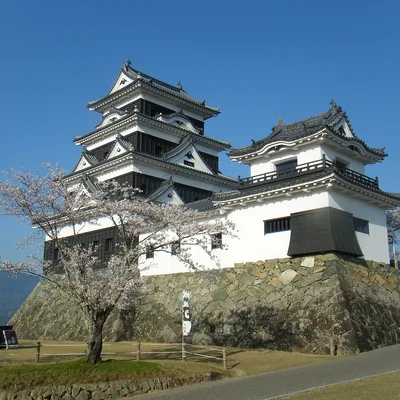
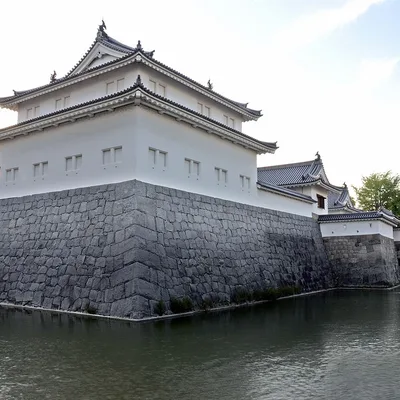
Reconstructed in 2001 with traditional joinery and no nails, this trio of turrets and 90-meter corridor symbolizes the Heisei restoration. Authentic Edo methods recreate the 1850s appearance, and interior tours reveal the vertical hoist shaft inside the Hashizume-mon turret.
From Sannomaru square, frame the reconstructed ensemble behind cherry blossoms
3.Nezumitamon Gate and Bridge (2020 reconstruction)
Restored in July 2020 after 140 years, the two-story Nezumitamon links Gyokusen'in-maru to the Kanaya bailey. Excavation revealed a unique black-mortar joint in its namako walls found nowhere else in Japan, and the gate-bridge opens a new route to the Nagamachi samurai quarter.
From Gyokusen'in-maru, capture the bridge with the black-joint namako wall
Stories & Legends
Recommended For
Insider Tips
- 1.Three originals survived the 1881 fire as Important Cultural Properties: Ishikawa-mon, Sanjukken Nagaya, and Tsurumaru Storehouse. Comparing these Edo originals with the Heisei reconstructions reveals subtle differences in plaster texture and joinery
- 2.The Gyokusen'in-maru Garden, recreated in 2015, is a hidden gem far less crowded than the main bailey. Its terraced design around a central pond is best in the early morning when you can have the misty Tatsumi Canal paths almost to yourself
- 3.The castle park is free; only the Hishi Yagura, Gojikken Nagaya, and Hashizume-mon interior cost 320 yen. The combined Kenroku-en ticket at 500 yen offers real savings, and seasonal evening illuminations (spring/autumn weekends) are free
Visit Information
- Access
- From Kanazawa Station on the Hokuriku Shinkansen, take a local bus about 10 minutes to Kenrokuen-shita/Kanazawa-jo stop at the castle entrance, or walk roughly 25 minutes. About 2.5 hours from Tokyo and 2 hours 40 minutes from Osaka.
- Time Required
- About 1.5 hours for the castle park alone; allow a half day if combined with Kenroku-en.
- Budget Guide
- Park entry is free; interior visit of Hishi Yagura, Gojikken Nagaya and Hashizume-mon Tsuzuki Yagura costs 320 yen. Combined ticket with Kenroku-en is 500 yen. (As of 2024)
Nearby Attractions
Kenroku-en Garden (right next door, one of Japan's three great gardens), Higashi Chaya geisha district (20-minute walk), 21st Century Museum of Contemporary Art (10-minute walk), Nagamachi samurai district (15-minute walk via Nezumitamon), and Omicho Market (15-minute walk for seafood) cluster compactly around the castle.
Go Deeper
Deeper details for those with the time to read on.
Timeline
- 1546
Oyama Gobo built
Ikko-ikki followers built Oyama Gobo as a fortified Jodo Shinshu temple, becoming the headquarters of their control over Kaga Province
- 1580
Sakuma Morimasa captures site
Oda Nobunaga's general Sakuma Morimasa captured Oyama Gobo, renamed it Kanazawa Castle, and made it his residence
- 1583
Maeda Toshiie enters
Following the Battle of Shizugatake, Maeda Toshiie entered the castle on April 28, renaming it Oyama Castle and beginning Maeda rule
- 1592
Maeda Toshinaga rebuilds
Drawing on Korean campaign experience, Maeda Toshinaga built extensive stone walls, the Hyakkenbori moat, a six-story keep, and rows of turrets
- 1602
Tenshu keep burns
Lightning destroyed the keep on October 30; tension with the Tokugawa shogunate prevented reconstruction and a three-story turret was built instead
- 1631
Kan'ei Great Fire
A massive fire forced major rebuilding; the following year the Tatsumi Canal was channeled into the castle and the Ninomaru became the lord's residence
- 1759
Horeki Great Fire
The Horeki Great Fire engulfed the castle town and inflicted further extensive damage on the castle structures
- 1873
Abolition under Meiji
The Castle Abolition Order placed the site under Imperial Army control, with the 7th Infantry Regiment stationed there from 1875
- 1881
Fire destroys most structures
A fire from the 7th Regiment barracks on January 10 destroyed nearly every structure except the Ishikawa-mon, Sanjukken Nagaya, and Tsurumaru Storehouse
- 1949
Kanazawa University moves in
On May 31, the newly founded Kanazawa University established its Marunouchi campus on the castle grounds, where it remained until 1995
- 1996
Castle park restoration begins
Ishikawa Prefecture acquired the site from the national government and began the Heisei-era restoration as Kanazawa Castle Park
- 2001
Hishi Yagura reconstructed
The first phase reconstructed the Hishi Yagura, Hashizume-mon Tsuzuki Yagura, and Gojikken Nagaya using traditional methods and opened them to the public
- 2008
National Historic Site
Kanazawa Castle was designated a National Historic Site, formalizing its status alongside the 2006 selection as one of Japan's Top 100 Castles
- 2020
Nezumitamon Gate restored
The Nezumitamon Gate and Bridge were reconstructed in timber after roughly 140 years, opening a new route to the Nagamachi samurai district
- 2025
Ninomaru Palace begins
On March 9, groundbreaking began for the Ninomaru Palace omote-muki reception hall, the climax of the Heisei Castle Construction project
Detailed History
Kanazawa Castle traces its origin to 1546, during the late Muromachi period, when Ikko-ikki followers of Jodo Shinshu Buddhism built Oyama Gobo on the Kodatsuno Ridge. Surrounded by stone walls like the Ishiyama Hongan-ji, it became the headquarters of the Peasants' Kingdom ruling Kaga Province. In 1580, Oda Nobunaga dispatched Sakuma Morimasa; he captured Oyama Gobo, renamed the site Kanazawa Castle, and began work on moats and the castle town. After Nobunaga's assassination, Morimasa sided with Shibata Katsuie and was defeated by Maeda Toshiie at Shizugatake in 1583. Toshiie entered on April 28, renaming the castle Oyama. In 1587, the Kirishitan daimyo Takayama Ukon, renowned for castle design, oversaw a sweeping reconstruction; the Kanazawa name returned around this time. In 1592, drawing on the Korean invasions, Maeda Toshinaga rebuilt with stone walls, the Hyakkenbori moat, and a six-story keep. Lightning destroyed it on October 30, 1602; tense relations with the Tokugawa made rebuilding dangerous, and a three-story turret took its place. The Kan'ei Fire of 1631 forced another rebuild, after which the Tatsumi Canal was channeled in by Itaya Hyoshiro in 1632. Further fires struck in 1759 and 1808, but the castle functioned throughout the Edo period as the seat of Kaga Domain under 14 generations of Maeda. The castle passed to the Imperial Army in 1873, and the 7th Infantry Regiment was stationed there from 1875. A fire from the regiment barracks on January 10, 1881, destroyed nearly every structure except the Ishikawa-mon, Sanjukken Nagaya, and Tsurumaru Storehouse. From 1898 the 9th Division headquartered on the site, and after the war Kanazawa University used the grounds as its Marunouchi campus from 1949 to 1995. Ishikawa Prefecture acquired the site in 1996. The Hishi Yagura, Hashizume-mon Tsuzuki Yagura, and Gojikken Nagaya were reconstructed in 2001; the castle became a National Historic Site in 2008; the Kahoku-mon followed in 2010, the Hashizume-mon and Gyokusen'in-maru Garden in 2015, and the Nezumitamon Gate and Bridge in 2020. The Noto earthquake of January 1, 2024, damaged 27 stone-wall sections, and on March 9, 2025, work began on the long-awaited Ninomaru Palace.
Cultural Significance
Kanazawa Castle served throughout the Edo period as the seat of the 14-generation Maeda clan, who ruled Kaga, Noto, and Etchu and held the largest kokudaka of any tozama daimyo in Japan. It embodies the prestige of the million-koku domain that funded one of early modern Japan's most flourishing regional cultures. Three surviving Edo structures (Ishikawa-mon, Sanjukken Nagaya, Tsurumaru Storehouse) are Important Cultural Properties, and the entire site became a National Historic Site in 2008. It was selected as one of Japan's Top 100 Castles in 2006. The Kanazawa name replaced the older Oyama when Sakuma Morimasa wished to break with the Ikko-ikki past. The adjacent Kenroku-en, one of Japan's three great gardens, originated as the Renchitei auxiliary garden commissioned by the fourth Maeda lord Tsunanori, making castle and garden a single cultural landscape. After the 1631 Fire, the Maeda built defensive temple networks including the labyrinthine Myoryu-ji (Ninja-dera) whose well reportedly connects to an escape tunnel. In 2006, Ishikawa and Kanazawa jointly proposed the castle-town heritage for Japan's tentative UNESCO list, where it remains under review. The lead tiles, namako walls, and unique black-mortar joints of the Nezumitamon Gate reflect the Hokuriku aesthetic and the Maeda's independent vision.
Architectural Details
Kanazawa Castle is a tei-kaku-shiki hirayama-jo on the Kodatsuno Ridge between the Sai and Asano rivers. Its six enclosures (Honmaru, Ninomaru, Sannomaru, Shinmaru, Kitanomaru, Gyokusen'in-maru) are staggered to exploit the topography. After the keep burned in 1602, the three-story turret and Ninomaru Palace served as the core. Three signatures define Kanazawa: first, walls clad in namako (sea-cucumber) tilework, with square tiles laid diagonally over white plaster and joints raised in white plaster, while the Nezumitamon Gate alone uses black-mortar joints found nowhere else in Japan; second, lead-clad roof tiles chosen for their light weight under heavy Hokuriku snowfall, which could in wartime be melted into musket shot; and third, decorative karahafu and irimoya bay windows on first-tier turrets. The stone walls exhibit all three historical techniques (nozura-zumi, uchikomi-hagi, kirikomi-hagi), earning the nickname stone-wall museum. The outer defenses originally included four sogamae moats, most later turned into irrigation canals. Mount Yamazaki inside Kenroku-en is part of the sogamae earthwork. The Tatsumi Canal, designed by Itaya Hyoshiro in 1632, is a roughly 11-kilometer inverted-siphon aqueduct supplying drinking and fire water. The Heisei and Reiwa reconstructions use traditional methods with no nails and authentic clay-and-plaster finishes.