Nakijin Castle
今帰仁城
今帰仁村 · JP
Japan's earliest cherry blossoms set against a 1.5-km serpentine limestone wall
On the Motobu Peninsula ridge in northern Okinawa, Nakijin Castle was the seat of the Hokuzan Kingdom from the 14th to early 15th century. Its 1.5-kilometer rough-fit limestone wall snakes along the ridge, and the site joined UNESCO World Heritage in 2000 as part of the Gusuku Sites of Ryukyu.
Best Season & Time
Nakijin Gusuku Sakura Festival brings Japan's earliest cherry blossoms with evening illuminations on the wall
★★★★★
Comfortable 20°C; moss-covered stones contrast strongly with bright limestone — excellent for photography
★★★★☆
After typhoons, dry 25°C days deliver clear skies and East China Sea blues at their most striking
★★★★☆
Vivid blue-sky contrast but little shade; expect 30°C-plus heat and plan an early-morning visit
★★☆☆☆
Top 3 Highlights
1.Rough-Fit Limestone Wall Snaking the Ridge
The fortifications span 350 by 800 meters, enclosing 37,000 square meters. Built of unhewn Ryukyu limestone in nozura-zumi (rough-fit) technique, the walls bend dramatically with the ridge — distinct from the straight bastions of mainland Japanese castles.
From the elevated O-sumi enclosure, look down on the curving wall in afternoon raking light
2.Heiro Gate and Cherry Avenue of the Stairway
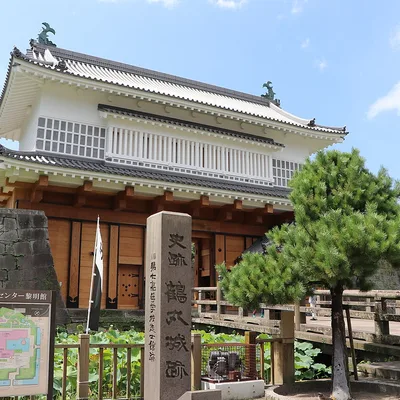
Beyond the Heiro main gate, a stairway climbs into the castle flanked by a hundred Hikan-zakura trees blooming deep pink from late January to early February — Japan's earliest cherry blossoms. The Sakura Festival adds evening illuminations.
Frame the cherry avenue and wall vertically from the foot of the Heiro Gate
3.East China Sea Vista and Sacred Utaki
From the inner bailey the view sweeps across the East China Sea to the Motobu mountains. The highest plateau is Uchibaru, a sacred precinct. Over ten utaki (sacred groves) survive within the walls — evidence that ritual and military functions coexisted in Ryukyuan gusuku culture.
From the main bailey ruin, frame an east-facing wide-angle in early-morning light
Stories & Legends
Recommended For
Insider Tips
- 1.During the Hikan-zakura Festival (late January to early February) the castle stays open with evening illuminations even on weekdays; a late-afternoon arrival avoids the daytime crowd, lets dusk soften the limestone, and parking is far easier.
- 2.Your JPY 600 admission also covers the Nakijin Village Museum of History and Culture, which displays excavated Chinese and Southeast Asian ceramics — an hour there before the castle gives a three-dimensional picture of Hokuzan's trade history.
- 3.Combine Nakijin with the Kouri Ohashi bridge (15 minutes by car) and the Churaumi Aquarium (25 minutes) for the classic northern-Okinawa loop — from Naha a single rewarding rental-car day trip becomes possible.
Visit Information
- Access
- About two hours by car from Naha Airport via the Okinawa Expressway, then 40 minutes on Route 58 from the Kyoda interchange. By coach, Yanbaru Express runs about 2h40 from Naha Airport to Nakijin-jo-ato Iriguchi, plus a 15-minute walk.
- Time Required
- About 1.5-2 hours for the castle ruins; 2.5-3 hours combined with the village museum.
- Budget Guide
- Combined Nakijin Castle and village museum ticket JPY 600 (adults), JPY 450 (junior- and high-school), free for elementary children. Parking free. (2024 prices.)
Nearby Attractions
About 25 minutes by car, the Okinawa Churaumi Aquarium hosts whale sharks in one of the world's largest tanks. About 15 minutes by car, the Kouri Ohashi bridge and Kouri Island deliver clear-water vistas and the famous Heart Rock — the three together form the classic northern Okinawa day-trip loop from Naha.
Go Deeper
Deeper details for those with the time to read on.
Timeline
- Early 13th century
Origins of the Gusuku
Aji chieftains on the Motobu Peninsula begin stacking rough-fit limestone walls on the 100-meter plateau, founding a stronghold of the rising Hokuzan power.
- ca. 1322
Hokuzan Kingdom Founded
Hanishi defeats the former Nakijin no Oshi line and crowns himself the first King of Hokuzan, opening the Hokuzan dynasty of the Sanzan period.
- 1383
First Ming Tribute
The Ming Taizu Annals record envoys sent by 'Hanishi, King of Sanboku', the oldest surviving documentary mention of Nakijin Castle.
- 1416
Fall of Hokuzan
Chuzan's King Sho Hashi besieges Nakijin; betrayed by his vassal Motobu Tehara, King Hananchi takes his own life and the Hokuzan Kingdom ends.
- 1422
Hokuzan Governorship Established
King Sho Hashi posts a Nakijin Kanshu (Hokuzan governor) at the castle, which serves as the Chuzan court's northern administrative outpost.
- 1609
Burned by Satsuma
Shimazu Iehisa's Satsuma forces land at Unten Harbour in March, attack Nakijin as a primary objective and burn the buildings to the ground.
- 1665
Governorship Abolished
The Shuri court abolishes the Hokuzan governorship in Kangxi 4, and the Nakijin Choki house thereafter manages the site under the Ryukyu Kingdom.
- 1879
Disposition of Ryukyu
Meiji-era Disposition of Ryukyu converts the kingdom into Okinawa Prefecture, ending the dynasty and leaving Nakijin's stone walls in long neglect.
- 1962
Archaeological Survey
Okinawa Prefecture and Nakijin Village launch archaeological investigation and reconstruction of the Heiro Gate, opening the modern conservation era.
- 1972
National Historic Site
On 15 May, the day Okinawa reverts to Japanese sovereignty, the Nakijin Castle Ruins are designated a National Historic Site under Japanese law.
- November 2000
World Heritage Inscription
The 24th UNESCO Committee in Cairns inscribes Nakijin as part of the Gusuku Sites and Related Properties of the Kingdom of Ryukyu, Japan's eleventh listing.
- 2006
Top 100 Japanese Castles
The Japan Castle Foundation selects Nakijin as number 98 of Japan's Top 100 Castles, anchoring its place in mainland castle scholarship.
- 2010
Shiina Ruins Added
On 22 February the Shiina Castle ruins are added to the designation; the official name becomes 'Nakijin Castle Ruins with the Shiina Castle Ruins'.
Detailed History
Nakijin Castle originates in fortifications begun by northern Okinawan chieftains (aji) using rough-fit limestone in the twelfth and thirteenth centuries; the earliest surviving wall sections likely date to the first half of the thirteenth century. During the Sanzan period (1314-1429) Okinawa Island was divided among three kingdoms — Hokuzan in the north, Chuzan in the center, Nanzan in the south — and Hokuzan, with Nakijin as its capital, controlled the Motobu and Kunigami peninsulas as well as parts of the southern Amami Islands. Around 1322 the chieftain Hanishi struck down the previous Nakijin no Oshi line to crown himself the first King of Hokuzan, and in 1383 (Hongwu 16) the Ming Taizu Annals recorded tributary envoys sent by 'Hanishi, King of Sanboku' — the earliest documentary mention of the castle. Kings Min and Hananchi succeeded him; tributary trade with the Ming brought Chinese and Southeast Asian ceramics, and excavation has yielded fourteenth- and fifteenth-century Jingdezhen and Fujian wares, Goryeo celadon, and Thai Sukhothai ceramics in quantity. In 1416 (Oei 23 / Yongle 14; some sources say 1422) Chuzan's King Sho Hashi (1372-1439) dispatched a punitive army; the gates were opened by Hananchi's vassal Motobu Tehara, Hananchi took his own life, and Hokuzan ended. The Chuzan court thereafter posted a Nakijin Kanshu (Hokuzan governor) to administer the former Hokuzan domain. In 1609 (Keicho 14) the Satsuma invasion under Shimazu Iehisa landed at Unten Harbour on 8 March, attacked Nakijin and burned the buildings; from then on only stone walls remained. The governorship was abolished in 1665, after which the Nakijin Choki line of the Gushikawa Udun house managed the site until the Meiji-era Disposition of Ryukyu. After Okinawa Prefecture was established in 1879 the ruins fell into neglect, but archaeological survey began in 1962, and on 15 May 1972 — the day Okinawa reverted to Japan — the site was inscribed as a National Historic Site. On 30 November 2000 the 24th UNESCO Committee in Cairns inscribed Nakijin as one of nine components of the Gusuku Sites and Related Properties of the Kingdom of Ryukyu, Japan's eleventh World Heritage site, under criteria (ii), (iii) and (vi). In 2006 it was selected as number 98 of Japan's Top 100 Castles, and in 2010 the adjacent Shiina Castle ruins were added to the designation.
Cultural Significance
Nakijin Castle was inscribed in 2000 under World Heritage criteria (ii) cultural exchange, (iii) testimony to a vanished civilization, and (vi) association with thought and belief, as a monument embodying the Ryukyuan synthesis of belief, architecture and statecraft. Within the walls lies the Uchibaru, a sacred upper precinct, and more than ten utaki (sacred groves) survive — Soi-tsugi, Tenchiji Amachiji and others — among them the northern-bailey utaki visited by the kingdom's chief priestess Kikoe-Okimi, making Nakijin an active center of Ryukyuan court ritual that retains its sanctity today. The inseparable coexistence of castle and shrine, rooted in the Niraikanai belief in a paradise beyond the sea, sets Ryukyuan gusuku culture apart from the purely military strongholds of mainland Japan and the palatial styles of China and Korea. The alternative name 'Hokuzan-jo' refers to its role as capital of the Hokuzan Kingdom; fourteenth-century Chinese sources called it 'Sanboku'. The Hikan-zakura that blooms from late January — a full month before mainland Yoshino cherries — has made Nakijin the herald of Japan's cherry-blossom season alongside Mount Yae, and the Sakura Festival draws over 200,000 visitors each year. In classical theatre the kumi-odori plays 'Shushin Kaneiri' and 'Nido Tekiuchi' carry the story of Hokuzan's fall.
Architectural Details
Nakijin Castle is a mountain-type gusuku built on a roughly 100-meter limestone plateau in the center of the Motobu Peninsula. Its grounds span 350 by 800 meters, covering some 37,000 square meters, and the surviving walls extend approximately 1.5 kilometers — the largest gusuku in Okinawa. The masonry is local Ryukyu limestone of raised-coral origin, and the dominant technique is nozura-zumi (rough-fit, unhewn stone). Most surviving walls, built in the late fourteenth and early fifteenth century, retain this archaic style — the nuno-zumi coursed style and aikata-zumi polygonal style seen at Nakagusuku and Shuri do not appear here. The castle is divided into seven enclosures, with a stepped circulation rising from the Heiro main gate through the Umiya plaza, the Uchibaru sacred precinct, the main bailey, the O-sumi enclosure and the Shijima-jokaku. The Heiro Gate is a two-storey reconstruction from 1962 based on archaeological evidence. Walls reach a maximum thickness of 4 meters and a maximum height of 7 meters and snake along the ridge in pronounced curves, exploiting the topography for defense. The inner bailey shelters a small garden and spring at the highest point, and the main bailey commands the East China Sea to the north and the Motobu mountains to the south. The Shiina Castle ruins six kilometers southeast were added to the National Historic Site designation in 2010.