Hiroshima Castle
広島城
基町 · JP
Risen beyond the atomic bomb — Hiroshima Castle, the 'Carp Castle' of Mori Terumoto's delta keep
Founded by Mori Terumoto in 1589 on the Ota River delta, this is one of Japan's Three Great Plains Castles. Its National-Treasure keep fell in the atomic bombing of August 6, 1945, then rose again in 1958 as a symbol of recovery — known as Rijo, the 'Carp Castle'.
Best Season & Time
Cherry blossoms along the inner moat frame the keep — perfect for pairing with the Peace Park
★★★★★
Green moats and the August 6 memorial ceremonies make this the most reflective time to visit
★★★☆☆
Maple foliage at neighboring Shukkeien and the calm castle grounds — quieter than the spring rush
★★★★☆
Bare branches reveal the stone walls in detail and the crisp morning air leaves the keep to yourself
★★★☆☆
Top 3 Highlights
1.The Reconstructed Great Keep and History Museum
Standing 39 meters from the stone base, the five-story keep was rebuilt in reinforced concrete in 1958 as an exterior replica. Inside, a history museum traces Hiroshima's castle-town culture, while the black weatherboard cladding preserves the Azuchi-Momoyama aesthetic.
Shoot diagonally from the east inner moat, ideally morning light in cherry-blossom season
2.The Lost National-Treasure Keep
Designated a National Treasure in 1931, the original keep collapsed in the atomic blast of August 6, 1945 when its lower pillars failed. Before-and-after displays inside the modern keep, plus surviving atomic-bombed trees in the grounds, form a memorial to war and reconstruction.
Photograph the historical contrast panels inside the keep museum, ideally afternoon light
3.The 1994 Wooden Restoration of the Ninomaru
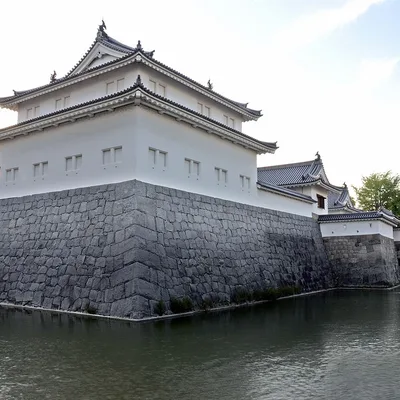
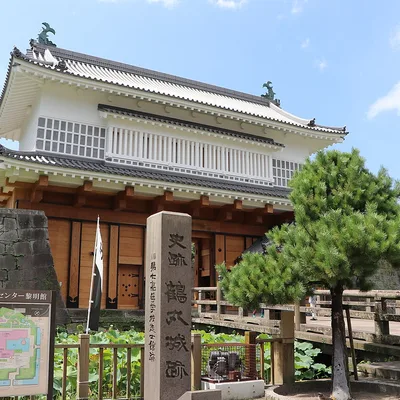
The Omote-mon gate and three turrets of the Ninomaru were rebuilt in 1994 using traditional pine-timber techniques — a landmark of postwar cultural-property restoration. Placed beside the 1958 concrete keep, they show how 'restoration' itself evolved over half a century.
Frame the keep vertically through the Omote-mon gateway for the iconic ensemble shot
Stories & Legends
Recommended For
Insider Tips
- 1.The free underground bunker at the south Honmaru — the Chugoku Military District Headquarters — preserves the telegraph room from which a young signal soldier first reported 'Hiroshima destroyed' on the morning of August 6, 1945.
- 2.Three atomic-bombed trees north of the keep (eucalyptus, willow, kurogane holly) survived the blast about 900 meters from ground zero — you can examine the scarred bark up close, rarely flagged in guidebooks.
- 3.Peace Memorial Park and the Atomic Bomb Dome are 20 minutes on foot or 5 minutes by tram; pair castle in the morning with peace sites in the afternoon, and the JPY 520 one-day tram pass cuts costs (2024 prices).
Visit Information
- Access
- About 10 minutes from JR Hiroshima Station by tram or bus, then a 15-minute walk from Kamiyacho-Higashi or Kamiyacho-Nishi tram stops. Hiroshima Station is a Nozomi shinkansen stop — roughly 4 hours from Tokyo and 1.5 hours from Shin-Osaka.
- Time Required
- About 2 hours for the grounds and keep museum; half a day with Shukkeien or Peace Park.
- Budget Guide
- Keep museum admission about JPY 370 for adults and JPY 180 for students. Honmaru and Ninomaru grounds are free. Check the official site for the latest prices (as of 2024).
Nearby Attractions
The Peace Memorial Park and Atomic Bomb Dome (1996 UNESCO Heritage) are 20 minutes on foot or 5 minutes by tram — the classic half-day pairing. Adjacent Shukkeien, the Asano family's pond-stroll garden and a National Scenic Beauty, sits beside the Prefectural Art Museum, and the Hiroshima Museum of Art holds a respected Impressionist collection.
Go Deeper
Deeper details for those with the time to read on.
Timeline
- 1589
Construction Begins
Mori Terumoto holds the ground-breaking ceremony on the Ota River delta at Gokamura, with Hoida Motokiyo and Ninomiya Naritada as commissioners.
- 1599
Construction Completed
Ten years on, the early modern castle with three concentric moats, Honmaru, Ninomaru, and Sannomaru is complete and the name 'Hiroshima' takes hold.
- 1600
Fukushima Masanori Takes the Castle
The Mori clan, on the losing side at Sekigahara, are stripped of land and leave; Fukushima Masanori takes over and develops the outer baileys and castle town.
- 1619
Asano Twelve Generations Begin
Fukushima is dispossessed for unauthorized flood repairs, and Asano Nagaakira enters — beginning 250 years of Asano rule for twelve generations until the Meiji era.
- 1864
First Choshu Expedition Headquarters
The shogunate's army under Tokugawa Yoshikatsu makes the castle its headquarters, and Yoshikatsu's photograph of the castle survives in the Tokugawa Forestry archives.
- 1894
Imperial General Headquarters
With the First Sino-Japanese War, the Imperial General Headquarters is established in the Honmaru and Emperor Meiji relocates here, making Hiroshima a de facto capital for seven months.
- 1928
Keep Opens to the Public
Long off-limits inside an army base, the keep is opened to visitors — leading to its National Treasure designation in January 1931.
- August 6, 1945
Destroyed by the Atomic Bomb
At 8:15 a.m., the atomic blast destroys the keep and all surviving original buildings; 2010 research shows the lower pillars were broken before collapse.
- 1958
Keep Rebuilt in Concrete
As a symbol of atomic recovery, the great keep is rebuilt as an exterior replica in reinforced concrete and opened as a history museum.
- 1994
Ninomaru Wooden Restoration
The Omote-mon gate, hira-yagura, taga-yagura, and taiko-yagura are restored in pine timber using traditional methods — a model for postwar wooden restoration.
- 2006
Listed Among 100 Famous Castles
Listed as number 73 in the Japan Castle Foundation's 100 Famous Castles, recognized as an exemplar of the early modern plains castle.
Detailed History
Hiroshima Castle begins in 1589 (Tensho 17), when Mori Terumoto — lord of 1.12 million koku across nine provinces — chose Gokamura ('Five Villages') on the Ota delta. The Mori had ruled from mountain Yoshida-Koriyama, but the early modern period demanded a lowland administrative center. Inspired by his 1588 visit to Osaka Castle and Jurakudai, Terumoto held the ground-breaking on April 15, 1589 with Hoida Motokiyo and Ninomiya Naritada as commissioners. He moved in by January 1591, and the complex was completed in 1599. The name 'Hiroshima' was coined here — tradition takes 'Hiro' from Oe no Hiromoto and 'Shima' from Fukushima Motonaga. After Sekigahara the Mori were stripped of territory, and Fukushima Masanori took the castle, laying three concentric moats and the castle town. In 1619 Masanori was charged with violating the Buke Shohatto by repairing flood damage without permission and was transferred to Kawanakajima. Asano Nagaakira entered, and the Asano ruled twelve generations for 250 years until the Meiji Restoration. During the First Choshu Expedition of 1864, the castle served as the shogunate's headquarters under Tokugawa Yoshikatsu, whose photograph survives at the Tokugawa Forestry archives. Because Hiroshima Domain joined the imperial side in the Boshin War, the castle escaped fighting. From founding to 1871 — nearly 280 years — it never saw combat. In the Meiji era, the Honmaru housed the prefectural office and then an army garrison, with the Fifth Division Headquarters established in 1888. When the First Sino-Japanese War broke out in 1894, the Imperial General Headquarters was set up in the Honmaru, Emperor Meiji moved here, and the Seventh Diet convened in Hiroshima — making it a de facto capital for seven months. The keep was opened to the public in 1928 and designated a National Treasure in 1931. In the final months of WWII, the Second General Army HQ (April 1945) and Chugoku Military District HQ (June 1945) were housed here. On August 6, 1945 at 8:15 a.m., the atomic blast destroyed the keep and all surviving buildings. Long thought blown away, 2010 evidence suggests the lower pillars failed first. In 1958 the keep was rebuilt as a concrete exterior replica. In 1994 the Omote-mon gate and three Ninomaru turrets were rebuilt in pine timber — a milestone in postwar cultural-property restoration.
Cultural Significance
Hiroshima Castle stands alongside Osaka and Okayama as a leading example of the early-modern plains castle, and together with Matsumoto and Nijo it is counted among Japan's Three Great Plains Castles. The original keep, designated a National Treasure in 1931, was prized for its black weatherboard cladding and top-floor balustrade — witnesses to Azuchi-Momoyama castle aesthetics. The nickname Rijo ('Carp Castle') has multiple origins: the older place name Koi-no-ura ('Carp Bay'), carp once thought to fill the moat, and the contrast with the keep's dark tone. The earliest surviving use of 'Rijo' is in a Chinese-style poem by the Edo Confucian scholar Rai Itsuan. The Hiroshima Toyo Carp baseball team takes its name from this castle nickname. The three-stage history of atomic destruction in 1945, exterior-replica concrete rebuilding in 1958, and traditional wooden restoration in 1994 makes Hiroshima Castle a unique laboratory for the evolution of postwar Japanese architectural restoration. The bombed trees and the underground bunker turn the castle into a memory device for atomic survival and the formation of Hiroshima's identity as a city of peace. The 120,000-square-meter Honmaru and Ninomaru area is designated a National Historic Site, and the castle is listed among Japan's 100 Famous Castles.
Architectural Details
Hiroshima Castle is a classic rinkaku-shiki (concentric-bailey) plains castle, with the Honmaru at center, Ninomaru and Sannomaru wrapping around it, and the outer enceinte beyond — protected by three rings of moats and the Ota River main channel (Hongawa) to the west. The middle and outer moats were filled in between late Meiji and Taisho, and only the inner moat remains. The original keep was an ensemble of a five-story great keep and two three-story smaller keeps connected by corridors, supported by 88 yagura turrets. The current 1958 keep is the great keep only, a five-story reinforced-concrete structure standing about 39 meters including the 12.4-meter stone base. Its exterior recreates the founding-era design with black weatherboard walls and a top-floor balustrade. The 1994 Ninomaru restoration produced four buildings — Omote-mon, hira-yagura, taga-yagura, and taiko-yagura — built mainly from pine based on photographs and excavation surveys. The stone walls show three masonry styles: rough nozura-zumi, Fukushima-era uchikomi-hagi, and Asano-era kirikomi-hagi. At the southern Honmaru stands the concrete shell of the Chugoku Military District Headquarters underground bunker, hardened in June 1945 — a rare wartime structure preserved as it was at the blast.