Hirosaki Castle
弘前城
下白銀町 · JP
Tohoku's only surviving castle keep, where 2,600 cherry trees frame white-plaster walls
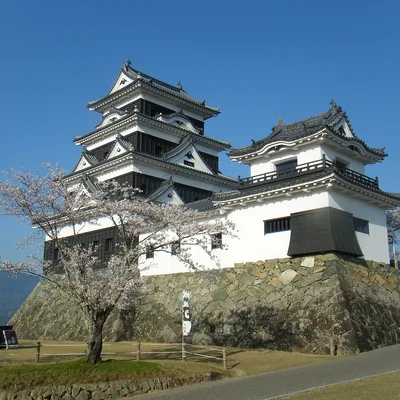
On the Tsugaru Plain in Hirosaki, Aomori, the seat of the 47,000-koku Tsugaru clan still holds its 1810 three-story tenshu — Japan's northernmost surviving castle keep, set in a park of roughly 2,600 cherry trees that crowns one of the country's three great sakura destinations.
Best Season & Time
Some 2,600 cherries pair with the white keep, and lantern-lit moats mark Tohoku's most celebrated bloom
★★★★★
Lotus ponds and fresh greenery frame the white tenshu in cool relief — a quiet window before autumn crowds
★★★☆☆
The Chrysanthemum and Maple Festival sets 1,000 maples and chrysanthemum dolls against the keep
★★★★☆
The Yuki-doro Matsuri lights 300 snow lanterns and 150 mini-kamakura around the keep
★★★★☆
Top 3 Highlights
1.Tohoku's Only Surviving Tenshu
Built in 1810 by ninth lord Tsugaru Yasuchika as a 'remodel' of the Tatsumi turret, this three-story keep is the shortest of Japan's twelve survivors at 14.4 meters. Copper roof tiles guard against Tohoku winters, and a 'two-sided' facade lavishes ornament on the outer walls.
From the south-east plaza, frame the eastern chidori-hafu gable in a vertical shot
2.Night Cherry Blossoms on the Moat
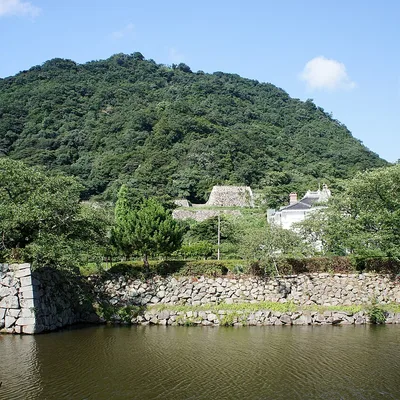
Cherry trees planted from 1903 now number some 2,600 and weep over the West and Outer Moats, placing Hirosaki Park among Japan's top three sakura destinations. Late-April brings 200 lanterns over the water and a 'hanaikada' raft of fallen petals.
From Shun'yo Bridge over the West Moat, mirror lanterns and weeping cherries on the night water
3.Three Surviving Corner Yagura and Five Gates
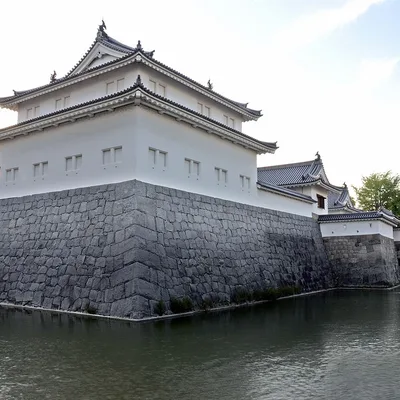
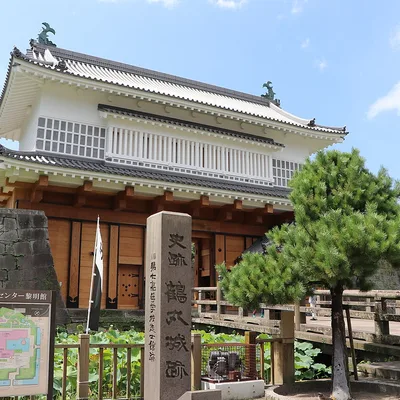
Beyond the keep, the second bailey still holds three Edo-period corner yagura — Ushitora, Tatsumi, Hitsujisaru — plus five surviving gates from the Sannomaru Otemon to the Kitanokuruwa North Gate. Nine structures together are designated Important Cultural Properties.
The Hitsujisaru Yagura has open sky around it, ideal for a low-angle full-frame shot
Stories & Legends
Recommended For
Insider Tips
- 1.Stone-wall repairs that began in 2015 mean the keep currently sits on a temporary base inside the inner bailey, lowered from its original stone platform — a rare chance to view a surviving tenshu at ground level before its planned return from 2025 onward.
- 2.The free Hirosaki Castle Information Hall near the Minami-Uchimon shows footage of the 'hikiya' relocation and scale models of all twelve surviving tenshu. Hours are short, so call in right after the 9:00 a.m. park opening.
- 3.The inner-bailey paid zone (320 yen) operates only April-November; from December through March entry is free, and dusk lighting during the February Yuki-doro Matsuri lets you photograph the snowy keep and moats at no cost — a quiet local favourite.
Visit Information
- Access
- From JR Hirosaki Station, take the Dotemachi-Junkan bus to 'Shiyakusho-mae Koen-iriguchi' (10 min) then walk 4 min, or walk 25 min. From Tokyo, the Hayabusa Shinkansen reaches Shin-Aomori in 3 hours, then a 30-min Limited Express to Hirosaki.
- Time Required
- Two hours for the inner and second baileys; half a day to include the park.
- Budget Guide
- Inner-bailey ticket: 320 yen for adults, 100 yen for students. Combined ticket with the botanical garden: 520 yen. As of 2024 — confirm current rates on the official site.
Nearby Attractions
Within the park sit a botanical garden and the Castle Information Hall, and a statue of Tsugaru Tamenobu stands near the East Gate. South-east, the Choshoji Compound — 33 Soto-Zen temples protected as a National Historic Site — lies within walking distance, with the Fujita Memorial Garden and the heritage buildings near Hirosaki Station.
Go Deeper
Deeper details for those with the time to read on.
Timeline
- 1590
Tsugaru Independence
After the Odawara campaign, Oura Tamenobu received a vermilion-seal letter from Toyotomi Hideyoshi for 45,000 koku, declared independence from the Nambu, and adopted the surname Tsugaru.
- 1600
Hirosaki Domain Established
Tamenobu sided with Tokugawa Ieyasu at the Battle of Sekigahara and received an additional 2,000 koku, formalising the 47,000-koku Hirosaki Domain.
- 1610-1611
Takaoka Castle Completed
Tsugaru Nobuhira resumed his father's plans and completed Takaoka Castle in just one year and one month, crowned by a five-story keep on the inner bailey's southwest corner.
- 1627
Original Keep Destroyed
Lightning struck the five-story keep and ignited stored gunpowder; the explosion consumed the keep, the main palace, and several yagura, and no keep would stand here for nearly two centuries.
- 1628
Renamed 'Hirosaki'
Takaoka was renamed Hirosaki on the suggestion of the priest Tenkai, spiritual mentor of lord Nobuhira, and the castle's name was changed accordingly.
- 1810-1811
Current Tenshu Built
Citing Russian ships in the Tsugaru Strait, ninth lord Yasuchika won shogunal permission to 'remodel' the Tatsumi corner turret into the current three-story keep, completed in 1811.
- 1873
Abolition Order Survived
Hirosaki came under army control with the Meiji abolition order but escaped wholesale demolition; the main palace and martial-arts hall were dismantled in 1884.
- 1895
Hirosaki Park Opens
Following a petition by the former Tsugaru lords, Hirosaki City took over the grounds, opened them as Hirosaki Park, and began planting cherry trees from 1903.
- 1937-1953
Cultural Property Designations
Eight structures were named 'old national treasures' in 1937, reclassified as Important Cultural Properties in 1950, and joined by the Third Bailey East Gate in 1953.
- 1952
National Historic Site
The castle grounds were designated a National Historic Site, later expanded in 1985 and 2002 to form 'Tsugaru Clan Castle Sites' covering three related castles.
- 2006
Top 100 Castles of Japan
The Japan Castle Foundation chose Hirosaki as the fourth of Japan's 100 Fine Castles, and the city celebrated the castle's 400th anniversary throughout 2011.
- 2015-
Hikiya Relocation
To rebuild the swelling inner-bailey stone foundation, the tenshu was relocated by 'hikiya' onto a temporary base, with a return scheduled for 2025 or later.
Detailed History
Hirosaki Castle traces its origins to 1590, when Oura Tamenobu — a former Nambu retainer — received a vermilion-seal letter from Toyotomi Hideyoshi confirming him as lord of 45,000 koku for his role at Odawara, at which point he adopted the surname Tsugaru. In 1594 he moved his seat to Horikoshi Castle, but the cramped site offered poor defenses. After siding with Tokugawa Ieyasu at Sekigahara in 1600, he received an additional 2,000 koku and Hirosaki Domain was formalised at 47,000 koku. In 1603 he began work on a castle at Takaoka, the present site, but died in Kyoto in 1604 before the project could advance. His successor Tsugaru Nobuhira resumed in 1609, stripping materials from Horikoshi and Oura Castles, and completed Takaoka Castle in 1611 — a feat finished in roughly one year, crowned by a five-story keep on the inner bailey's southwest corner. Disaster struck in 1627 when lightning ignited gunpowder inside the keep, triggering an explosion that destroyed the keep, the main palace, and several yagura; local lore blamed the curse of Tamenobu's aunt. For nearly two centuries no keep stood here. In 1810, ninth lord Yasuchika, citing Russian ships in the Tsugaru Strait, won shogunal permission to 'rebuild' the Tatsumi corner turret as a three-story tenshu, finished in 1811. After the Meiji Restoration the castle came under the Ministry of War in 1872, was spared by the 1873 abolition order despite the 1884 demolition of the main palace, and in 1894 was leased to Hirosaki City, which opened it as Hirosaki Park the next year. Cherry-tree plantings began in 1903. Eight structures were named 'old national treasures' in 1937; the 1950 Cultural Properties Protection Law reclassified them as Important Cultural Properties, with the Third Bailey East Gate added in 1953. The grounds were inscribed as a National Historic Site in 1952, expanded in 1985 and 2002 under 'Tsugaru Clan Castle Sites' covering Hirosaki, Horikoshi, and Tanesato Castles. In 2006 Hirosaki was chosen as one of Japan's 100 Fine Castles. From 2015 the keep has been relocated by 'hikiya' so its swelling foundation can be rebuilt, with a return scheduled for 2025 or later.
Cultural Significance
Hirosaki Castle holds a singular place as the northernmost — and only east-of-Kanto — surviving tenshu among Japan's twelve original keeps. Together with the keep, the three corner yagura of the second bailey and five gates form a nine-structure ensemble all designated National Important Cultural Properties, an unusually intact Edo-period inventory. The grounds are protected as the National Historic Site 'Tsugaru Clan Castle Sites,' a combined inscription covering Hirosaki, Horikoshi, and Tanesato Castles totaling roughly 1,054,000 square meters. The park is listed among Japan's 100 Famous Cherry-Blossom Spots, the 100 Fine Castles, and the three great sakura destinations of Japan. The novelist Shiba Ryotaro, in 'Kaido wo Yuku: Kita no Mahoroba,' called Hirosaki one of the Seven Famous Castles of Japan. Older names linger — 'Takaoka-jo' from the pre-1628 place name, and 'Yoyo-en' from the 1908 imperial naming by Crown Prince Yoshihito. The annual Sakura Matsuri in late April, the Chrysanthemum and Maple Festival in late October, and the Yuki-doro Matsuri in early February together make three of Hirosaki's Four Great Festivals, anchoring the cultural calendar of the Tsugaru region.
Architectural Details
The plan of Hirosaki Castle is a 'teikaku-shiki' hill-flat castle on the Tsugaru Plain, composed of six concentric baileys and originally measuring 612 meters east-west by 947 meters north-south, totaling roughly 385,200 square meters. The surviving tenshu is a three-story layered keep of 14.4 meters — the shortest of Japan's twelve survivors. It was once paired on its northern side with an attached multi-roomed yagura, but that was demolished around 1896, leaving the present free-standing form. The walls are finished in white shikkui plaster with nageshi mouldings above and below the windows, and the roofs are clad in copper tiles for the snowy climate. The east and south facades are richly modeled with chidori-hafu gables and large kirizuma bay windows on the lower stories, while the inward-facing west and north walls have no gables and only plain renji-mado lattice windows — the famous 'two-sided' composition. Even the interior was built with ordinary yagura-grade timber, suggesting the building was conceived from the outset as a storehouse. The stone walls are largely 'nozura-zumi' rough-laid; the inner-bailey stone beneath the keep is 'uchikomi-hagi' cut-and-fitted Edo work, and the 2015 hikiya was undertaken to rebuild that swelling foundation before the keep returns to its perch.