Matsue Castle
松江城
松江市 · JP
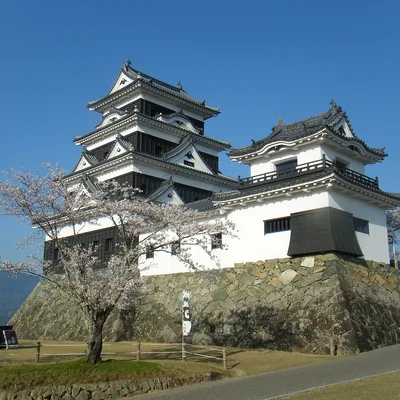
Black-lacquered chidori soaring above Kameda Hill — the San'in region's only National Treasure keep
Standing atop Kameda Hill in Matsue City, Shimane Prefecture, this watchtower-style tenshu was built by Horio Yoshiharu in the early Edo period. Its black weatherboarding and through-pillar framework survive as the San'in region's only original main keep, re-designated a National Treasure in 2015.
Best Season & Time
Around 200 Somei-yoshino cherry trees bloom along Chidori Bridge, framing the black keep in pink
★★★★★
Maples around the Honmaru overlap with the Lake Shinji sunset, joined by an evening light-up event
★★★★☆
The black-lacquered keep dressed in snow offers a rare scene, with quiet grounds for a contemplative visit
★★★☆☆
The Horikawa pleasure boat glides over new green water, with breezes and Lake Shinji's celebrated sunset
★★★☆☆
Top 3 Highlights
1.Black-Lacquered Watchtower Keep — National Treasure
A watchtower keep with four exterior tiers, five interior floors and a basement. The black-lacquered weatherboarding on the lower tiers exudes martial dignity, while storm shutters around the top-floor balcony reveal the practical battlefield design of the early Edo period.
Look up from the tenshu base on the southwest side of the Honmaru to frame the gables and turret
2.Cherry Blossoms over Chidori Bridge in Spring
The Chidori Bridge corridor gate is one of Japan's Top 100 Cherry Blossom Spots. Around 200 Somei-yoshino trees bloom along the moat each spring, and the contrast between the dark tenshu and pale pink petals composes Matsue's most iconic seasonal scene.
In early April, frame the keep south from the north end of Chidori Bridge with blossoms in front
3.Gobō-zumi Stonework — Wisdom That Refuses to Crumble
The walls supporting the Ninomaru and Honmaru use a local Izumo method called gobō-zumi, in which long stones are driven deep into the back fill rather than dressed neatly at the face. The interlocking grip has resisted centuries of earthquakes intact.
Shoot from the lower bailey of the Ninomaru, emphasising the joint lines and the depth of the stones
Stories & Legends
Recommended For
Insider Tips
- 1.From the top-floor balcony of the keep, the view south sweeps across Lake Shinji; just before the 16:30 last-entry, the setting sun turns the lake gold and the crowds have already thinned — a hidden golden hour for serious photographers.
- 2.The Horikawa moat-canal cruise uses a flexible day-pass ticket; alight near Shiomi Nawate or the Lafcadio Hearn Memorial Museum to walk the samurai quarter, then re-board to cover keep and town efficiently within half a day.
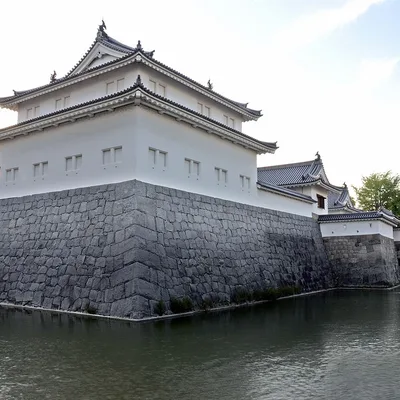
- 3.The reconstructed Taiko, Naka and Minami turrets in the lower Ninomaru are open free of charge; stopping by before paying the keep's admission lets you preview Matsue Domain turret design, an easy-stair detour suited to families.
Visit Information
- Access
- From JR Matsue Station, the Gurutto Matsue Lake Line bus takes about 10 minutes to the Otemae stop (Matsue Castle / Prefectural Office), then 5 minutes on foot. From Yonago Airport, the limousine bus is about 45 minutes; by car, about 15 minutes from Matsue-Nishi IC.
- Time Required
- About 90 minutes for the keep; a half day (4 hours) including the cruise
- Budget Guide
- Keep admission 1,000 yen (adults), 500 yen (students); Horikawa cruise 1,600 yen (2024 figures; confirm officially). Budget roughly 3,000-5,000 yen per person with a meal.
Nearby Attractions
Within walking distance lie the Shiomi Nawate samurai quarter, the former residence and museum of Lafcadio Hearn (Koizumi Yakumo), the Tanabe Art Museum, Meimei-an tea house and the Horikawa cruise terminal. A 30-60 minute ride opens up Lake Shinji sunset viewpoints, the Adachi Museum of Art, Izumo Taisha and Tamatsukuri Onsen.
Go Deeper
Deeper details for those with the time to read on.
Timeline
- 1600
Matsue Domain Founded
Horio Tadauji, rewarded for service at the Battle of Sekigahara, received Izumo and Oki at 240,000 koku and entered Gassantoda Castle, founding the Matsue Domain.
- 1607
Castle Construction Begins
Construction of the new castle began on Kameda Hill at the site of the former Suetsugu Castle, under the layout of strategist Oze Hōan and the engineering of Inaba Kakunojō.
- 1611
Castle Completed
Matsue Castle was completed in the first month. Horio Yoshiharu, who had driven the construction, died that June; recent research has rejected the long-held theory that he died on the eve of completion.
- 1634
Kyōgoku Tadataka Arrives
After the Horio line ended, Kyōgoku Tadataka was transferred from the Obama Domain in Wakasa at 260,000 koku, and his construction of the Sannomaru completed the full castle layout.
- 1638
Matsudaira Naomasa Installed
Matsudaira Naomasa, a grandson of Tokugawa Ieyasu, transferred in from the Matsumoto Domain of Shinano at 186,000 koku; his line went on to rule Matsue for ten generations across 234 years.
- 1873
Abolition Edict and Buy-back
Under the Castle Abolition Edict every structure except the keep was sold off; the keep, priced at 180 yen, was rescued by farmer Katsube Honuemon and retainer Takagi Gonpachi from their private funds.
- 1927
Donated to Matsue City
The Matsudaira family donated the keep and castle grounds to Matsue City, which opened them as a public park — a turning point in making the castle a civic asset.
- 1935
Old National Treasure Designation
The tenshu was designated a National Treasure under the prewar National Treasure Preservation Act, corresponding to today's Important Cultural Property classification.
- 1950-1955
Shōwa Restoration
Following the keep's reclassification as an Important Cultural Property under the new Law for the Protection of Cultural Properties, a full dismantling restoration was carried out at about 53 million yen.
- 2001
Ninomaru Turrets Reconstructed
The Minami, Naka and Taiko turrets and 87 metres of wall in the Ninomaru were faithfully reconstructed based on master carpenter Takeuchi Yūhei's wood-marking diagrams and old photographs.
- 2006
Selected as a Top 100 Castle
Matsue Castle was selected as one of Japan's 100 Famous Castles (No. 64), reinforcing its status as a pilgrimage site for castle enthusiasts nationwide.
- July 2015
Tenshu Becomes National Treasure
On 8 July the keep was elevated to National Treasure status, with the discovery of original construction-era prayer tablets serving as decisive evidence. It was the fifth keep so designated and the first in 63 years.
- 2027-
Reiwa Restoration Planned
A major renovation focused on re-roofing and exterior repairs rather than full dismantling is scheduled, projected at about three years and seven months at roughly 2.9 billion yen.
Detailed History
In 1600 (Keichō 5), Horio Tadauji — son of Horio Yoshiharu — was granted Izumo and Oki at 240,000 koku for his service at Sekigahara, and initially entered the mountain fortress of Gassantoda Castle, founding the Matsue Domain. Because Gassantoda was a medieval stronghold ill-suited to an early-modern castle town, the Horio chose a new site on Kameda Hill near the river linking Lake Shinji and Lake Nakaumi, where the ruins of Suetsugu Castle stood. Construction began in 1607 (Keichō 12) under the layout of the strategist Oze Hōan and the engineering of Inaba Kakunojō, and the castle was completed in the first month of 1611 (Keichō 16). Yoshiharu, who had driven the project, died that June; recent research has overturned the long-held belief that he died on the very eve of completion. In 1633 (Kan'ei 10) Horio Tadaharu died heirless, ending the Horio line after three generations. In 1634 Kyōgoku Tadataka was transferred from the Obama Domain in Wakasa at 260,000 koku, and his construction of the Sannomaru completed the full layout. After Tadataka died heirless in 1637, in 1638 Matsudaira Naomasa — grandson of Tokugawa Ieyasu — transferred in from Matsumoto Domain in Shinano at 186,000 koku, and the Matsudaira clan ruled the domain for ten generations across 234 years. With the 1871 abolition of feudal domains the castle was decommissioned, and the 1873 Castle Abolition Edict saw every structure except the keep auctioned for 4 to 5 yen and demolished. Even the keep was to be sold for 180 yen, but the Izumo farmer Katsube Honuemon and former retainer Takagi Gonpachi paid the same sum into the treasury and bought it back. In 1927 the Matsudaira family donated the keep and grounds to Matsue City, which opened them as a public park. The keep was designated an Old National Treasure in 1935, and reclassified as an Important Cultural Property in 1950. From 1950 to 1955 the Shōwa Restoration — a full dismantling rebuild costing about 53 million yen — secured its survival. On 8 July 2015, original construction-era prayer tablets clinched its elevation to National Treasure status, the first keep so designated in 63 years and only the fifth nationwide. From fiscal 2027 the Reiwa Restoration is scheduled, focused on re-roofing and exterior repairs over about three years and seven months at a projected 2.9 billion yen.
Cultural Significance
Matsue Castle stands alongside Inuyama, Matsumoto, Hikone and Himeji as one of Japan's five National Treasure castles, and is the only surviving original tenshu in the entire San'in region — a distinction that makes it among the rarest cultural assets in western Japan. The popular nickname Chidori-jō (Plover Castle) is said to derive from the way the tenshu's chidori gables and attached turret evoke the silhouette of plovers in flight, and its lakeside setting earns it a place among Japan's Three Great Lake Castles alongside Zeze Castle and Takashima Castle. Its modern preservation arc — designated a National Historic Site in 1934, selected among Japan's 100 Outstanding Urban Landscapes in 1992, chosen as one of the 100 Famous Castles of Japan (No. 64) in 2006, and finally re-elevated to National Treasure status in 2015 — mirrors the trajectory of Japan's cultural property protection system itself. The surrounding castle town preserves the Shiomi Nawate samurai quarter, the former residence and memorial museum of Lafcadio Hearn (Koizumi Yakumo), and the Tanabe Art Museum, sustaining the atmosphere Hearn famously cherished. The Horikawa moat-canal cruise traces waterways largely unchanged since the Edo period, and combined with spring blossoms recognised among Japan's Top 100 Cherry Blossom Spots, the castle, water and sakura form a uniquely integrated urban culture.
Architectural Details
Matsue Castle is a hilltop fortress on 29-metre Kameda Hill, with a Honmaru core flanked by the Kita-no-maru, upper and lower Ninomaru, and the detached Sannomaru. The tenshu is a watchtower-type keep with four exterior tiers, five interior floors and a basement, stacking a two-tier watchtower on a two-tier hip-and-gable base. The second and fourth tiers carry east-west irimoya roofs, with irimoya-gabled projecting windows on the second tier. The first and second tiers wear black-lacquered weatherboarding; the third and fourth tiers and the attached turret combine plaster above black boarding, with a hongawara-tile roof. The footprint measures 12 by 10 ken (about 22 by 18 metres), and the keep rises roughly 30 metres above the Honmaru — third in scale among surviving keeps after Himeji and Matsumoto. Its hallmark is the aggressive use of through-pillars binding non-adjacent levels for exceptional vertical rigidity. The second floor has eight ishi-otoshi stone-drop chutes, and the top floor encloses a sheltered balcony with storm shutters. The basement contains the only surviving well inside a Japanese keep. The shachi finials, copper plate over wood, are the tallest surviving examples at about two metres. The stone walls use the local gobō-zumi method — long stones driven deep into the back fill, prioritising interlocking grip over a tidy face, an Izumo tradition.