Gifu Castle
岐阜城
岐阜市 · JP
Where Oda Nobunaga raised his banner of unification — a Sengoku mountain castle on Mount Kinka
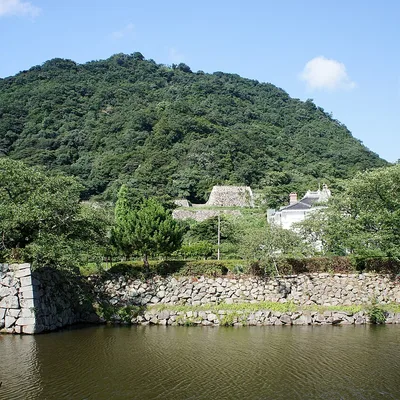
Crowning Mount Kinka (329 m), the former Inabayama, above Gifu City in Gifu Prefecture, Gifu Castle is the mountain fortress that Oda Nobunaga seized from Saito Tatsuoki in 1567. From this summit he first stamped the seal 'Tenka Fubu' and launched his unification of Japan.
Best Season & Time
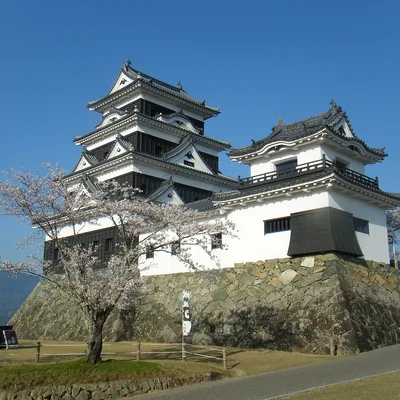
Cherry blossoms in Gifu Park against the green of Mount Kinka — ropeway riders see both at once
★★★★★
Pair with Nagara River cormorant fishing (May-October); the summit stays cooler than the city below
★★★★☆
Autumn foliage on Mount Kinka frames the reconstructed keep — quieter than spring, a hidden best season
★★★★★
Clearest air of the year for Nobi Plain views; bright days reach Mount Ibuki and Nagoya Station
★★★☆☆
Top 3 Highlights
1.The Mountaintop Keep and Sweeping Nobi Plain Panorama
The reinforced-concrete keep stands three stories tall on the 329 m summit, commanding a near-360-degree view of the Nagara River and Nobi Plain. On clear days the eye reaches Mount Ibuki and the Nagoya skyline — the horizon Nobunaga gazed across to plot national unification.
Frame the keep from the western observation deck in afternoon light, the Nagara River behind
2.Nobunaga's Residence: Unearthed Golden Castle Town
Within Gifu Park's Tsukidani valley, excavations since 2007 have unearthed massive stone terraces and fragments of gold-leafed roof tiles from Nobunaga's residence. The Jesuit Luis Frois called the compound 'an earthly paradise', and the dig is still active today.
Capture interpretive panels and stone walls together in soft morning light from the south
3.The Mount Kinka Ropeway: Sengoku Aerial View
The three-minute ropeway from Gifu Park to the summit lets visitors approach the castle from the air as the Nagara River and Gifu's grid unfurl below. The steepness of the climb makes plain why this mountain was an impregnable natural fortress in the warring-states era.
Shoot through the gondola window for an aerial composition with the river as backdrop
Stories & Legends
Recommended For
Insider Tips
- 1.Skip the ropeway and take the Nanamagari trail (about 60 minutes one way) — this is the medieval approach Nobunaga's troops used. Parallel routes (Umanose, Hyakumagari) reveal how the slope itself served as the castle's first defensive wall.
- 2.The Nobunaga residence excavation in Gifu Park at the foot of the mountain is free to walk. Stand above the gold-leafed tiles and mega-boulder stone walls Luis Frois praised; the small free castle museum displays excavated artefacts up close.
- 3.On select summer and autumn weekends the ropeway and keep stay open after dark, illuminating Gifu's nightscape and the Nagara River cormorant-fishing bonfires from above. Check the Gifu City official site for the current night-opening calendar.
Visit Information
- Access
- From JR Gifu Station or Meitetsu Gifu Station, take a Gifu Bus for about 15 minutes to the Gifu-koen Rekishi-hakubutsukan-mae stop, then ride the Mount Kinka ropeway for 3 minutes and walk roughly 8 minutes to the keep. Roughly 30 minutes by train from Nagoya Station.
- Time Required
- About 1.5 hours for summit and keep; half a day with the Nobunaga residence dig.
- Budget Guide
- Keep admission JPY 200 for adults and JPY 100 for children. Mount Kinka ropeway round trip JPY 1,300. (Prices as of 2024; confirm latest fees on the official site.)
Nearby Attractions
Inside Gifu Park at the foot of the mountain are the free Nobunaga residence excavation and the Gifu City Museum of History. A 15-minute walk reaches the Nagara River, where cormorant fishing has been practiced every May to October since the Sengoku era. A 30-minute drive away is Sunomata Castle (linked to Hideyoshi's overnight-castle legend).
Go Deeper
Deeper details for those with the time to read on.
Timeline
- 1201
Foundation
Nikaido Yukimasa, a senior official of the new Kamakura shogunate, builds a fortress on Inoguchi hill (Mount Kinka) to control the route to Kyoto.
- 1539
Saito Dosan's Reconstruction
Saito Dosan, the deputy military governor of Mino, begins the first true fortification of the summit and makes Inabayama Castle his seat — the rise of the 'Viper of Mino'.
- 1564
Takenaka Hanbei's Coup
Saito retainer Takenaka Hanbei reportedly seizes Inabayama Castle with only 13 retainers and holds it briefly — a humiliation for Saito Tatsuoki.
- 1567
Nobunaga Enters Gifu
Aided by the defection of the Western Mino Triumvirate, Oda Nobunaga captures Inabayama from Saito Tatsuoki, renames the town 'Gifu' and moves his headquarters here.
- 1567
Tenka Fubu Begins
Nobunaga starts using the seal 'Tenka Fubu' (rule the realm by force) at roughly the same moment as the renaming, formally declaring his unification campaign.
- 1582
Aftermath of Honno-ji
After Nobunaga and his heir Nobutada are killed at the Honno-ji Incident, the Kiyosu Conference grants Gifu Castle to Nobunaga's third son Oda Nobutaka.
- 1600
Battle of Gifu Castle
In the prelude to Sekigahara, Oda Hidenobu, siding with the western army, falls to a one-day siege by Fukushima Masanori and Ikeda Terumasa — the symbolic end of the Sengoku era.
- 1601
Abolition and Kano Castle
Tokugawa Ieyasu orders Gifu Castle dismantled and grants 100,000 koku to Okudaira Nobumasa to build the new flatland Kano Castle in its place.
- 1910
First Replica Keep
A wooden three-story replica keep is rebuilt by Gifu citizens using salvaged timbers from the first Nagara Bridge, in a voluntary labor campaign.
- 1943
Replica Keep Destroyed
On the early morning of February 17 the first replica keep burns in an accidental fire, taking with it relics including a lock of Nobunaga's hair.
- 1956
Current Keep Rebuilt
The present steel-reinforced concrete keep, three stories and four floors, is completed on July 25, funded by an 18-million-yen public subscription.
- 2006
Top 100 Castles Selection
On April 6, Gifu Castle is selected as number 39 of the Top 100 Castles of Japan by the Japan Castle Foundation.
- 2011
National Historic Site
On February 7, roughly 209 hectares of Mount Kinka are designated a National Historic Site as 'the Gifu Castle Ruins'.
- 2015
Japan Heritage Designation
Gifu Castle is incorporated into the Japan Heritage 'Sengoku castle town of Gifu where Nobunaga's hospitality lives on'.
Detailed History
Gifu Castle's history begins in 1201, when Nikaido Yukimasa, a senior Kamakura shogunate official, built a fortress on the Inoguchi hill (Mount Kinka, also Inabayama). After the Nikaido house collapsed, the site lay abandoned for about 153 years until Saito Toshinaga, the shugo-dai of Mino Province, repaired it in the mid-15th century. In 1525 the Saito retainers Nagai Nagahiro and Nagai Shinzaemon-no-jo revolted, taking control of the castle. In 1533 the latter's son — later Saito Dosan — inherited it. From 1539 Dosan fortified the summit in earnest; in 1541 he expelled the protector Toki Yorinori, embodying gekokujo and earning the nickname 'Viper of Mino'. He was killed by his son Saito Yoshitatsu at the Battle of the Nagara River in 1556. When Yoshitatsu died suddenly in 1561 the castle passed to the 13-year-old Saito Tatsuoki, who in 1564 lost it briefly to his retainers Takenaka Hanbei and Ando Morinari, who reportedly took Inabayama Castle with just 13 retainers. In 1567 Oda Nobunaga, aided by the defection of the Western Mino Triumvirate (Inaba Ittetsu, Ujiie Bokuzen, Ando Morinari), captured Inabayama at last; Tatsuoki fled to Ise Nagashima. Nobunaga moved his base from Komakiyama, and citing the Zhou precedent of King Wen pacifying the realm from Mount Qi, renamed castle and town 'Gifu' while adopting the seal 'Tenka Fubu' — formally launching his unification campaign. In 1576 he handed Gifu Castle and the provinces of Mino and Owari to his eldest son Oda Nobutada. After Nobutada was killed at Honno-ji in 1582, the Kiyosu Conference granted the castle to Nobunaga's third son Oda Nobutaka, who in 1583 was besieged here by his brother Nobukatsu after Shizugatake and forced to commit seppuku. Ikeda Motosuke, Ikeda Terumasa, Toyotomi Hidekatsu and Oda Hidenobu then held the castle in turn. When Hidenobu sided with the western army in 1600, Fukushima Masanori and Ikeda Terumasa took the castle in a one-day siege at the Battle of Gifu Castle — the prelude to Sekigahara. In 1601 Tokugawa Ieyasu ordered the castle abolished, granting 100,000 koku to Okudaira Nobumasa to build the new flatland Kano Castle. A wooden replica was raised in 1910 but burned in 1943; the present steel-reinforced concrete keep dates from 1956. In 2011, roughly 209 hectares of Mount Kinka were designated a National Historic Site as 'the Gifu Castle Ruins'.
Cultural Significance
Gifu Castle holds a singular place in Sengoku and early-modern Japanese history as the site where Oda Nobunaga first adopted the seal 'Tenka Fubu' and openly declared his campaign to unify the realm. The renaming of the town from Inoguchi to Gifu — drawn from the Chinese precedent of King Wen of the Zhou dynasty pacifying the realm from Mount Qi — testifies to Nobunaga's classical learning and the scope of his ambition, making the site exceptional in the documentary record of his rule. Excavations at the foot of the mountain since the 1980s have produced gold-leafed roof-tile fragments and massive worked-stone retaining walls, giving physical reality to the 'earthly paradise' that the Jesuit Luis Frois described in his 'History of Japan'. In 2011 the roughly 209-hectare Mount Kinka complex was designated a National Historic Site as 'important to understanding the formation of early modern Japanese castles'. In 2006 the castle was selected as number 39 of the Top 100 Castles of Japan, and in 2015 it was incorporated into the Japan Heritage 'Sengoku castle town of Gifu where Nobunaga's hospitality lives on'. NHK's flagship taiga dramas — Kunitori Monogatari (1973) and Kirin ga Kuru (2020) — have repeatedly used the castle as the setting for Dosan and Nobunaga, cementing its place in the popular imagination.
Architectural Details
Gifu Castle is a classic mountain castle (yamashiro) built on the 329 m summit of Mount Kinka, with the mountain itself as its primary defensive feature. The plan splits into two zones — the summit fortress (honmaru, ninomaru, sannomaru) and the lord's residence at the foot in Tsukidani valley — connected by precipitous approach trails (Nanamagari, Umanose, Hyakumagari) and reinforced by smaller forts along the slope. The current keep was rebuilt in 1956 in steel-reinforced concrete to a three-story, four-floor design by Kido Hisashi (professor emeritus at Nagoya Institute of Technology), modeled on drawings of the three-story turret at Kano Castle; Dai Nippon Doboku was the contractor. Including stonework the structure rises about 17 meters. The reconstruction was funded by a public campaign that gathered roughly 18 million yen in four months from August 1955. In 1975 the adjacent sumiyagura (now the Gifu Castle Museum) was built using Hikone Castle as a reference. The residence excavation has continued since 1984, revealing terraced gardens on both sides of the Tsukidani stream, large boulder-block stone walls, garden ponds, and buildings roofed in gold-leafed tiles. Stone came chiefly from local granite outcrops; Nobunaga-era walls are notable for boulders exceeding one meter — an early example of the Shokuho-period technique.