Aizuwakamatsu Castle
若松城
会津若松市 · JP
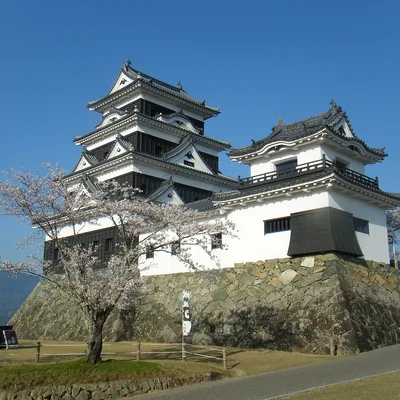
The red-tiled keep of Aizu — Japan's only crimson-roofed castle reborn from siege
Rising at the heart of Aizuwakamatsu in Fukushima, Tsuruga Castle was the seat of the Aizu Domain. Gamo Ujisato raised a seven-story keep here in 1593, the fortress endured a month-long siege in the 1868 Boshin War, and in 2011 it was reborn with the only red-tiled keep in Japan.
Best Season & Time
About 1,000 cherry trees against the red-tiled keep — peak of the year, one of Japan's Top 100 cherry sites
★★★★★
Fresh green and the popular projection-mapping shows that bathe the keep in light on summer nights
★★★☆☆
Maple foliage and red roof tiles in harmony; the gardens around Rinkaku teahouse are a quieter photo spot
★★★★☆
A snow-dusted red-tiled keep is a uniquely Aizu vista — challenging weather but a dream shot for photographers
★★★★☆
Top 3 Highlights
1.The Layered Red-Tiled Keep (Restored 2011)
In the 2010-2011 renovation the keep was re-roofed from black tile to the crimson akagawara of the late Edo period, making it the only red-tiled tenshu in Japan. The five-story silhouette and silver-and-gold shachi with diamond-set eyes capture the proud spirit of Aizu.
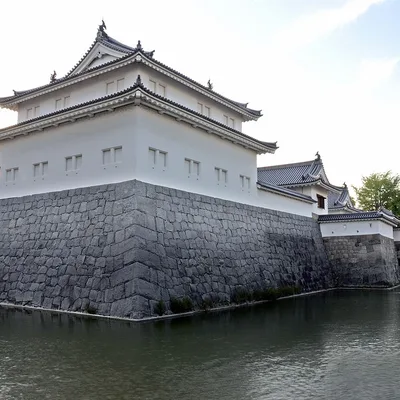
Shoot the keep head-on from the Hoshii-yagura turret side in morning light
2.One Thousand Cherry Trees Against White Walls
Tsurugajo Park is among Japan's Top 100 Cherry Blossom Sites: 1,000 Somei-Yoshino and Yae-zakura encircle the inner bailey and bloom in mid-April. The contrast of red-tiled keep and pink blossoms is unique to Aizu, and the evening light-ups make the tenshu glow above the petals.
From the Rokabashi covered bridge, frame the keep with cherry branches in front across the moat
3.Rinkaku Teahouse and the Shoan Legacy
Within the inner bailey, the Rinkaku teahouse was built by Sen no Shoan — son of Sen no Rikyu — when he fled to Aizu under Gamo Ujisato's protection. Relocated and rebuilt within the castle in 1990 and now a Fukushima ICP, it offers a rare encounter with Sengoku-era tea culture.
From the engawa veranda in late autumn, frame the teahouse and garden vertically with maples above
Stories & Legends
Recommended For
Insider Tips
- 1.Approach the keep via the Rokabashi covered bridge for a dramatic first view: the towering stone walls jutting outward let you feel what the artillery duels of 1868 around the Higashi-deguruwa bailey would have been like.
- 2.The Rinkaku teahouse inside the inner bailey takes a separate 200-yen ticket and rarely has a queue — a quiet thatched Sengoku-era tea space and a waiting bench let you reset between the bustle of keep viewing and the rest of the park.
- 3.Pair the castle with Iimoriyama (where the Byakkotai boy soldiers took their lives) and use the loop sightseeing buses 'Haikara-san' and 'Akabee' (600 yen day pass) — they connect the castle's North Gate, Iimoriyama, and Nanokamachi at 30-minute intervals.
Visit Information
- Access
- From JR Aizu-Wakamatsu Station, about 15 minutes on the 'Haikara-san' loop bus to Tsurugajo North Gate. From Tokyo, take the Tohoku Shinkansen to Koriyama then the Banetsu West Line (about 3.5 hours total). By car, 10 minutes from Aizu-Wakamatsu IC.
- Time Required
- 1.5 hours for the keep; 2-3 hours including the Rinkaku teahouse and park walk.
- Budget Guide
- Keep admission JPY 520 for adults and JPY 150 for children; combined Rinkaku teahouse ticket JPY 620 for adults. (Prices as of 2024.)
Nearby Attractions
Iimoriyama (30 min on foot, 10 by loop bus) is where the Byakkotai boy soldiers committed seppuku, with the Sazaedo (ICP) nearby. Higashiyama Onsen (15 min by car) is a historic hot spring once used by the Aizu lords. Ouchijuku, a preserved Edo-period post town, is a 30-minute drive. Nanokamachi-dori (5 min by car) is a retro Taisho-era shopping street.
Go Deeper
Deeper details for those with the time to read on.
Timeline
- 1384
Founding of Kurokawa Castle
During the Nanboku-cho era, Ashina Naomori builds the Odagaki estate (Higashi-Kurokawa-yakata) — considered the origin of Tsuruga Castle.
- 1589
Battle of Suriagehara
Date Masamune defeats Ashina Yoshihiro and seizes Kurokawa Castle, ending the Ashina line; Hideyoshi reclaims Aizu the next year.
- 1592
Gamo Ujisato's Renovation
Transferred from Omi Hino, Gamo Ujisato renames Kurokawa to Wakamatsu and launches a sweeping rebuild into an early modern castle.
- 1593
Renamed Tsurugajo
A seven-story watchtower keep is completed and the castle is renamed Tsurugajo after the crane crest of the Gamo house.
- 1611
Aizu Earthquake and Rebuild
The great Aizu Earthquake topples the keep; Kato Akinari rebuilds it as a five-story layered tenshu and adds the Nishi and Kita baileys.
- 1643
Hoshina Masayuki Arrives
Hoshina Masayuki, half-brother of shogun Tokugawa Iemitsu, enters with 230,000 koku; Aizu becomes the Matsudaira seat for two centuries.
- 1868
Battle of Aizu and Siege
Boshin War: Aizu holds out for one month against 2,500 shells before surrendering to Itagaki Taisuke on 22 September.
- 1874
Demolition of the Keep
Under War Ministry orders, the keep, turrets, and gates are dismantled and the castle grounds are converted into an army parade field.
- 1890
Ruins Bought Back
Former Aizu retainer Endo Keishi buys the grounds back with 2,500 yen of his own funds and donates them to the former lord's house.
- 1934
National Historic Site Designation
The castle ruins are designated a National Historic Site, protecting around 23 hectares of the inner bailey and outworks.
- 1965
Concrete Keep Reconstruction
The keep's Edo-era exterior is reconstructed in reinforced concrete; the interior opens as the Tsuruga Castle Local History Museum.
- 1990
Rinkaku Teahouse Restored
Rinkaku, the Shoan-built teahouse and a Fukushima ICP, is rebuilt on its original site within the inner bailey.
- March 2011
Red Tiles Return
Re-roofing in late-Edo red akagawara is completed just 16 days after the Great East Japan Earthquake — the only red-tiled keep in Japan.
Detailed History
Tsuruga Castle's history reaches back to 1384, when Ashina Naomori, seventh head of the Ashina clan, built a fortified residence on the Odagaki estate during the Nanboku-cho era. By the mid 15th century the site was known as Kurokawa Castle, and under Ashina Moriuji it became the seat of an extensive Sengoku dominion. In 1589 Date Masamune defied Toyotomi Hideyoshi's prohibition to crush Ashina Yoshihiro at the Battle of Suriagehara and seized Kurokawa — but the next year, after the Odawara campaign, he pledged fealty to Hideyoshi, lost Aizu, and was relocated to Yonezawa. Gamo Ujisato, transferred from Omi Hino, began a vast reconstruction in 1592, renaming the town 'Wakamatsu' after the pine grove near his birthplace; in 1593 he raised an unprecedented seven-story watchtower keep and named it Tsurugajo. When Ujisato's son Hideyuki was moved to Utsunomiya in 1598, Uesugi Kagekatsu entered from Echigo Kasugayama with a 1.2 million koku fief, but after siding with the western coalition at Sekigahara he was reduced to Yonezawa in 1600. Hideyuki returned the next year, and after the great Aizu Earthquake of 1611 toppled the keep, Kato Yoshiakira and his son Akinari rebuilt it as a layered five-story tenshu and added the Nishi-deguruwa and Kita-deguruwa baileys that survive today. In 1643 Hoshina Masayuki — half-brother of the third shogun Tokugawa Iemitsu — was installed with 230,000 koku, and the castle remained the seat of the Aizu Matsudaira house for the rest of the Edo period. The ninth lord, Matsudaira Katamori, took the high office of Kyoto Shugoshoku in 1862 and commanded the Shinsengumi. In the Boshin War of 1868 the Battle of Aizu became a one-month siege: about 2,500 shells fell on the keep before Katamori surrendered to Itagaki Taisuke on 22 September. The Meiji War Ministry ordered the keep demolished in 1874, but in 1890 the former Aizu retainer Endo Keishi bought back the ruins with 2,500 yen of his own funds and donated them to the Matsudaira family. The site was designated a National Historic Site in 1934, the keep was reconstructed in reinforced concrete in 1965, and in March 2011 — just 16 days after the Great East Japan Earthquake — the roof was re-tiled in late-Edo red akagawara, making Tsuruga the only red-tiled keep in Japan.
Cultural Significance
Tsuruga Castle is a leading early modern castle of the Tohoku region, designated a National Historic Site in 1934. Within its inner bailey stands the Rinkaku teahouse, a Fukushima Prefecture Important Cultural Property built by Sen no Shoan, son of Sen no Rikyu, under the protection of Gamo Ujisato after Rikyu's seppuku; it was relocated to its original site in 1990. The name 'Tsurugajo' (Crane Castle) was given by Ujisato in 1593, drawing on the facing-crane crest of his house. The month-long siege of 1868, together with the tragedies of the Byakkotai boy soldiers, the Joshitai women's company, and the loyalist Sagawa Kanbei, became the spiritual emblem of the 'Aizu spirit' (aizu shikon) and has been depicted in literature and film — Shiba Ryotaro's Lord of the Castle, Saotome Mitsugu's Aizu Shikon, and NHK's drama Yae no Sakura (2013). The red-tile restoration completed in March 2011, only two weeks after the Great East Japan Earthquake, became a nationwide symbol of Fukushima's recovery. The akagawara — the only such surface on any Japanese castle keep — was reproduced through traditional Aizu-Hongo pottery techniques with a glaze formulated to withstand the region's freezing winters.
Architectural Details
Tsuruga Castle is a step-bailey hilltop castle (teikaku-shiki hirayama-jo) centered on the inner bailey, with the Kita-deguruwa and Nishi-deguruwa baileys north and west and the Ninomaru and Sannomaru extending east. All three gateways are protected by masugata stone gates and umadashi outworks, forming a layered defensive geometry. The northern main gate drew converging fire from four directions and was nicknamed 'Minagoroshi-maru' — the bailey of total annihilation. Today's keep, rebuilt in 1965 in reinforced concrete to follow the layered five-story plan of the 1611 Kato-era tenshu, faithfully reproduces the Edo-period silhouette: about 25 meters tall, with two shachi ornaments on its roof clad in silver leaf and gilded fangs and given two-carat diamond pupils (a gift from the chairman of Hazama). In the 2010-2011 renovation the black tiles were replaced with red Aizu-Hongo-yaki akagawara fired with a freeze-resistant glaze, returning the late-Edo aesthetic to view. The stone walls — uncoursed nozurazumi alternating with semi-dressed uchikomihagi — date from different eras, and the tenshu base and the masonry around Rokabashi are among the largest in Tohoku. In 2001 the Hoshii-yagura turret and South Watari-nagaya were rebuilt in wood, and the contrast between the timber-restored sections and the concrete keep is itself part of the architectural interest.