Komoro Castle
小諸城
小諸市 · JP
The Ana-jo: Japan's only major castle that sits below its own town, with Takeda strategy in stone
Komoro Castle in Nagano Prefecture is Japan's textbook example of an Ana-jo — a fortress laid out lower than its own castle town. Takeda Shingen drafted the plan, Sengoku Hidehisa rebuilt it in stone, and two of its Edo-era gates still stand as Important Cultural Properties.
Best Season & Time
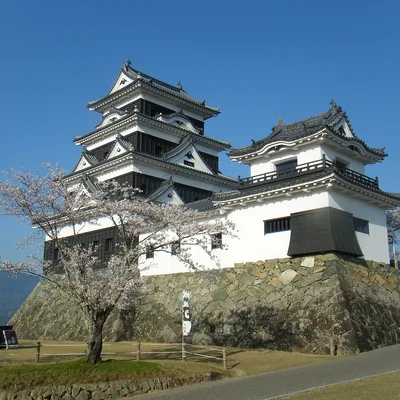
Weeping cherries against medieval stone walls — Kaikoen's most celebrated week as a Top 100 cherry site
★★★★★
Crimson maples along the Chikuma River cliffs frame the Ana-jo terraces — peak for serious photographers
★★★★★
Snow on the Otemon and dry moats for a monochrome castle that almost no tourists come to see
★★★☆☆
Lush green ravines and a cooler 660m highland climate make Kaikoen a welcome retreat from lowland humidity
★★★☆☆
Top 3 Highlights
1.Sengoku-era stone walls and lost keep platform
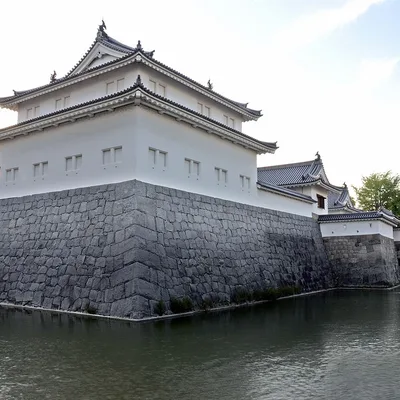
Sengoku Hidehisa rebuilt the medieval fortress in dressed stone after arriving in 1590. The rough-cut masonry of the tenshudai (keep platform) survives even though lightning destroyed the three-story donjon in 1626 — a quiet monument to Shinshu stone craft.
South face of the tenshudai in late afternoon, when raking sunlight reveals every stone seam
2.Otemon: a 1612 yagura-mon on its original site
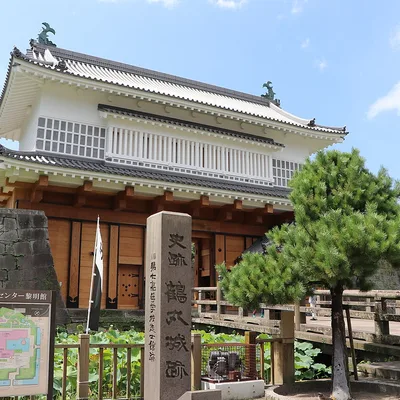
Built in 1612, the Otemon is a five-bay yagura-mon (turret gate) with an irimoya roof and original clay tiles. A 2004-2008 dismantle-and-reassemble project peeled away restaurant-era alterations and returned it to its Keicho silhouette — a national Important Cultural Property.
Frontal view from the approach path in morning light, to bring out the wood and white plaster
3.Kaikoen: weeping cherries and maples on ruins
The grounds reopened in 1880 as Kaikoen, a strolling park created by former Komoro retainers who bought the land at auction. A Top 100 cherry site, the park bursts into yae-beni-shidare in mid-April and turns crimson with maples and Chikuma River cliffs in early November.
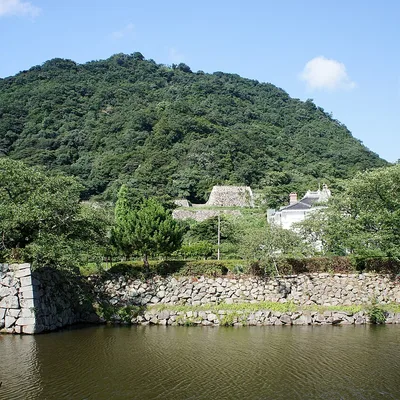
From the honmaru looking toward the ninomaru, peak times are mid-April and early November
Stories & Legends
Recommended For
Insider Tips
- 1.The San-no-mon at the Kaikoen entrance has appeared multiple times in the opening sequence of Fuji TV's Sazae-san anime — look up for the calligraphy plaque inscribed Kaikoen by Tokugawa Iesato before you step inside, a small ritual that locals notice.
- 2.To actually feel why this is called Ana-jo (the buried castle), first walk to the high ground in front of the San-no-mon and look down at the bailey, then descend into the park. Almost no other Japanese castle reverses the usual uphill approach like this.
- 3.On the north side of the honmaru, the small Kojin-i well still draws spring water — a remnant of the rare mizu-yagura water-tower system the castle used to lift Nakazawa River water onto the bailey, a clever fix to a real survival problem at this elevation.
Visit Information
- Access
- Take the Shinano Railway or JR Koumi Line to Komoro Station, then walk about 5 minutes to the San-no-mon entrance. From Karuizawa it is roughly 25 minutes by Shinano Railway, making Komoro an easy day trip from Tokyo via the Hokuriku Shinkansen-plus-local connection.
- Time Required
- About 2 hours for a relaxed Kaikoen walk, half a day with the Otemon and relocated gates
- Budget Guide
- Park admission is about 500 yen including the on-site museums, or 300 yen walking-only (2024). Plan around 3,000 yen per person with Komoro soba.
Nearby Attractions
Adjacent to Kaikoen are the Komoro Torasan Museum and the Komoro Gijuku Memorial Hall dedicated to Shimazaki Toson, both within walking distance. By Shinano Railway, Ueda Castle (the Sanada stronghold) is about 25 minutes east and Matsumoto Castle is about an hour west, making Komoro a natural pivot for a Shinshu castle circuit.
Go Deeper
Deeper details for those with the time to read on.
Timeline
- 1487
Oi Mitsutada raises a hill fort
Local warlord Oi Mitsutada builds the first fortification here in the late Muromachi period, the seed of Komoro Castle
- 1554
Takeda Shingen redraws the plan
Around Tenbun 23 Takeda Shingen commissions a full rebuild as a regional stronghold for eastern Shinano, traditionally credited to Yamamoto Kansuke
- 1582
Three changes of hand in a year
Takeda is destroyed by Oda-Tokugawa forces in March; the castle passes to Takigawa Kazumasu and then to Yoda Nobushige after the June Honno-ji incident
- 1590
Sengoku Hidehisa receives Komoro
After the Odawara campaign Toyotomi Hideyoshi awards Hidehisa a 50,000-koku Komoro domain; he rebuilds in dressed stone with a three-story keep
- 1612
Otemon Gate built
The surviving five-bay yagura-mon Otemon Gate is raised in Keicho 17, with irimoya roof and clay tile cladding — later a national Important Cultural Property
- 1622
Sengoku transferred to Ueda
Sengoku Tadamasa is moved to Ueda Castle in Genna 8; Komoro cycles through Matsudaira, Aoyama, and Sakai daimyo over the next 80 years
- 1626
Donjon destroyed by lightning
In June Kanei 3 lightning sets fire to the three-story keep with its gold-leaf paulownia-crest tiles; it is never rebuilt
- 1702
Makino family takes Komoro
Makino Yasushige is enfeoffed in Genroku 15; his line holds Komoro Domain for ten generations until the Meiji Restoration
- 1742
Inu-no-manmizu flood
A catastrophic flood damages the Otemon, Ashigara-mon, and San-no-mon; San-no-mon will later be rebuilt in 1766 in a different yagura-mon style
- 1873
Castle abolition order
Komoro Castle is abolished under the Meiji haijo-rei; most structures are demolished or relocated to nearby temples and private houses
- 1880
Kaikoen opens
Former Komoro samurai pool funds to buy the inner bailey grounds at auction and reopen the site to the public as Kaikoen park
- 1926
Honda Seiroku redesigns the park
Forest scientist Honda Seiroku redesigns Kaikoen in Taisho 15, expanding it as a modern landscape park integrating castle ruins and native scenery
- 2004-2008
Otemon full restoration
A four-year dismantle-and-reassemble project peels away later restaurant-era alterations and returns the Otemon to its early Edo silhouette
- 2006
Listed among the 100 Fine Castles
On April 6 Heisei 18 Komoro Castle is added as number 28 on the official 100 Fine Castles of Japan list by the Japan Castle Foundation
Detailed History
Komoro Castle began in 1487 (Chokyo 1, late Muromachi period) as a hill fort raised by Oi Mitsutada, a local warlord of the Shinano Saku district. In the mid-16th century, as Takeda Shingen consolidated his hold over eastern Shinano, he commissioned a comprehensive rebuild around 1554 (Tenbun 23). Local tradition credits Shingen's master strategist Yamamoto Kansuke with the new layout, although no contemporary documents confirm this attribution. The resulting plan still defines the footprint of the ruins today. Under Takeda Katsuyori the castle was commanded by Shimosone Joki, a kinsman of the Takeda. In March 1582 the Oda-Tokugawa invasion of Kai threw the eastern Takeda lands into chaos: Joki cut down the refugee Takeda Nobutoyo, presented his head to Oda Nobunaga, and was himself executed shortly afterward. With the Takeda destroyed, Komoro passed to Takigawa Kazumasu, Nobunaga's general. The Honno-ji incident on June 2, 1582 unraveled this arrangement. Takigawa was beaten at the Kannagawa by the Later Hojo, fell back to Komoro on June 21, and withdrew to Ise Nagashima. The castle then changed hands to Yoda Nobushige and eventually to Tokugawa Ieyasu. After the 1590 Odawara campaign Tokugawa Ieyasu assigned Komoro to his general Sengoku Hidehisa as a 50,000-koku daimyo holding, later confirmed under the Tokugawa shogunate. Hidehisa rebuilt the castle in dressed stone, raised the bailey walls, and crowned the central keep with a three-story donjon roofed in gold-leaf tiles bearing the paulownia crest. His son Tadamasa was transferred to Ueda in 1622 (Genna 8). In June 1626 (Kanei 3) lightning destroyed the donjon, which was never rebuilt. During the Edo period Komoro Domain cycled through the Matsudaira, Aoyama, and Sakai houses before the Makino family took possession in 1702 (Genroku 15) and held it until the Meiji Restoration. The 1742 (Kanpo 2) Inu-no-manmizu flood badly damaged the Otemon and San-no-mon; the latter was rebuilt in 1765. The 1871 abolition of the han system led to most structures being demolished or moved. In 1880 former Komoro retainers purchased the inner bailey land and opened it as Kaikoen, expanded under landscape architect Honda Seiroku in 1926. The Otemon underwent full restoration in 2004-2008, and in 2006 the castle was added to the official 100 Fine Castles of Japan list as number 28.
Cultural Significance
Komoro Castle's documented value rests above all on its two surviving wooden gates, both nationally designated Important Cultural Properties. The Otemon, completed in 1612, is a five-bay yagura-mon with an irimoya roof and original tile cladding — a rare early Edo castle gate that has stayed on its original site. The San-no-mon was rebuilt in 1765 after the 1742 flood, as a three-bay yagura-mon with a hipped roof and pan tiles, owned by the adjacent Kaiko Shrine. The nicknames map the castle's character. Suigetsu-jo (Drunken Moon), Hakkaku-jo (White Crane), Nabefuta-jo (Pot-lid), and most famously Ana-jo (Buried Castle) converge on one fact: the baileys sit below the level of the surrounding town, an inversion almost unknown elsewhere in Japan. Strategists exploited the deep ravines of Mount Asama's lahar flows on the east and the cliffs of the Chikuma River on the west as natural dry moats. Modern Kaikoen began in 1880 when former Komoro samurai pooled funds to buy the inner grounds at auction; forest scientist Honda Seiroku redesigned the park in 1926. The San-no-mon appears in the title sequence of Fuji TV's Sazae-san anime, embedding Komoro in postwar visual culture as small-town Japan shorthand. The site is also a literary pilgrimage: Shimazaki Toson's Chikumagawa stele and Wakayama Bokusui's tanka on the ninomaru walls anchor a small canon of modern Japanese verse.
Architectural Details
The plan comprises five baileys — honmaru, ninomaru, kita-no-maru, minami-no-maru, and san-no-maru — laid out lower than the surrounding castle town, the defining Ana-jo configuration. The system maximized natural defenses by adopting the ravines of Mount Asama's lahar terraces on the east and the cliffs over the Chikuma River on the west as ready-made dry moats, reducing artificial earthworks to a minimum. In its Edo prime the castle had six main gates: Otemon, Ni-no-mon, San-no-mon, Nakajikiri-mon, Kuromon, and Akazu-mon. The first four were all watari-yagura-mon (turret-bridge gates), and Nakajikiri-mon was an unusually large three-story turret gate. The keep was a three-story bogata (watchtower-style) donjon roofed in gold-leaf clay tiles stamped with the paulownia crest — a status statement on the eastern Shinano landscape. A technical highlight is the mizu-yagura on the ninomaru, a water tower that diverted Nakazawa River flow onto the bailey. Reliable water was a chronic problem for highland castles and this fix appears in few other surviving plans. Stone walls are predominantly nozura-zumi (rough-stack) from the Sengoku reorganization. Surviving above-ground elements are the Otemon, the San-no-mon, the tenshudai foundation, and bailey walls; the Kuromon now serves as the gate of Shogenin temple and the Ashigara-mon as that of Kogaku-ji temple.