Iwamura Castle
岩村城
恵那市 · JP
Highest of Japan's three great mountain castles, where a female lord's tragedy lingers in the mist
Crowning a 721-meter ridge in Ena, Gifu, Iwamura was the highest daimyo seat in Japan and one of its three great mountain castles. Founded by the Toyama clan, it became the stage for the doomed female lord Otsuya-no-kata caught between Oda and Takeda.
Best Season & Time
Cherry blossoms over the residence and castle town, fresh green setting off the six-tiered stone walls
★★★★☆
Cool mountain breezes through deep green canopy; climb in the morning or late afternoon to avoid heatstroke
★★★☆☆
Foliage and the famed sea of clouds align in the year's best window, the moment that earns the Kirigajo name
★★★★★
Snow on the six-tiered walls reads like an ink-wash painting; bring winter tires and mind ice on the approach
★★★☆☆
Top 3 Highlights
1.The Six-Tiered Stone Walls of the Main Bailey
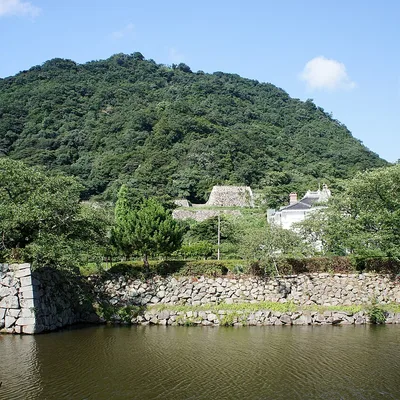
Iwamura's signature is a six-stage stone rampart climbing the northern cliff beneath the main bailey. Rough nozura-zumi fitting transitions into half-dressed uchikomi-hagi masonry, recording a century of castle engineering in one wall.
Shoot the wall head-on in early morning side-light to bring out the six tier seams
2.Sea-of-Clouds Vista from 721 Meters
On still autumn dawns a sea of clouds engulfs the basin and leaves only the keep ridge afloat, explaining the alias Kirigajo, Castle of Mist. From the main bailey at 721 meters the Ena range and the Mino plain unfold, exposing the warlords' tactical geography.
Arrive at the demaru parking lot before 5:30 a.m. between mid-October and mid-November
3.Reconstructed Front Gate and Drum Tower at the Foot
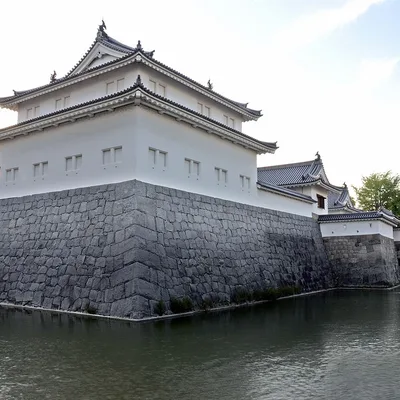
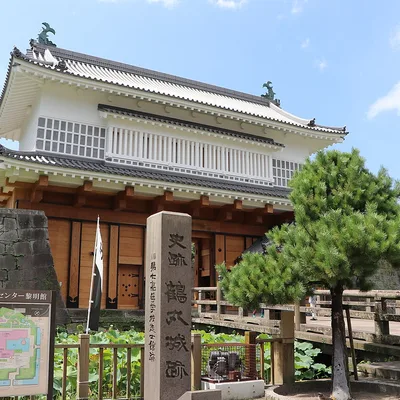
On the former daimyo residence grounds at the foot, the Omote-gomon, Hira-shigeto gate and Taiko-yagura drum tower were rebuilt in timber in 1990, restoring the Edo-period entrance. The adjacent Iwamura History Museum holds Matsudaira Norikata's 1718 stone-wall repair drawings.
Look up at the drum tower from the foot of the Goten-zaka slope; best in fresh green of May
Stories & Legends
Recommended For
Insider Tips
- 1.Driving to the Demaru parking lot near the summit cuts the walk to the main bailey to about ten minutes, versus forty minutes from the residence below. For views go up via Demaru; for history climb from the foot, and pair both on one visit.
- 2.Iwamura Brewery on the main street still uses corridor timbers transplanted from the main bailey and pours its sake 'Onna-jōshu' (Female Castellan). The surrounding Edo-period machiya streetscape is a nationally designated Important Preservation District.
- 3.For the sea of clouds, watch for a clear cold night after a warm afternoon in late October or early November, with a temperature swing above ten degrees Celsius. Radiative cooling lifts mist to the height of the main bailey shortly after dawn.
Visit Information
- Access
- From Akechi Railway Iwamura Station it is about a 20-minute walk to the daimyo residence at the foot, then another 20 minutes up to the main bailey. By car, take Chuo Expressway to the Ena IC, about 25 minutes via Route 257; the Demaru parking lot is close to the summit.
- Time Required
- Half a day for the residence and main bailey, a full day including the castle town below.
- Budget Guide
- Castle grounds free; Iwamura History Museum 400 yen adults, 200 yen children. Allow about 2,000 yen with a meal in town. As of 2024; confirm on the official site.
Nearby Attractions
Iwamura's main street, a nationally designated Important Preservation District (1998), runs 350 meters of Edo machiya. Iwamura Brewery preserves a corridor from the main bailey and pours its sake Onna-jōshu; the Chishinkan school grounds sit nearby. Naegi Castle in Nakatsugawa lies 30 minutes by car, Enakyo Gorge 50 minutes on.
Go Deeper
Deeper details for those with the time to read on.
Timeline
- ca. 1185
Toyama Kagetomo founds Iwamura
Toyama Kagetomo, eldest son of Minamoto no Yoritomo's vassal Kato Kagekado, takes up the Toyama estate in eastern Mino and builds a flatland stockade that becomes the seat of the Iwamura Toyama clan.
- 1337
Castle of Mist named in the Taiheiki
An entry in the Taiheiki on the battle at Kanegasaki names 'Toyama Saburo of Mino Castle of Mist,' the earliest written sign that a Toyama castle on this ridge was already known across the provinces.
- 1572
Otsuya-no-kata becomes female castellan
After lord Toyama Kageto dies of illness, Oda Nobunaga's aunt Otsuya-no-kata takes charge of the castle as regent for the infant adopted heir Boshimaru, Nobunaga's fifth son.
- 1573
Surrender by marriage to Akiyama
Besieged by the Takeda retainer Akiyama Torashige while Nobunaga could not relieve her in time, Otsuya-no-kata surrenders on the condition of marrying her besieger, and Iwamura passes under Takeda control.
- 1575
Nobunaga retakes Iwamura; crucifixions
After the Takeda are broken at Nagashino, Nobutada leads a six-month siege to retake the castle; Nobunaga then rescinds the quarter and has Akiyama and Otsuya-no-kata crucified upside-down on the Nagara riverbank.
- 1582
Headquarters for the Kai campaign
Nobunaga receives reports of his Kai campaign from Iwamura; after Takeda are extinguished, Kawajiri Hidetaka becomes castellan, and Dan Tadamasa is killed within months by the Honnoji Incident.
- 1601
Matsudaira Ienori founds Iwamura Domain
After Sekigahara, Matsudaira Ienori enters Iwamura and founds Iwamura Domain (20,000 koku), moves the lord's residence from the summit to the foot, and lays out the castle town.
- 1702
Founding of the Chishinkan domain school
Matsudaira Norinori enters from Komoro in Shinano and establishes the Bunbusho, later renamed Chishinkan, only the third domain school in Japan and the cultural anchor of eastern Mino.
- 1718
Toyama earthquake and repair drawings
The Toyama earthquake of the seventh month of Kyoho 3 damages over fifty sections of stone wall; lord Matsudaira Norikata's repair drawings survive as Gifu prefectural cultural properties.
- 1873
Abolition order and dismantling
Under the Meiji abolition order all wooden buildings of Iwamura are dismantled, leaving only stone walls; several gates including the Fumei-mon and the Toki-mon survive as temple gates in the town below.
- 1990
Residence buildings rebuilt in timber
At the foot of the mountain, the Omote-gomon front gate, hira-shigeto secondary gate and taiko-yagura drum tower of the daimyo residence are rebuilt in timber, restoring the Edo entrance after 120 years.
- 2006
Japan 100 Famous Castles inscription
Iwamura is selected for the Japan 100 Famous Castles by the Japan Castle Foundation, complementing earlier listings as one of the three great mountain castles and one of the 100 Hidden Landscapes of Japan.
Detailed History
Iwamura's history begins around 1185, when Toyama Kagetomo, eldest son of Minamoto no Yoritomo's vassal Kato Kagekado, was sent to the Toyama estate in eastern Mino and built an early stockade on the flatland below the ridge. The transformation into a full mountain castle came only in the late sixteenth century, jointly under the Iwamura Toyama and the invading Takeda. A 1337 entry in the Taiheiki, naming 'Toyama Saburo of Mino Castle of Mist,' shows a Toyama castle on this ridge already known across the provinces. In 1570 the Takeda retainer Akiyama Torashige struck east, defeated at Kamimura by the Oda commander Akechi Mitsuyuki. Two years later lord Toyama Kageto died of illness, and Oda Nobunaga installed his fifth son, the boy Boshimaru, as adopted heir, with his own aunt Otsuya-no-kata acting as regent female castellan. Linked with Takeda Shingen's Totomi campaign, Akiyama besieged Iwamura again, and Otsuya-no-kata surrendered on the condition of marrying him. The castle passed under Takeda control. After Katsuyori broke at Nagashino in 1575, Nobunaga sent his heir Nobutada to retake the ridge in a six-month siege. The promised quarter was rescinded; Akiyama, Otsuya-no-kata and three others were crucified upside-down on the Nagara riverbank. Iwamura then passed through Oda allies Kawajiri Hidetaka and Dan Tadamasa, both dying within months. Mori Nagayoshi and then his son Tadamasa took it, and senior retainer Kagami Mototada spent some seventeen years turning Iwamura into a modern stone-walled castle. In 1601, after Sekigahara, Matsudaira Ienori founded Iwamura Domain (20,000 koku), moved the lord's residence from the summit to the foot and laid out the castle town. Niwa rule from 1645 was followed in 1702 by the return of the Ogyu-Matsudaira under Norikata, who founded Chishinkan, only the third domain school in Japan. The Hoei earthquake of 1707 and the Toyama earthquake of 1718 damaged more than fifty sections of stone wall, prompting the famous repair drawings now held as Gifu prefectural cultural properties. The 1873 abolition order had every wooden building dismantled, leaving only stone. In 1990 the front gate and drum tower of the residence were rebuilt in timber, and in 2006 Iwamura was inscribed on the Japan 100 Famous Castles list.
Cultural Significance
Iwamura is counted, alongside Takatori in Nara and Bitchu-Matsuyama in Okayama, as one of Japan's three great mountain castles, with its main bailey at 721 meters above sea level the highest daimyo seat in the country. It also forms a regional trio with Naegi Castle in Nakatsugawa and Kaneyama Castle in Kani as the three mountain castles of Gifu, and is protected as a Gifu prefectural historic site. The nickname Kirigajo, Castle of Mist, comes from the autumn sea of clouds that hides the summit each dawn and symbolises the natural defence that confounded even Kamakura-era envoys. The tragic story of Otsuya-no-kata is preserved locally as 'Iwamura, village of the female lord,' and her name lives on in the local sake Onna-jōshu brewed by Iwamura Brewery, where corridor timbers from the main bailey survive in the brewery's hallway. The town centre is a nationally designated Important Preservation District (selected in 1998), with about 350 meters of Edo-period machiya lining the main street, and the front gate and Sekiten Hall of the Chishinkan school stand on the residence grounds as Gifu prefectural cultural properties. The site was added in 2006 to both the Japan 100 Famous Castles and the Japan 100 Hidden Landscapes, fixing its place as one of the country's most evocative encounters of Sengoku tragedy and mountain-castle scale.
Architectural Details
Iwamura's plan is a teikaku-style mountain castle climbing the city-named hill in concentric tiers. The main bailey at 721 meters is the highest daimyo seat in Japan and is ringed by a second bailey, a western demaru advance bailey, and a third bailey. There was no tenshu donjon; two-storey turrets stood on the main bailey, while a three-storey 'arrival turret' at the third bailey gate served as a substitute keep. The most celebrated feature is the six-tiered stone rampart on the north flank of the main bailey, where Mori-era engineers stacked steep cliff faces in six receding ledges. The face traces the evolution of Japanese stone-walling: rough nozura-zumi of natural stones at the lower courses, half-dressed uchikomi-hagi in the middle, and dressed kirikomi-hagi at the upper bands, spanning late Sengoku through early Edo. Senior retainer Kagami Mototada is credited with seventeen years of this transformation. As of the 1873 survey the main bailey held a yagura gate, a nando-yagura storehouse turret, east and west taman corridors, hira-shigeto and tana gates, while the second bailey added a hishi diamond turret, weapons and rice stores, and two-storey turrets. All wooden buildings were dismantled under the abolition order. At the foot the residence grounds regained their Edo frontage in 1990 with the timber rebuild of the front gate, hira-shigeto and taiko-yagura drum tower.