Hirado Castle
平戸城
平戸市 · JP
A sea castle embraced by three coasts — Japan's only hill castle laid out by Yamaga science
Crowning a peninsula above the Hirado Strait in Nagasaki Prefecture, Hirado Castle was the seat of the Matsura clan, daimyo of Hirado Domain. Built, burned, and rebuilt over a century, today its Kaijuyagura houses one of Japan's only true overnight 'castle stay' experiences.
Best Season & Time
Cherry blossoms surround the keep and Kameoka Shrine festival falls the same week — peak Hirado season
★★★★★
Jangara folk dance and Hirado evening concerts animate the streets below the castle in warm coastal nights
★★★☆☆
Quieter foliage season paired with Hirado's local sake and fresh seafood — the connoisseur's window
★★★★☆
Crystal-clear air reveals the keep across the Hirado Bridge with Kyushu's mountains sharp behind
★★★☆☆
Top 3 Highlights
1.Reconstructed Keep and Hirado Strait Panorama
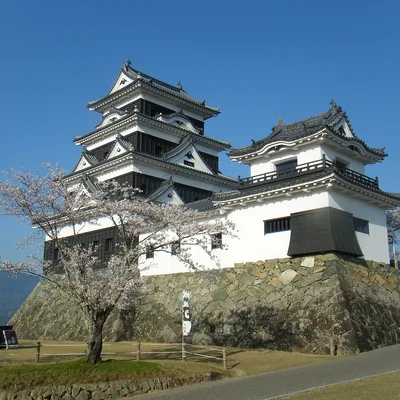
Rebuilt in 1962, the five-story keep offers from its top floor a sweeping view of Hirado Port, the strait, the red Hirado Bridge, and mainland Kyushu — among the finest sea-castle vistas on Japan's western coast. Inside is a Matsura clan museum.
Use a telephoto lens from the top floor to compress the Hirado Bridge in morning haze
2.The Matsura Sea Castle from Hirado Port
Standing on a wooded peninsula surrounded on three sides by water, the castle reveals its true sea-castle character only when viewed from the opposite Hirado Port shore. The white keep among pines, mirrored in the blue strait, became an emblematic Edo-period view.
Shoot the keep silhouette across the Hirado Bridge at sunset for the classic harbor frame
3.Yamaga-School Layout and the Kenso Turret
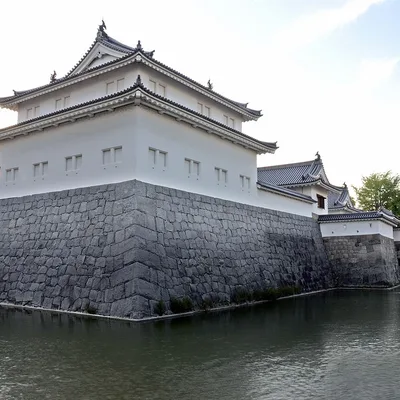
Hirado is the only Japanese hill castle laid out by strategist Yamaga Soko's military theories, with a shrine at the demon gate and the Inui Yagura serving in place of a keep. The Kenso and other turrets reconstructed in 1962 preserve this distinctive defensive scheme.
Compose a low-angle shot looking up at the Kenso Yagura to capture the defensive geometry
Stories & Legends
Recommended For
Insider Tips
- 1.Since April 2021 the Kaijuyagura operates as 'Castle Stay Hirado', a single-party-per-night accommodation almost unique in Japan. Guests effectively rent the entire castle grounds after hours and watch the Hirado Strait sunrise from a turret built in 1707.
- 2.Pair the keep visit with the Matsura Historical Museum across the harbor and Kameoka Shrine within the same park. Together they trace seven centuries of Matsura clan history far richer than the castle alone offers first-time visitors.
- 3.The shore in front of the Matsura Historical Museum is the prime vantage for the entire castle across the harbor. Sunset light-ups and the mirror-still 7 a.m. morning calm reflecting the keep are local photographers' favorite spots.
Visit Information
- Access
- About two hours by JR limited express Midori or Huis Ten Bosch from Hakata Station to Tabira-Hiradoguchi, then a 30-minute Saihi Bus ride to Hirado Sanbashi and a 10-minute uphill walk. Roughly three hours by car from Fukuoka Airport.
- Time Required
- About 1.5 hours for the keep, two to three hours including Kameoka Shrine and park.
- Budget Guide
- Keep admission JPY 520 adults, JPY 310 children. Castle Stay Hirado in the Kaijuyagura starts around JPY 660,000 per night for one party with two meals. (2024.)
Nearby Attractions
The Matsura Historical Museum, residence of the last Matsura daimyo, is a 15-minute walk across the harbor and traces seven centuries of clan history. The Hirado Xavier Memorial Church viewpoint is a 10-minute drive, and the reconstructed Hirado Dutch Trading Post five minutes by car preserves Hirado's role as Japan's first European trading port.
Go Deeper
Deeper details for those with the time to read on.
Timeline
- 1599
Hinotake Castle Construction Begins
Matsura Shigenobu starts construction on the Hinotake site that will become Hirado Castle, marking the origin of the castle's recorded history.
- 1613
Self-Inflicted Destruction
Matsura Shigenobu burns the nearly completed castle himself, reportedly to allay Tokugawa suspicions after his hedge toward the Toyotomi side at Sekigahara.
- 1685
Death of Yamaga Soko
The strategist Yamaga Soko, whom the Matsura lord had hoped to invite, dies before reaching Hirado; his kinsman Yamaga Yoshimasa later enters Matsura service.
- 1703
Reconstruction Authorized
The bakufu grants exceptional permission for fourth daimyo Matsura Takashi to rebuild, citing Tokugawa marriage ties and East China Sea coastal defense needs.
- 1704
Construction Restarts
Work begins in February under Matsura Takashi, with Yamaga Yoshimasa directing the layout according to strict Yamaga-school military principles.
- 1707
Substantial Completion
Hirado Castle is essentially completed; the three-story Inui Yagura on the second bailey serves as a substitute keep since no proper tower is raised.
- 1718
Full Completion
Final detailing finishes the entire fortification; Hirado functions as the seat of the Matsura clan and Hirado Domain until the Meiji Restoration.
- 1871
Abolition of the Han
Hirado Domain is dissolved with the Meiji abolition of the han system, and the following year the Castle Abolition Edict decides Hirado's official end.
- 1872
Castle Buildings Dismantled
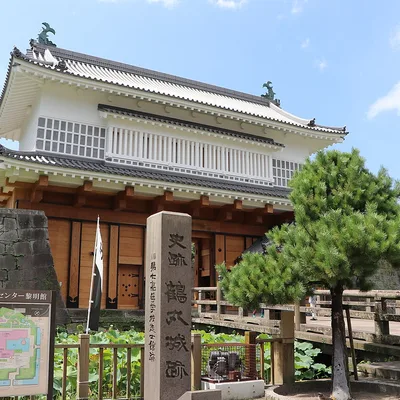
All structures save the Tanuki Yagura and the northern Kitatorakuchimon are dismantled, and the grounds are gradually converted into Kameoka Park.
- 1962
Modern Reconstruction
A reinforced concrete keep and the Kenso, Inui, Jizozaka, and Kaiju turrets are rebuilt in Showa 37, restoring a recognizable silhouette to the peninsula.
- 2006
Selected as 100 Fine Castles
On April 6, Hirado is listed as number 90 of the 100 Fine Castles of Japan by the Japan Castle Foundation, lifting the site to national recognition.
- 2021
Castle Stay Opens
On April 1, the Kaijuyagura begins operating as 'Castle Stay Hirado', a one-party-per-night turret accommodation almost unique within Japan.
Detailed History
Hirado Castle's history begins in 1599 (Keicho 4) when Matsura Shigenobu, lord of the Matsura clan and the most powerful daimyo of the Matsura warrior league, began his first castle on the Hinotake site. He had been confirmed in Matsura district and Iki Island after joining Toyotomi Hideyoshi's Kyushu campaign. After Sekigahara in 1600, where he favored the losing Toyotomi side, he reportedly dismantled part of the castle to allay Tokugawa Ieyasu's suspicions. In 1613, as construction neared completion, fire destroyed most of the structure. The arson is attributed to Shigenobu himself; some cite his need to demonstrate fealty to the new bakufu given his Toyotomi ties, others connect the burning to grief over his heir Hisanobu. The clan built an unfortified residence called Naka-no-Yakata across the harbor as the seat of Hirado Domain, making Hirado one of the rare 'castle-less' jin'ya domains despite governing two provinces. The fourth daimyo Matsura Shigenobu (a successor) had a friendship with strategist Yamaga Soko and sought to invite him, but Soko died in 1685. His kinsmen Yamaga Takamoto and Yoshimasa later entered Hirado service. In 1702 Shigenobu petitioned to rebuild, and 1703 brought exceptional approval — rarely granted in mid-Edo Japan — owing to Matsura's Tokugawa marriage ties and East China Sea defense under sakoku. Construction began February 1704 under fourth daimyo Matsura Takashi and the new construction was completed in 1718. No formal keep was raised; the three-story Inui Yagura served as a substitute. Under Yamaga Yoshimasa's design guidance the layout strictly followed Yamaga-school principles, making Hirado the only Japanese hill castle so configured. In 1871 the abolition of the han ended Hirado Domain, and the following year all buildings except the Tanuki Yagura and northern Kitatorakuchimon were dismantled. The grounds became Kameoka Park. In 1962 the reinforced concrete keep and the Kenso, Inui, Jizozaka, and Kaiju yagura were rebuilt. In 2006 the castle was selected as number 90 of the 100 Fine Castles of Japan. In 2019 a joint venture between Hirado City, Japan Airlines, Kessha, and Atelier Tekuto agreed to convert the Kaijuyagura, and on April 1, 2021 'Castle Stay Hirado' began.
Cultural Significance
Hirado Castle holds an exceptional place in Japanese castle history as one of very few new fortifications authorized in the mid-Edo period. Since the One Domain One Castle Edict of 1615, the bakufu had strictly forbidden new castles, and the Genroku-era permission to rebuild Hirado is widely attributed to a combination of Matsura's Tokugawa marriage ties and East China Sea coastal defense urgency under sakoku. The castle is the only hill castle in Japan laid out according to the military theories of Yamaga Soko, whose teachings shaped samurai ethics for two centuries; the flatland Ako Castle has been suggested as a second Yamaga site through archaeology, but only Hirado is documented. Hirado itself, since the sixteenth century, was an international trading port — the birthplace of Ming loyalist Zheng Chenggong (Koxinga), the landing site of Francis Xavier in 1550, and home to both the Dutch and English East India Company factories before the Tokugawa concentrated foreign trade at Nagasaki. The Matsura clan presided over this cosmopolitan harbor, and the castle they finally built embodied not feudal display but disciplined coastal vigilance. Selection as one of the 100 Fine Castles of Japan in 2006 raised its national profile, and the 2021 launch of Castle Stay in the Kaijuyagura pioneered a new tourism model of staying inside a cultural property.
Architectural Details
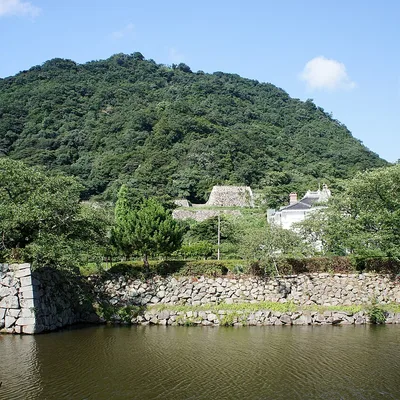
Hirado Castle is a hilltop castle on the rounded crown of a peninsula at the northern end of Hirado Island, with the main bailey on the summit, the second bailey to the south, and the third bailey to the east in a stepped tikaku layout. Three sides are surrounded by the waters of Hirado Strait, Port, and Bay, giving the site the simultaneous character of hill castle and sea castle. The layout was directed by Yamaga Yoshimasa following Yamaga-school principles: the shrine was placed at the demon gate northeast, and the three-story Inui Yagura substituting for a keep was placed at the inui (northwest) corner of the main bailey, aligning compass with strategy. Only two original structures survive — the Tanuki Yagura and the Kitatorakuchimon, both late seventeenth or early eighteenth century. The northern gate is a tiled hip-and-gable yakuimon structure conveying the Hirado domain's rank. The 1962 reconstructions are reinforced concrete; the modern keep stands roughly twenty-five meters tall in five stories on the original platform, in observation-tower form. The Kenso, Jizozaka, Inui, and Kaiju yagura are external reconstructions based on historical records, with interiors adapted as museum spaces and, in the Kaiju case, overnight accommodation. The stone walls combine uncoursed nozura-zumi and semi-dressed uchikomihagi typical of the Genroku era.