Akashi Castle
明石城
明石市 · JP
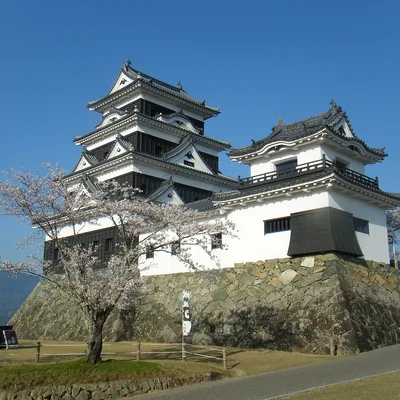
Two three-story turrets stand side by side — a Harima castle five minutes from the station
Built in 1619 on Hitomaru Hill in Akashi, Hyogo Prefecture, Akashi Castle was Ogasawara Tadazane's Tokugawa stronghold watching the western daimyo. No keep was ever raised, but the Tatsumi and Hitsujisaru three-story turrets still stand together — both Important Cultural Properties.
Best Season & Time
Cherry blossoms against stone walls and turrets — among Kansai's top 100 hanami spots, the year's peak
★★★★★
Fresh greenery and quiet moat walks at dawn — fewer visitors and cool morning air make it a hidden window
★★★☆☆
Maple leaves against the white plaster of the turrets, paired with autumn weekend openings of Hitsujisaru
★★★★☆
Clear winter air reveals fine stonework details — early mornings are empty, a hidden season for photographers
★★★☆☆
Top 3 Highlights
1.The Twin Three-Story Turrets Standing Side by Side
Two three-story yagura standing together on the southern stone walls of the inner bailey is a sight found in very few castles. The Hitsujisaru came from the Fushimi Castle keep and the Tatsumi from the Funage Castle keep — both are now Important Cultural Properties.
Shoot the two turrets from the lawn of the Sannomaru third-bailey for the classic frame
2.Tatsumi Yagura — National Important Cultural Property
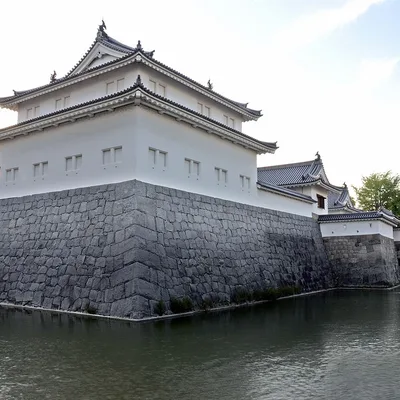
A three-story layered tower five ken wide and four ken deep, the Tatsumi Yagura was identified in 1982 as a relocated Funage Castle keep. Its first floor opens free of charge on weekends and holidays in spring (March-May) — a rare chance to inspect the timber framework up close.
Look up from the southeast stone wall base to emphasize the gabled hafu roof
3.Cherry Blossoms with Stone Walls in Spring
Inside the inner moat lies Hyogo Prefectural Akashi Park, on Japan's Top 100 Cherry Blossom Sites list. The contrast of stone walls and pink petals along the moat-side promenade makes it one of Kansai's premier hanami spots, drawing crowds every spring.
Shoot horizontally along the inner moat to capture stone wall and blossoms together
Stories & Legends
Recommended For
Insider Tips
- 1.The Tatsumi Yagura opens its first floor free of charge only on spring weekends and holidays (March-May), and the Hitsujisaru only on autumn weekends (September-November). Plan around the season, or check the official site for the current opening calendar.
- 2.From the north exit of JR Akashi Station you can already see the turrets and stone walls from the platform itself. Take a shot from the north end of the platform before going through the gate to capture station and castle in a single rare frame.
- 3.The Musashi Garden in the third bailey was laid out in 2003 to honor the swordsman's role in planning the castle town. The small gravel-and-stone garden is free to enter and pairs naturally with the keep ruins for travelers tracing Musashi's trail.
Visit Information
- Access
- About 5 minutes on foot from Akashi Station on the JR Kobe Line or Sanyo Electric Railway Main Line. The turrets and stone walls are visible from the platform itself — about 40 minutes by Special Rapid from Osaka Station and 15 minutes from Kobe Sannomiya.
- Time Required
- About 1 hour for the main bailey and turrets, 2-3 hours with the wider park.
- Budget Guide
- Park and grounds are free. Yagura interiors are also free. With akashiyaki lunch (around JPY 1,000), budget JPY 2,000-3,000 per day. (As of 2024.)
Nearby Attractions
Himeji Castle, the World Heritage National Treasure keep, is a 20-minute ride on the JR Kobe Line and the natural pairing. Sumaura Park, 15 minutes by Sanyo Electric Railway, offers Seto Inland Sea views. Inside Akashi Park sit the prefectural library and the Musashi Garden, with akashiyaki octopus dumpling shops near the station.
Go Deeper
Deeper details for those with the time to read on.
Timeline
- 1617
Construction Ordered
Ogasawara Tadazane, newly transferred from Matsumoto to Akashi, receives orders from Shogun Tokugawa Hidetada to build a castle as a Tokugawa stronghold over the western daimyo.
- 1619
Construction Begins
Hitomaru Hill is selected and full-scale construction begins, salvaging timber from the dismantled Miki, Takasago, Funage, and Fushimi castles.
- 1620
Ogasawara Tadazane Moves In
Tadazane relocates from Funage Castle; interior work accelerates in the sixth month; Miyamoto Musashi reportedly advises on the castle town layout.
- 1632
Ogasawara Transferred
Tadazane, the man who built the castle, is transferred to Kokura Domain in Buzen, beginning a period of rapid lord changes.
- 1682
Echizen Matsudaira Arrive
Matsudaira Naoaki of the Echizen branch takes possession with a 60,000-koku stipend, beginning ten generations and 189 years of stable shinpan rule.
- 1739
Genbun Restoration
The salvaged-timber buildings have aged quickly; the second Matsudaira lord, Naotsune, carries out a major restoration of the castle structures.
- 1874
Castle Abolished
Under the Meiji-era Abolition of Castles, the castle is decommissioned during the tenure of the last lord, Matsudaira Naomune, and many buildings are gradually dismantled.
- 1881
Ushitora Yagura Dismantled
The northeast Ushitora Yagura is dismantled to provide timber for the new Kobe Aioi Elementary School (today's Minatogawa Elementary).
- 1883
Akashi Park Established
Local citizens of Akashi voluntarily develop the castle grounds as a public park, the seed of the later prefectural park.
- 1918
Prefectural Park Opens
Hyogo Prefecture leases the Imperial Household grounds and formally opens Hyogo Prefectural Akashi Park on April 15.
- 1957
Important Cultural Property
On June 18, the surviving Tatsumi and Hitsujisaru Yagura are designated Important Cultural Properties of Japan.
- 1982
Turret Origins Revealed
Renovation work reveals that the Tatsumi is a relocated Funage Castle keep and the Hitsujisaru a relocated Fushimi Castle keep — a landmark discovery for castle research.
- 1995
Great Hanshin Earthquake
The earthquake of January 17 causes major damage including stone wall collapse, triggering a five-year restoration effort.
- 2004
National Historic Site
On September 30 the entire castle site is designated a National Historic Site, securing its cultural status.
- 2006
Top 100 Castles of Japan
On April 6 the site is selected by the Japan Castle Foundation as one of Japan's Top 100 Castles, listed as number 58.
Detailed History
Akashi Castle's history begins in 1617 (Genna 3), when Ogasawara Tadazane, newly transferred from Matsumoto as daimyo of the 100,000-koku Akashi Domain, was ordered by Shogun Tokugawa Hidetada to build a castle. The Tokugawa chose this site as their second western stronghold after Himeji to watch the tozama daimyo. Akashi sat on the San'yo highway where roads to Tanba split north and ferries ran south. Hitomaru Hill on Mount Akamatsu was chosen for its natural defensive pond. Hatamoto officers were dispatched as commissioners with one thousand kan of silver. Timber was salvaged from the dismantled Miki, Takasago, Edayoshi, and Funage castles. Tradition holds the Hitsujisaru used materials from Fushimi Castle and the Tatsumi from Funage Castle, and Hosokawa Tadaoki sent parts of the Nakatsu Castle keep. Construction began in early 1619, and by 1620 Tadazane had moved in from Funage. A stone tenshu platform was raised but no main keep was ever built; four three-story yagura (Tatsumi, Hitsujisaru, Inui, Ushitora) were placed at the corners instead. Chronicles including the Sekishi-shichu-ki and Harima-kagami record that Miyamoto Musashi, then a guest of Tadazane, directed the town layout. In 1632 (Kan'ei 9) Tadazane was transferred to Kokura. A rapid succession of lords followed — the Toda-Matsudaira, Okubo, Matsudaira (Fujii), and Honda — until 1682 (Tenna 2), when Matsudaira Naoaki of the Echizen branch took possession with 60,000 koku. The shinpan Matsudaira held the castle for ten generations and 189 years. Because the buildings were salvaged timber, they aged quickly, and the second lord Naotsune carried out major repairs in 1739 (Genbun 4). The 1874 Abolition of Castles ended its role under the last lord Matsudaira Naomune. The Ushitora Yagura was dismantled in 1881 for school construction, the Inui in 1901 to repair the Hitsujisaru. Citizens opened Akashi Park in 1883; the prefecture took over the park on April 15, 1918. The Tatsumi and Hitsujisaru became Important Cultural Properties on June 18, 1957, and the site a National Historic Site on September 30, 2004. The Great Hanshin Earthquake of January 17, 1995 caused major damage; a five-year restoration completed in 1999 lifted the turrets, repaired foundations, and replaced the wooden wall. On April 6, 2006 it was selected as Japan's Top 100 Castles, number 58.
Cultural Significance
Akashi Castle's greatest cultural value lies in two three-story yagura from the early Edo period that still stand side by side. The Tatsumi and Hitsujisaru Yagura became Important Cultural Properties on June 18, 1957, and the site became a National Historic Site on September 30, 2004. During 1982 (Showa 57) renovation work, both turrets were confirmed as relocated keeps — the Hitsujisaru from Fushimi Castle and the Tatsumi from Funage Castle — re-establishing them as key examples of late Sengoku and early Edo architecture. Miyamoto Musashi's role in the town layout is recorded in the Sekishi-shichu-ki, Harima-kagami, Bansyu-akashi-kiroku, and the Memoirs of Ogasawara Tadazane, and the castle is now a pilgrimage site for kendo and budo enthusiasts. The fifth daimyo Matsudaira Nobuyuki chose ten scenic spots within and named it Kiharu-jo, the Castle of Joyful Spring. After the 1898 Imperial designation and 1918 park opening, the inner moat grounds joined Japan's Top 100 Cherry Blossom Sites. In 2018 NHK's Rekishi Hiwa Historia featured the castle as a definitive example of standardized turret architecture by master builder Nakai Masakiyo. For the 400th anniversary, large-scale re-plastering was carried out in 2019, and Akashi City now plans to reconstruct the Taiko-mon gate, more turrets, the chief retainer's residence, and earthen walls.
Architectural Details
Akashi Castle is a hybrid layered-bailey hilltop castle on Hitomaru Hill (Mount Akamatsu): the inner bailey at center, second and east baileys east, third bailey south, Inari bailey west. The Akashi River formed a natural outer moat west, a canal-harbor (today's Port of Akashi) ran south, and the Kounoike pond protected the north. Main bailey stone walls were built by the Tokugawa directly; the third bailey was a joint project. The southwestern tenshu platform measures roughly 25m east-west and 20m north-south — about 152 tsubo, large enough for a five-story keep — but no tower was ever built. Three-story yagura took the corners instead. The Tatsumi measures five ken wide, four ken deep, and seven ken one sun tall, with an irimoya roof whose gables face east-west, and incorporates the Funage Castle keep. The Hitsujisaru measures six ken wide, five ken deep, and seven ken two shaku nine sun tall, with gables facing north-south, and incorporates the Fushimi Castle keep — the Compendium of Japanese Castles calls it a substitute keep. The differing gable orientations are unusual, and the towers are cited as a definitive Edo example of the standardized system by master builder Nakai Masakiyo. Stone walls damaged in 1995 were restored over five years using a hikiya building-move to lift the turrets, repair foundations, and return them to position, completing in 1999.