Matsumae Castle
松前城
松前町 · JP
Japan's northernmost castle, embraced by eight thousand cherry trees on the Hokkaido frontier
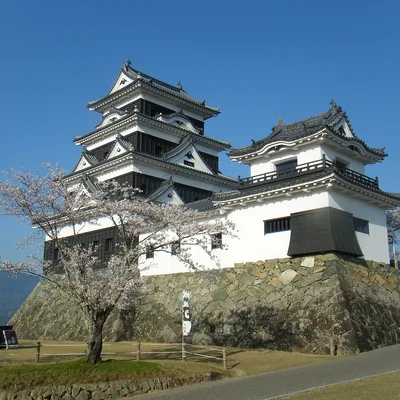
Rising on the Fukuyama plateau in southern Hokkaido, Matsumae Castle is one of the last traditional Japanese castles, completed in 1855 for coastal defence. The 1961 concrete reconstruction crowns a precinct of eight thousand cherry trees and a surviving Important Cultural Property gate.
Best Season & Time
Two hundred fifty cherry varieties bloom across two months, with nightly keep illumination during the festival
★★★★★
Fresh greenery against the Tsugaru Strait and August's Matsumae Castle Age Festival with samurai processions
★★★☆☆
Autumn maples against stone walls — quieter than spring, ideal for unhurried keep photography
★★★★☆
Snow on the Honmaru Gate and keep — the only traditional snow-castle scene in Hokkaido, prized by photo fans
★★★☆☆
Top 3 Highlights
1.Reconstructed Tenshu Above the Tsugaru Strait
The three-tiered, four-storey tenshu, reconstructed in 1961 in reinforced concrete, reproduces its pre-fire appearance. From the honmaru terrace you look across the Tsugaru Strait toward Honshu — the maritime-defence purpose of this northernmost castle becomes immediate.
Frame the keep head-on from the southwest near Tenjinzaka Gate in early morning light
2.Surviving Honmaru Main Gate of Matsumae
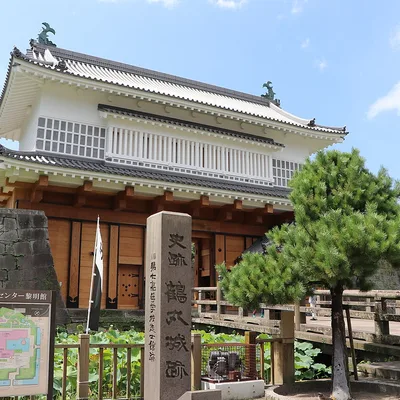
Spared from the 1949 fire that consumed the tenshu, the gabled Honmaru Main Gate is the only structure surviving from the original 1855 castle, a nationally designated Important Cultural Property. Its restrained late-Edo joinery embodies the historical core of Matsumae.
From the honmaru courtyard, frame the keep through the gate opening in vertical composition at noon
3.Eight Thousand Cherry Trees of Matsumae Park
Matsumae Park holds eight thousand cherry trees of two hundred fifty varieties, including rare Matsumae-origin cultivars like Matsumae-hayazaki and Beniyutaka. From late April to late May a two-month bloom succession unfolds — among Japan's Top 100 Cherry Blossom Sites.
Compose a cherry-blossom tunnel against the keep at dawn in late April or early May
Stories & Legends
Recommended For
Insider Tips
- 1.Inside the keep, the Matsumae Castle Museum systematically presents the Matsumae clan's archive, Ainu trade history and Boshin War records — an essential complement to the exterior for grasping how Matsumae uniquely sat between Honshu and Ezo.
- 2.Stone walls beside the Honmaru Main Gate still bear bullet scars from the Boshin War; reading the interpretive signs while tracing Hijikata Toshizo's assault lines gives history-minded visitors a rarely-spotlighted route through the battlefield.
- 3.Festival-week car parks fill before dawn, but parking at the adjacent Matsumae Han Yashiki and around the town hall absorbs overflow — weekday mornings between 7 and 9 a.m. offer the calmest blossom viewing of the season.
Visit Information
- Access
- From JR Shin-Hakodate-Hokuto Station, drive about 1.5 hours; from JR Kikonai Station, the Matsumae-bound bus takes about 1.5 hours to Matsushiro stop, then seven minutes on foot. From Hakodate Airport, plan around 2 hours by rental car.
- Time Required
- 1 hour for keep and Honmaru Gate; allow half a day with Matsumae Park included.
- Budget Guide
- Keep admission (Matsumae Castle Museum) JPY 360 for adults; JPY 240 for children. Matsumae Han Yashiki an additional JPY 360. (Prices as of 2024.)
Nearby Attractions
Matsumae Han Yashiki, five minutes on foot, is a full-scale open-air reconstruction of the late-Edo castle town. The temple district has five Edo-era temples including Kozenji and Hogenji within walking distance. Thirty minutes by car, Yagoshi Prefectural Natural Park overlooks the Tsugaru Strait; the Seikan Tunnel Memorial Hall traces undersea-rail history.
Go Deeper
Deeper details for those with the time to read on.
Timeline
- 1600-1606
Fukuyama Hall Built
Matsumae Yoshihiro moves the clan seat from Odate to Fukuyama and builds Fukuyama Hall, the Matsumae clan's Edo-era headquarters.
- 1849
Shogunate Castle Order
On 10 July, the Tokugawa Shogunate orders the new Matsumae lord Takahiro to build a proper castle for coastal defence against foreign warships.
- 1855
Castle Completed
Matsumae Castle is completed in late September under Ichikawa Ichigaku's layout, with seven cannon emplacements in the sannomaru bailey — the last traditional castle built in Japan.
- November 1868
Hijikata Toshizo Captures the Castle
On 5 November (lunar), Hijikata Toshizo's Bakufu remnant army of 700 captures Matsumae Castle; defending troops retreat, and three-quarters of the town burns in the fighting.
- April 1869
Recaptured by New Government
On 17 April, New Government forces with returning Matsumae troops as vanguard land at Otobe and advance from Esashi to retake Matsumae Castle.
- 1874
Meiji Dismantling
The Hokkaido Development Commission dismantles all castle buildings except the tenshu, the honmaru main hall entrance and the Honmaru Main Gate, repurposing materials for government offices.
- 1935
National Historic Site Designation
On 7 June, the castle precinct is designated a National Historic Site, placing the entire site under formal legal protection of Japan's cultural heritage system.
- 1941
National Treasure Designation
On 8 May, the tenshu, the Honmaru Main Gate and its east wall are designated National Treasures under the old National Treasure Preservation Law.
- 1949
Tenshu Destroyed by Fire
On 5 June around 1:10 a.m., a fire from the adjacent town hall leaps across and consumes the tenshu and its east wall by 4 a.m. — townspeople watch in tears.
- 1950
Honmaru Gate Re-designated
The Honmaru Main Gate, spared from the fire, is re-designated an Important Cultural Property under the new Law for the Protection of Cultural Properties.
- 1961
Tenshu Reconstructed
On 16 May, a reinforced-concrete reconstruction of the tenshu is completed at a cost of 70 million yen, and the interior opens as the Matsumae Castle Museum.
- 2000-2002
Gates Reconstructed in Timber
In 2000 the Karamete-Ni-no-Mon and outer-moat bridges, and in 2002 the Tenjinzaka-mon are reconstructed in timber, restoring a fuller late-Edo castle landscape.
Detailed History
Matsumae Castle's history begins with Fukuyama Hall. Built in 1600-1606 after Matsumae Yoshihiro shifted his seat from Odate to Fukuyama, the hall held honmaru, ninomaru, kitanomaru and watchtowers but, as the clan held mujo (uncastled) status, was not officially a castle. It burned in 1637 and was rebuilt in 1639. Responding to Western incursion, on 10 July 1849 the Tokugawa Shogunate ordered the new lord Matsumae Takahiro to build a proper castle. The layout was entrusted to Ichikawa Ichigaku, ranked among the three greatest Naganuma-school tacticians. Ichigaku and his son Juro surveyed Matsumae and proposed two designs — a new site at Shojiyama north of Hakodate, or expansion of Fukuyama Hall — and the Shogunate chose the cheaper expansion. Construction began in July 1850 under Matsumae Hirotaki. Stone came mostly from green tuff quarried northeast of the castle, with critical sections in Hyogo honmikage granite. Cost reached about 150,000 ryo, raised through tariff hikes, ten-percent salary surrenders by retainers, and donations. Completion came in late September 1855, covering 21,074 tsubo from honmaru to sannomaru, with three-, two- and drum-towers and the unusual feature of seven cannon emplacements in the third bailey. On 5 November 1868 (lunar) the castle fell to a 700-strong Bakufu army under Hijikata Toshizo; defenders set fire and retreated, burning much of the town. In April 1869 New Government forces with returning Matsumae troops as vanguard landed at Otobe and retook the castle. From 1872 buildings were dismantled, copper roof plates stripped for the Hokkaido Development Commission; in 1874 everything except the tenshu, honmaru main hall entrance and Honmaru Main Gate was demolished, and in 1875 stone walls were reused for Matsumae Wharf. National Historic Site designation came on 7 June 1935; on 8 May 1941 the tenshu, the Honmaru Main Gate and east wall were designated National Treasures. On 5 June 1949 around 1:10 a.m. a fire from the town hall night-duty room leapt across, and by 4 a.m. the tenshu and east wall were destroyed. The Honmaru Main Gate, spared by chance, was re-designated as Important Cultural Property under the 1950 law. Reconstruction began under mayor Takashi Matsumoto's 1957 committee; the 70 million yen project rebuilt the tenshu in reinforced concrete, completing on 16 May 1961 as the Matsumae Castle Museum.
Cultural Significance
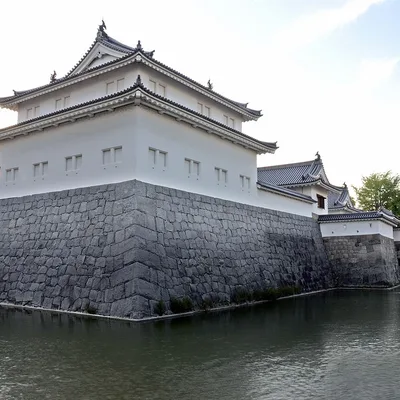
Matsumae Castle stands with Ishida Castle as one of the latest traditional Japanese castles and is the only such castle in Hokkaido — a singular standing in Japanese castle history. The Honmaru Main Gate is an Important Cultural Property under the 1950 law; the Honmaru Omote Goten entrance is a Hokkaido Tangible Cultural Property; the whole precinct holds National Historic Site status from 1935 — a triple protection layer rare in Japan. Its origin in defence against foreign warships, with seven third-bailey cannon emplacements focused on 'repelling enemies from the sea,' gives the site a unique structural identity: a traditional castle answering modern coastal-defence needs. As principal stage of the final Boshin War theatre, Matsumae draws Hijikata Toshizo and Bakumatsu enthusiasts from across Japan. Recent rediscovery of pre-fire survey drawings has prompted a plan to rebuild the deteriorating concrete tenshu in timber, opening debate over 'castle as cultural heritage' versus 'castle as tourist asset.' The cherries — rare Matsumae-origin cultivars Matsumae-hayazaki and Beniyutaka that give the two-month bloom succession — anchor its place among Japan's Top 100 sites, inseparable from Ainu trade, Kitamaebune shipping and the Matsumae clan polity.
Architectural Details
Matsumae Castle is a hirayama-jiro (flatland-hill castle) on the roughly 30-meter Fukuyama plateau, with honmaru, ninomaru and sannomaru baileys arranged in a renkaku (linked) layout. The reconstructed keep is a three-tiered, four-storey, one-basement layered-tower type, about 16.5 meters high, with white plaster walls, board-clad lower courses, hongawara tile roofing, and karahafu and chidori-hafu gables on each level. While the 1961 reconstruction uses reinforced concrete, the exterior reproduces the pre-fire form down to window placement, gable profile and ridge ornament from detailed measured drawings. The surviving Honmaru Main Gate is a gabled korai-mon-form structure with hongawara tile roof, conveying the spare joinery of late-Edo castle gates — an Important Cultural Property. Stone walls primarily use green tuff from northeast of the castle, with critical honmaru sections clad in Hyogo honmikage granite; unusually for a traditional castle, the outer-bailey walls were widened with an inner second line for defensive depth. The seven sannomaru cannon emplacements were unprecedented in traditional castles, complementing 33 guns in 16 coastal batteries from 1851 as an integrated maritime defence system. In 2000 the outer-moat bridges and Karamete-Ni-no-Mon were reconstructed in timber, and in 2002 Tenjinzaka-mon followed.