Imabari Castle
今治城
今治市 · JP
Triple seawater moats and Japan's premier sea castle by master builder Todo Takatora
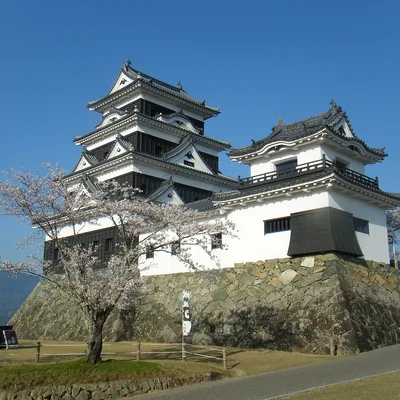
On the Seto Inland Sea coast of Imabari, Ehime, Imabari Castle was completed in 1608 by master builder Todo Takatora as the foremost of Japan's three great sea castles. Its triple seawater moats and prototype layer-style tenshu embody early Edo period architectural innovation.
Best Season & Time
Cherry blossoms around the inner moat combine stone walls and seawater into a uniquely Imabari spectacle
★★★★★
Sea breezes keep the grounds comfortable, with clearest views of the Shimanami Kaido from the keep
★★★★☆
Autumn foliage frames the stone walls, with thinner crowds ideal for unhurried strolls around the moats
★★★★★
The quietest season with crisp air, offering the sharpest distant views to Kurushima Kaikyo Bridge
★★★☆☆
Top 3 Highlights
1.Triple Seawater Moats Drawn from the Inland Sea
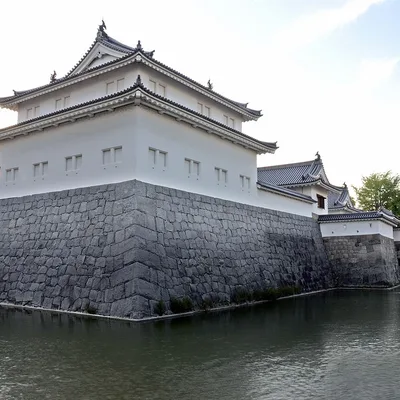
The 60-meter-wide triple moats are fed directly with seawater from the Seto Inland Sea and once allowed ships to dock at an internal anchorage. Stone walls and reflective water define Japan's three great sea castles, with light shifting between morning and evening.
From the southern earthen bridge, frame the keep across the moat at early morning
2.High Stone Walls with Inubashiri Walkway Technique
The high walls feature an inubashiri (dog walkway), a narrow flat platform at the base devised by Todo Takatora to stabilize masonry on soft coastal ground. Stones from Inland Sea islands stacked with sangi-zumi corners form an early modern masonry exemplar still intact today.
Capture wall and inubashiri from southwest moatside path in afternoon side light
3.Bronze Statue of Master Builder Todo Takatora
Erected on the Ninomaru in 2007, the bronze statue commemorates the architect who pioneered the rectangular tower-style tenshu here. The technique was later adopted at Edo Castle, marking Takatora as a defining figure in Japanese castle history.
Photograph the statue with the keep tower behind in morning frontal light
Stories & Legends
Recommended For
Insider Tips
- 1.The keep interior is a reinforced concrete replica that does not match the original, but the top floor offers exceptional views of the Kurushima Kaikyo Bridge and Shimanami Kaido — choose a clear day for this premier western Japan panorama.
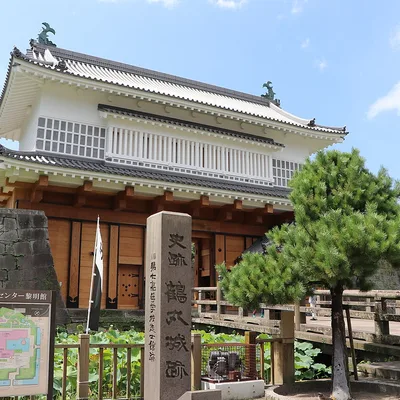
- 2.The Kurogane Main Gate was wood-reconstructed in September 2007 based on archaeological excavation, a valuable example of historically accurate restoration. The five connected tamon yagura are open for free interior viewing.
- 3.The western moat-side walkway is a local jogging path used by few tourists. Early morning visits between 6 and 8 AM offer the magnificent high stone walls in solitude, with only sea breeze and birdsong.
Visit Information
- Access
- From JR Yosan Line Imabari Station, take the Setouchi Bus bound for 'Imabari Office' (~10 min) and alight at 'Imabari-jo Mae', then walk 3 minutes. A 20-minute walk from the station is also feasible. The castle sits at the gateway to Shimanami Kaido expressway.
- Time Required
- About 1.5 to 2 hours for the keep and grounds; 2 to 3 hours with surrounding walks.
- Budget Guide
- Adult admission to the keep is JPY 520 (~USD 3.50). Stone wall and moat viewing are free. Nearby parking ranges from JPY 500 to 800 per day. (Prices as of 2024)
Nearby Attractions
Within central Imabari, the Imabari Towel Headquarters store is a 15-minute walk away. The Imabari City Murakami Suigun Museum is a 20-minute drive, and Kurushima Kaikyo Bridge — gateway to Shimanami Kaido — is 15 minutes by car. Combining the castle with Shimanami Kaido cycling and Oyamazumi Shrine on Omishima is recommended.
Go Deeper
Deeper details for those with the time to read on.
Timeline
- 1600
Takatora Installed
Following the Battle of Sekigahara, Tokugawa Ieyasu grants the 200,000-koku Iyo Province to Todo Takatora to control the Seto Inland Sea and check western daimyo
- 1602
Construction Begins
Todo Takatora begins building Imabari Castle under chief engineer Watanabe Satoru, breaking convention by choosing a coastal flatland site over a defensible mountain stronghold
- 1604
Castle Completed
Imabari Castle is completed featuring three concentric seawater moats and the prototype of the layer-style tower keep, becoming one of Japan's three great sea castles
- 1609
Takatora Transferred
Todo Takatora is transferred to Tsu Castle in Ise Province; the tenshu is reportedly dismantled and relocated to Tanba Kameyama Castle as recorded in the Kansei Choshu Shokafu
- 1635
Hisamatsu-Matsudaira Clan
Todo Takayoshi is transferred to Iga-Nabari and replaced by Matsudaira Sadafusa of the Hisamatsu-Matsudaira clan, who rule Imabari for the rest of the Edo period
- 1869
Castle Abolished
Even before the formal abolition of the castle system in the Meiji Restoration, most buildings are dismantled, leaving only the stone walls and inner moat
- 1871
Bugu-yagura Destroyed
A fire ignites gunpowder stored inside the surviving north corner armory turret of the ninomaru, destroying the last original superstructure of the castle complex
- 1953
Ehime Prefectural Historic Site
On October 9, the surviving Edo-period stone walls and inner moat are formally designated as an Ehime Prefectural Historic Site for preservation
- 1980
Replica Keep Constructed
A five-story, six-floor replica keep is constructed in reinforced concrete on the former site of the north corner turret in the honmaru
- 1985
Okane-yagura Restored
The east corner turret is reconstructed as the Okane-yagura with exterior facade restoration based on historical photographs from the late Edo period
- 1990
Yamazato-yagura Wooden Restoration
The west turret is reconstructed in wood at the western corner of the ninomaru, marking the first fully-wooden restoration project at Imabari Castle
- 2006
Top 100 Japanese Castles
On April 6, Imabari Castle is selected as the 79th of the Top 100 Japanese Castles by the Japan Castle Foundation, gaining nationwide heritage recognition
- 2007
Kurogane Main Gate Restored
In September, the Kurogane Main Gate and five connected tamon yagura are reconstructed in wood based on archaeological excavation, and the Todo Takatora statue is erected
Detailed History
The history of Imabari Castle begins in 1600, the year of the Battle of Sekigahara. Tokugawa Ieyasu granted the 200,000-koku Iyo Province to Todo Takatora (1556-1630) with orders to control Seto Inland Sea shipping and check the influence of western daimyo, particularly Fukushima Masanori at Hiroshima Castle. Takatora initially based himself at Kokufu Castle atop Mount Karako several kilometers inland, but soon recognized its limitations and made the radical decision to build a new coastal fortress — a break from military thinking that prioritized high ground. Construction began in 1602 under engineer Watanabe Satoru, and the new Imabari Castle was completed in 1608, six years after construction began. The result was a masterpiece of early modern castle architecture: three concentric seawater moats, high walls with the inubashiri walkway, and the prototype layer-style tower keep on a rectangular foundation. The castle featured the daimyo's residence in the second enclosure, retainer quarters within the inner moat, samurai residences within the outer moat, nine gates, and twenty turrets — a vast complex with an internal anchorage where ships could dock directly inside the walls. In 1609 Takatora was transferred to Tsu Castle, and the tenshu is documented in the Kansei Choshu Shokafu as dismantled and relocated to Tanba Kameyama Castle. Takatora's adopted son Takayoshi inherited the Imabari domain as a 20,000-koku exclave until 1635, when he was replaced by Matsudaira Sadafusa of the Hisamatsu-Matsudaira clan, who ruled until the Meiji Restoration. The complex was maintained through 260 years of Tokugawa peace, but in 1869 most buildings were dismantled. Only the bugu-yagura survived as an army garrison, but in 1871 a fire ignited its gunpowder stores, destroying the structure. The Edo-period stone walls and inner moat were designated an Ehime Prefectural Historic Site on October 9, 1953. A five-story replica keep was built in reinforced concrete in 1980. The Okane-yagura (1985 exterior), Yamazato-yagura (1990 wooden), and the Kurogane Main Gate with five tamon yagura (September 2007 wooden) followed in stages. A bronze statue of Todo Takatora was erected in 2007. In April 2006, Imabari Castle was selected as the 79th of the Top 100 Japanese Castles.
Cultural Significance
Imabari Castle stands as the foremost of Japan's three great sea castles (Mizujiro), alongside Takamatsu Castle in Kagawa and Nakatsu Castle in Oita, distinguished by moats fed with seawater. Its builder, Todo Takatora (1556-1630), is recognized as one of the foremost castle architects of early Edo period Japan. His career spanned Uwajima, Ozu, Imabari, Tsu, and Iga Ueno Castles, making him the most prolific designer of his generation. Imabari was where Takatora first deployed the layer-style tower keep, in which a rectangular foundation supported a keep of standardized prefabricated components. This solved structural weaknesses of the earlier prospect-style keep, which suffered from attic-floor irregularity and vulnerability to wind and earthquakes. Takatora exported this technique to Edo Castle itself, establishing the dominant tenshu form for the rest of the early modern period. The inubashiri walkway pioneered here also influenced later sea castle construction. The castle was designated an Ehime Prefectural Historic Site in 1953 and selected as the 79th of the Top 100 Japanese Castles in 2006. Imabari promotes itself as a maritime city, regarding the castle as a symbol of its maritime heritage. Its location at the Shikoku gateway to the Shimanami Kaido cycling route makes it a magnet for travelers combining sightseeing with the cycling pilgrimage.
Architectural Details
Imabari Castle occupies an irregular footprint of approximately 400 meters east-to-west by 500 meters north-to-south, structured around three concentric moats: inner (uchibori), middle (nakabori), and outer (sotobori). Although the castle sits slightly inland, all three moats connect to the Seto Inland Sea and fill with seawater — exceedingly rare in Japanese castle design. The inner moat exceeds 60 meters wide, and a ship anchorage historically existed within the second enclosure. The layout is concentric, with honmaru, ninomaru, and sannomaru protected by nine gates and twenty turrets. The surviving originals are the stone walls and inner moat of the honmaru and ninomaru. Walls reach approximately 13 meters in maximum height, with sangi-zumi interlocked corner stones representing a valuable example of early modern masonry. To address the soft coastal foundation, Todo Takatora introduced the inubashiri — a 2-meter-wide flat platform at the wall base — preventing collapse during ground settlement. Reconstructions include the five-story replica keep (1980, reinforced concrete, ~23 meters tall, not historically faithful), the Okane-yagura (1985 exterior), the Yamazato-yagura (1990 wooden), and the Kurogane Main Gate with five tamon yagura (September 2007 wooden, based on excavation). The gate features iron-plated doors with a ceremonial structure.