Okayama Castle
岡山城
丸の内 · JP
Black-lacquered majesty — the Crow Castle that mirrors white Himeji across Sanyo Road
Standing beside the Asahi River in Okayama City, Okayama Castle is an early-modern keep finished in 1597 by Ukita Hideie. Its black-lacquered cladding earned it the nickname U-jo, the Crow Castle, a deliberate counterpoint to white Himeji, paired with one of Japan's three great gardens.
Best Season & Time
Cherry blossoms along Korakuen and Ujo Park frame the black keep — peak with the Okayama Cherry Festival
★★★★★
Korakuen's Genso fantasy garden night light-up is dreamlike, and Okayama Cooling Fireworks add evening colour
★★★★☆
Korakuen's autumn foliage against the black keep is the photographer's hidden best season, quieter than spring
★★★★★
Korakuen's released red-crowned cranes are a winter signature, and snow on the black keep is a rare prize
★★★☆☆
Top 3 Highlights
1.The Crow Castle Keep in Black Lacquer
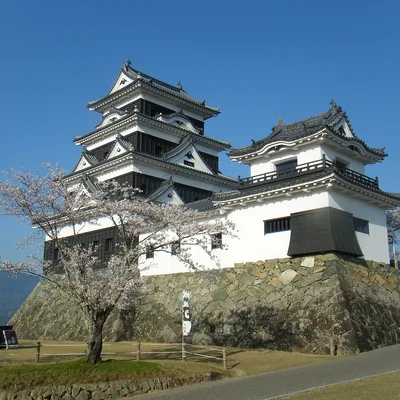
The four-story, six-floor compound-style watchtower keep is sheathed entirely in black-lacquered wooden boards, with a skewed polygonal first-story footprint. Rebuilt in reinforced concrete in 1966, it carries restored golden shachihoko gargoyles that recall Hideie's splendour.
Shoot from upstream of Tsukimi Bridge across the Asahi River for the black keep over flowing water
2.Tsukimi-yagura, the Moon-Viewing Turret (ICP)
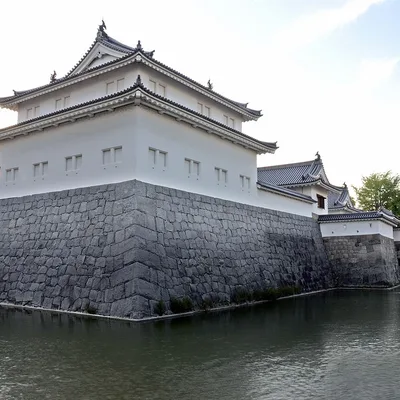
Built around 1620 under Ikeda Tadakatsu in the northwest corner of the honmaru middle bailey, this two-story moon-viewing turret with a partial basement survived the 1945 firebombing. White plaster cladding makes it read as two stories from outside but three from within.
Frame the turret from below the north stone walls of the middle bailey in morning front-light
3.The Crow Castle Seen from Korakuen Garden
Korakuen, one of Japan's three great gardens, was laid out over fourteen years by lord Ikeda Tsunamasa from 1687 as a defensive enclave. The view of the black keep rising beyond its sweeping lawn is the signature Okayama vista, especially magical in early-morning river mist.
Frame the keep horizontally over the lawn from near Sawa-no-ike pond; around 7 am gives misty effect
Stories & Legends
Recommended For
Insider Tips
- 1.The combined Okayama Castle and Korakuen ticket is roughly 100 yen cheaper than buying separately; ask for it at the castle entrance, since the two sites are linked by Tsukimi Bridge in just two to three minutes.
- 2.The surviving Tsukimi-yagura turret opens to visitors only on selected weekends in spring and autumn — check the Okayama City website schedule, since these limited tours are the only chance to see the original timber frame.
- 3.Genso Fantasy Garden, the synchronised night light-up of Korakuen and Okayama Castle held only in August and November, transforms the Crow Castle into a different creature; enter via Korakuen's main gate and Sawa-no-ike route.
Visit Information
- Access
- From JR Okayama Station, take the Higashiyama-bound tram 5 minutes to Shiroshita stop, then walk 10 minutes; or walk 25 minutes from the station. Okayama is a Nozomi shinkansen stop, about 45 minutes from Shin-Osaka and 35 minutes from Hiroshima.
- Time Required
- About 1.5 hours for the keep and main bailey; allow half a day to include Korakuen.
- Budget Guide
- Keep admission JPY 400 adult, JPY 100 child. Combined ticket with Korakuen JPY 720 for adults. (Prices as of 2024.)
Nearby Attractions
Korakuen, one of Japan's three great gardens, is two to three minutes across Tsukimi Bridge and pairs naturally with the castle on a combined ticket. The Hayashibara Museum of Art and the Okayama City Civic Hall sit on the second bailey grounds. Kibitsu Shrine is 30 minutes by car, and Kurashiki Bikan Quarter 30 minutes by JR Sanyo Line.
Go Deeper
Deeper details for those with the time to read on.
Timeline
- 1346
Fortress on Ishiyama-dai
In the Nanboku-cho Shohei era, Kamitsugami Takanao of the Nawa clan builds a small fortress on Ishiyama-dai, recorded in the Bizen Gunki chronicle as the site's beginning.
- 1573
Ukita Naoie Moves In
Ukita Naoie relocates from Kameyama Castle to Ishiyama Castle and begins reconstruction with a planned castle town, three years before Oda Nobunaga begins Azuchi Castle.
- 1590-1597
Ukita Hideie's Great Rebuilding
Hideie, married to Toyotomi Hideyoshi's adopted daughter Gohime, spends eight years building a new honmaru on Okayama hill with a four-story keep clad in gold-leafed roof tiles.
- 1600
Sekigahara and Ukita Exile
After leading part of the western army at Sekigahara, Hideie is exiled to Hachijo Island, the Ukita house is extinguished, and Kobayakawa Hideaki takes the castle.
- 1615
Ikeda Tadakatsu Completes the Layout
In the Genna era, Tadakatsu transfers from Awaji with 315,000 koku, extends the honmaru middle bailey and builds the Tsukimi-yagura turret, finalising the castle's overall plan.
- 1687
Korakuen Construction Begins
Lord Ikeda Tsunamasa commissions chief steward Tsuda Nagatada to build Korakuen, taking fourteen years to complete one of Japan's three great gardens beside Kairakuen and Kenrokuen.
- 1873
Abolition of Castles
The Meiji 6 abolition decree triggers the gradual demolition of buildings and filling-in of moats; by around 1882 only the keep, Tsukimi-yagura, Nishi-no-maru Nishite-yagura and the Ishiyama Gate remain.
- 1931
Old National Treasure Designation
In Showa 6 the keep is designated an Old National Treasure, becoming a protected cultural property after surviving the Meiji-era demolition pressure.
- June 1945
Okayama Air Raid
On 29 June 1945, the Okayama Air Raid destroys the keep and Ishiyama Gate by fire; only Tsukimi-yagura and Nishi-no-maru Nishite-yagura survive on the site.
- 1950
Important Cultural Property Designation
Under the Cultural Properties Protection Law, the two surviving turrets — Tsukimi-yagura and Nishi-no-maru Nishite-yagura — are designated National Important Cultural Properties.
- 1964-1966
Concrete Reconstruction
Over 1964-1966 the keep is rebuilt in reinforced concrete, alongside the Akazu Gate, Roka-mon, Rokujuichi-Gangi Joumon, and parts of the surrounding walls.
- 1987
National Historic Site Designation
The area centred on the honmaru is designated a National Historic Site as the 'Okayama Castle Ruins', placing the surviving stonework under formal protection.
- 1996
400th Anniversary Project
To mark four hundred years since construction, the golden shachihoko fish gargoyles that earned the keep the name Golden Crow Castle are restored to the roof.
- 2006
100 Famous Castles of Japan
The Japan Castle Foundation selects Okayama Castle as number 70 of the 100 Famous Castles of Japan, embedding it in standard tourist guidebooks.
- 2022
Reiwa Renovation Completed
A full interior renovation of the keep is completed, adding the U-jo bar and a 360-degree projection-mapping exhibit to refresh the visitor experience.
Detailed History
Okayama Castle's history begins in the Shohei era (1346-1369), when Kamitsugami Takanao of the Nawa clan built a small fortress on Ishiyama-dai, recorded in the Bizen Gunki chronicle. During the Daiei era (1521-1528) the Kanemitsu family held it as retainers of the Matsuda of Kanagawa Castle. In 1570 Ukita Naoie assassinated Kanemitsu Munetaka and took the area, and in 1573 he moved his seat from Kameyama Castle to Ishiyama Castle, beginning renovations and creating a castle town. Naoie summoned merchants from Bizen-Fukuoka and Bizen-Saidaiji, pursuing a flow-of-goods economic policy three years before Nobunaga's Azuchi Castle. His son Ukita Hideie married Toyotomi Hideyoshi's adopted daughter Gohime, becoming a 574,000-koku great daimyo, and from 1590 to 1597 built a new honmaru on Okayama hill with a four-story keep clad in gold-leafed tiles. The Asahi River was redirected along the north and east of the castle as a natural moat, reportedly under Hideyoshi's guidance. After Sekigahara in 1600, Hideie was exiled to Hachijo Island and the Ukita house extinguished; Kobayakawa Hideaki received Bizen and Mimasaka, widened the middle bailey, and built the outer 'twenty-day moat' in twenty days, but died heirless in 1602. From 1603 the castle passed to Ikeda Tadatsugu, son of Himeji lord Ikeda Terumasa, then to his brother Tadakatsu, who arrived from Awaji in 1615 with 315,000 koku, extended the middle bailey and built the Tsukimi-yagura and Nishi-no-maru Nishite-yagura turrets, completing the layout. From 1632, when Ikeda Mitsumasa arrived from Tottori, the Mitsumasa Ikeda line held the castle until the end of the Edo period. From 1687, Mitsumasa's son Tsunamasa spent fourteen years building Korakuen Garden as a defensive enclave, ranked beside Kairakuen and Kenrokuen as one of Japan's three great gardens. The Meiji abolition of castles in 1873 dismantled most buildings, and the Okayama Air Raid of 29 June 1945 destroyed the keep and Ishiyama Gate; only Tsukimi-yagura and Nishi-no-maru Nishite-yagura survived and were designated Important Cultural Properties under the 1950 Cultural Properties Protection Law. The keep was rebuilt in reinforced concrete in 1964-1966, and in 1996 the 400th anniversary project restored the gilded shachihoko fish gargoyles; in 2006 it was inscribed as number 70 of the 100 Famous Castles of Japan.
Cultural Significance
Okayama Castle's defining feature is its black-lacquered wooden cladding, which gives the keep an almost ink-stained silhouette and earned it the name U-jo, the Crow Castle, and Kin U-jo, the Golden Crow Castle, in the founding era when gold-leafed tiles also crowned the roof. Just over the prefectural border, the white-plastered Himeji Castle bears the answering name White Heron Castle, and the deliberate symbolic pairing of these two keeps across the Sanyo road has become one of the iconic dualities of Japanese castle history. The two surviving original structures — Tsukimi-yagura at the northwest corner of the honmaru middle bailey, built under Ikeda Tadakatsu in the 1620s, and the Nishi-no-maru Nishite-yagura — were designated Important Cultural Properties in 1950, and in 1987 the wider area around the honmaru was designated a National Historic Site as the 'Okayama Castle Ruins'. The 2006 listing as number 70 of the 100 Famous Castles of Japan recognised the site's cultural value despite Meiji destruction and wartime firebombing. Korakuen, across the Asahi River, is a Special Place of Scenic Beauty and stands beside Kairakuen and Kenrokuen as one of Japan's three great gardens, so the castle and the garden form an integrated landscape at the heart of Okayama's identity. The site served as a celebration venue for the Tokyo 2020 Olympic torch relay.
Architectural Details
Okayama Castle is a hilltop castle on a teikaku-shiki layout, exploiting the linked low hills of Okayama, Ishiyama, and Tenjin-yama with three-tiered baileys spreading westward. Because the north-east face of the honmaru was poorly defended, the Asahi River was diverted to wrap closely around it as a natural moat, and Korakuen later served partly as a substitute defensive outwork. The keep is a four-story, six-floor compound-style watchtower (fukugo-shiki bouro-gata) rebuilt in reinforced concrete in 1966; the historical entrance was through the attached shio-gura salt store, but a new front entrance was added during reconstruction. The first-story footprint forms a markedly skewed polygon, and two scholarly readings compete: one sees it as modelled on Azuchi Castle's polygonal tower, the other on Hideyoshi's Osaka Castle keep. The roof carries golden shachihoko gargoyles and paulownia-crest tiles, both restored in the 1996 anniversary project. Tsukimi-yagura, an Important Cultural Property, is two-story with a partial basement, clad in white shikkui plaster over hongawara-buki roofing, reading as two stories from outside but three from within. Stone walls reveal a mix of techniques: rough nozura-zumi from the Ukita era and dressed uchikomihagi from the Ikeda era, with the high wall below the lower middle bailey offering a textbook example of early-modern masonry.