Okazaki Castle
岡崎城
康生町 · JP
Birthplace of Tokugawa Ieyasu — the Dragon Castle where the Mikawa samurai spirit was forged
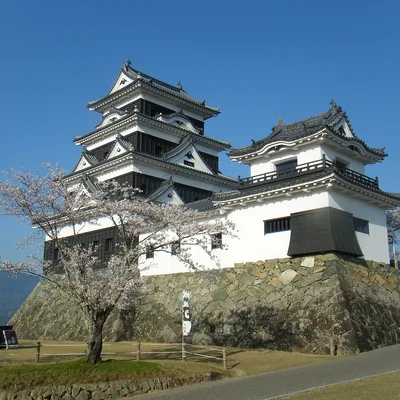
On Ryutozan hill in Okazaki, Aichi, Okazaki Castle is the fortress where Tokugawa Ieyasu — founder of the shogunate that ruled Japan for 260 years — was born in 1543. Demolished in 1873, its three-tier donjon was reconstructed in 1959 as a beloved Mikawa heritage site.
Best Season & Time
Some 800 Yoshino cherry trees frame the donjon — peak season for a Top 100 Cherry Blossom Spot
★★★★★
The Lord Ieyasu Summer Festival fireworks light the sky behind the donjon in a major regional display
★★★★☆
Crimson maples against the stone walls make a quieter, photographer-friendly alternative to spring
★★★☆☆
Leafless trees open clearer sightlines to the donjon; morning river mist adds atmosphere
★★★☆☆
Top 3 Highlights
1.The Reconstructed Donjon and Ryujo Shrine
The three-tier, five-floor donjon rebuilt in 1959 in reinforced concrete stands alongside Ryujo Shrine, dedicated to Tokugawa Ieyasu. Floors one through four house exhibits and the fifth-floor observatory, fully renovated in 2023 for the NHK drama 'Dou Suru Ieyasu'.
Frame the donjon and shrine vertically from the south plaza of the main bailey
2.Cherry Blossoms Across the Oto River
Okazaki Park is a Top 100 Cherry Blossom Spot, with about 800 Yoshino trees around the donjon. The riverside cherry promenade along the Oto River paired with the white keep draws nearly a million visitors at the early-April Sakura Festival.
Compose the donjon and blossoms across the river with a telephoto lens from Tono-bashi bridge
3.The Longest Surviving Castle Wall in Japan
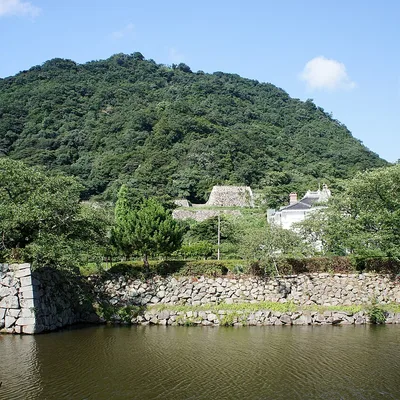
Unearthed in 2015 during the Oto River Riverfront project, the early-Edo Sugogawabata Stone Wall runs 400 meters — the longest surviving castle wall in Japan. Three yokoya-masugata firing salients at 80-meter intervals reveal Tanaka and Honda-era fortification techniques.
Capture the stone wall in a horizontal frame from the Oto River floodplain pathway
Stories & Legends
Recommended For
Insider Tips
- 1.The adjacent Mikawa Samurai Museum Ieyasu Hall offers a systematic overview of Ieyasu and the Mikawa warrior corps; the combined castle-museum ticket is the most economical choice and the dioramas engage families.
- 2.The Sugogawabata Stone Wall unearthed in 2015 is accessible from the Oto River floodplain pathway, offering a different angle on early-modern castle engineering well away from the donjon crowds.
- 3.April evening sakura illuminations cast paper-lantern light over the donjon and trees throughout the festival. Weekday nights are far quieter than weekends and allow long-exposure tripod photography.
Visit Information
- Access
- About 15 minutes on foot from Higashi-Okazaki Station on the Meitetsu Nagoya Main Line, or about 10 minutes from Okazaki-koen-mae Station or Naka-Okazaki Station on the Aichi Loop Line. Approximately 30 minutes by Meitetsu limited express from Nagoya.
- Time Required
- About 1.5 hours for the donjon and park; 2 to 3 hours with the Ieyasu Hall.
- Budget Guide
- Donjon admission JPY 300 adults, JPY 150 children; combined ticket with the Ieyasu Hall JPY 510 adults. Confirm current rates on the official site (prices as of 2024).
Nearby Attractions
The adjacent Mikawa Samurai Museum Ieyasu Hall is essential for understanding Ieyasu and the Mikawa warriors. A 15-minute walk reaches Daiju-ji, the Matsudaira-Tokugawa family temple; 10 minutes by car reaches Iga Hachiman-gu shrine tied to Ieyasu; 20 minutes by car reaches Takisan-ji and Takisan Toshogu.
Go Deeper
Deeper details for those with the time to read on.
Timeline
- 1455
Founding
Saigo Tsugiyori, deputy military governor of Mikawa under the Niki clan, builds a forward fortification on Ryutozan hill — the castle's beginning.
- 1531
Kiyoyasu's Reconstruction
Matsudaira Kiyoyasu, grandfather of Ieyasu, moves his base from Myodaiji to Ryutozan and builds the proper castle that forms the template of today's site.
- 1543
Birth of Tokugawa Ieyasu
Takechiyo, son of Matsudaira Hirotada and the future Tokugawa Ieyasu, is born within the castle walls on a cold winter day — an event the Edo state would later sanctify.
- 1560
Ieyasu Returns to Okazaki
After the death of Imagawa Yoshimoto at the Battle of Okehazama, the nineteen-year-old Matsudaira Motoyasu (Ieyasu) reclaims the castle and breaks with the Imagawa.
- 1590
Tanaka Yoshimasa's Modernization
When Ieyasu is transferred to the Kanto, Toyotomi vassal Tanaka Yoshimasa rebuilds Okazaki as a stone-walled early-modern castle and reorganizes the Okazaki post town.
- 1602
Honda Yasushige Installed
Tokugawa hereditary retainer Honda Yasushige enters with a 50,000-koku stipend, beginning the policy of appointing only fudai daimyo to the birthplace castle.
- 1617
Three-Tier Donjon Completed
Honda Yasunori completes a composite-connected layered-watchtower donjon of three exterior tiers and three interior floors — the signature silhouette of Edo-period Okazaki Castle.
- 1873
Abolition of Castles
Under the Meiji government's haijo-rei edict, the donjon, main gate, east corner turret, earthen walls, and all other structures are demolished.
- 1959
Concrete Donjon Reconstruction
A reinforced-concrete reconstruction of the donjon is completed to the design of Dr. Kido Hisashi, the fruit of a postwar civic fundraising movement.
- 2006
Top 100 Castles Designation
Selected as number 45 of Japan's Top 100 Castles by the Japan Castle Foundation, formalizing its national heritage status.
- 2010
East Corner Turret Reconstructed
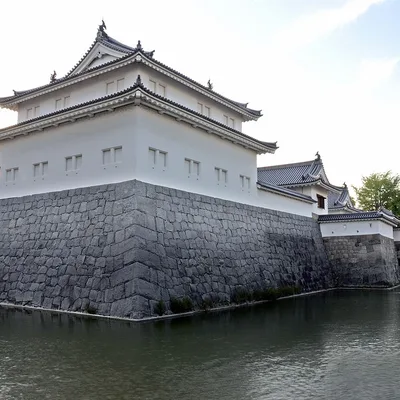
Using a 1781 castle drawing and Matsuyama Castle's Nohara Yagura as reference, the east corner turret and its earthen wall are rebuilt in traditional wood construction.
- 2023
Donjon Exhibit Renewal
Donjon exhibits and the fifth-floor observatory are fully renovated to coincide with the NHK historical drama 'Dou Suru Ieyasu', drawing a new wave of pilgrimage visitors.
Detailed History
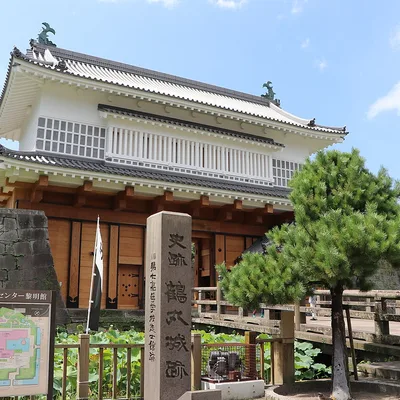
Okazaki Castle's origins trace to the late Muromachi period. Saigo Tsugiyori, deputy military governor for the Niki clan of Mikawa, built an earthen residence near Myodaiji during the Eikyo era (1429-1441). Between 1452 and 1455 he constructed a forward fortification on Ryutozan hill (about 24 meters above sea level) on the north bank of the Sugo River — the structure that would evolve into Okazaki Castle. In 1524 Matsudaira Kiyoyasu, grandfather of Tokugawa Ieyasu, overran Yamanaka Castle in a night attack, forced Saigo Nobusada to surrender Okazaki, and shifted his base from Anjo. Around 1531 Kiyoyasu moved his headquarters to the Ryutozan fort, building the first true castle that forms today's site. On January 31, 1543, Takechiyo — eldest son of Matsudaira Hirotada and the future Tokugawa Ieyasu — was born within the castle. When Hirotada died in 1549 the young heir was taken to Sunpu as an Imagawa hostage, and Okazaki was administered by Imagawa wardens. After Imagawa Yoshimoto's death at the Battle of Okehazama in 1560, Matsudaira Motoyasu (Ieyasu) reclaimed the castle, broke with the Imagawa, and used Okazaki as the springboard for unifying Mikawa. When Ieyasu moved his seat to Hamamatsu in 1570, his son Matsudaira Nobuyasu became lord, but in 1579 Nobuyasu was ordered to commit suicide at Oda Nobunaga's urging; thereafter Ishikawa Kazumasa and Honda Shigetsugu served as castellans. Following Ieyasu's transfer to the Kanto in 1590, Toyotomi vassal Tanaka Yoshimasa converted the site into a stone-walled early-modern fortress, reorganized the castle town, and rerouted the Tokaido through Okazaki to create the Twenty-Seven Bends. In 1602 Honda Yasushige entered with a 50,000-koku stipend; thereafter only fudai daimyo held the lordship in deference to Ieyasu's birthplace. A three-tier donjon was completed in 1617, and Honda Tadatoshi finished the stone walls in 1644. The 1873 abolition of castles saw the donjon and all major structures demolished, but a grassroots civic movement saw a reinforced-concrete reconstruction completed in 1959 to the design of Dr. Kido Hisashi. The main gate was rebuilt in wood in 1993 and the east corner turret in 2010, while 2007 excavations confirmed the original had been the fourth-largest castle in Japan. In 2023 donjon exhibits were fully renovated for the NHK drama 'Dou Suru Ieyasu'.
Cultural Significance
As the birthplace of Tokugawa Ieyasu, Okazaki Castle held special meaning for the Tokugawa shogunate throughout the Edo period — only hereditary fudai daimyo were appointed as lords here, and successive shoguns made pilgrimages to the 'birthplace of the divine ancestor' as a matter of state ritual. The grounds and the surrounding Okazaki Park are listed among Japan's Top 100 Cherry Blossom Spots, the Top 100 Urban Parks of Japan, and the Top 100 Castles of Japan (number 45), and serve as the heart of a cluster of Mikawa samurai heritage sites including the Mikawa Samurai Museum Ieyasu Hall and Ryujo Shrine. The castle town also contains Daiju-ji, the Matsudaira-Tokugawa family temple, and Iga Hachiman-gu, a shrine closely associated with Ieyasu, marking Okazaki as the historic core of Mikawa and the starting point of Ieyasu's famous 'Iga Crossing' escape in 1582. Since the 2023 broadcast of the NHK drama 'Dou Suru Ieyasu', the castle has become a pilgrimage destination for fans from across Japan, and Okazaki has built its tourism brand around the title 'Birthplace of Lord Ieyasu'. The castle's spring cherry-blossom festival, in turn, traces its lineage to the seasonal entertainments of the Edo-period domain lords.
Architectural Details
Okazaki Castle was originally a hilltop castle on the spit-like terrace of Ryutozan hill (about 24 meters above sea level), but renovations under three generations of the Honda clan from 1600 to 1645 gradually converted it into a flatland castle. The plan radiated outward from the main bailey through the Jibutsudo, Ninomaru, Kitaguruwa, Sannomaru, Higashiguruwa, Bizenguruwa, Joruriguruwa, Sakatani, Hakusan, Hieda, and Sugoguruwa enclosures, with a six-fold outer moat to the north and four-fold to the west — among the largest footprints in the Tokai region. The 1617 donjon by Honda Yasunori was a composite-connected layered-watchtower keep of three tiers and three floors, clad in white shikkui plaster with hongawara tile roofing. The 1959 reconstruction is a reinforced-concrete structure of three exterior tiers and five interior floors rising about 24 meters, with interiors fitted as a museum. The east corner turret rebuilt in 2010 is a two-tier wooden watchtower standing 9.4 meters tall, its hip-and-gable roof bearing the Honda clan's standing-hollyhock crest. Edo-period carpentry was faithfully reproduced, with a dry-stacked stone foundation built from on-site excavated stones. The Sugogawabata Stone Wall unearthed in 2015 runs 400 meters — the longest surviving castle wall in Japan — with three yokoya-masugata firing salients at 80-meter intervals.