Odawara Castle
小田原城
小田原市 · JP
The impregnable seat of the Hojo five — and a nine-kilometer earthwork that defied even Hideyoshi
Rising above Odawara on Sagami Bay in Kanagawa Prefecture, Odawara Castle was the century-long stronghold of the Later Hojo clan, repelling armies under Uesugi Kenshin and Takeda Shingen behind a nine-kilometer total enclosure that outmatched Hideyoshi's Osaka.
Best Season & Time
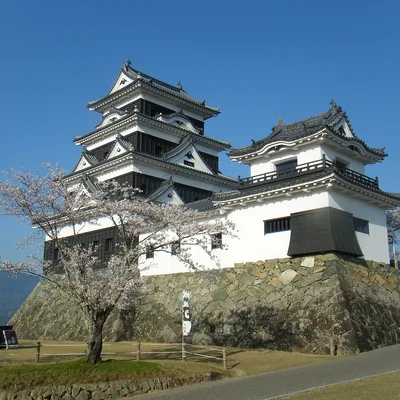
About 320 cherry trees bloom across the castle park, framing the white donjon in a celebrated hanami scene
★★★★★
The iris garden in the eastern moat hits full bloom with hydrangeas — a quiet rainy-season window
★★★☆☆
Maple foliage against the white keep — quieter than cherry season and a favorite of photographers
★★★★☆
Crystal-clear air reveals Sagami Bay and Mount Fuji, and the keep is a popular New Year sunrise spot
★★★☆☆
Top 3 Highlights
1.Sagami Bay Panorama from the Reconstructed Donjon
Rebuilt in reinforced concrete in 1960 on the Edo stone base, the three-tier four-story donjon rises about 60 meters. From its deck the Sagami Bay coast, the Boso Peninsula, and on clear days Oshima island fan out, while inside is a Hojo clan museum.
Frame the keep head-on from the south-east corner of the main bailey at sunset
2.The Imposing Akagane Gate and its Masugata Courtyard
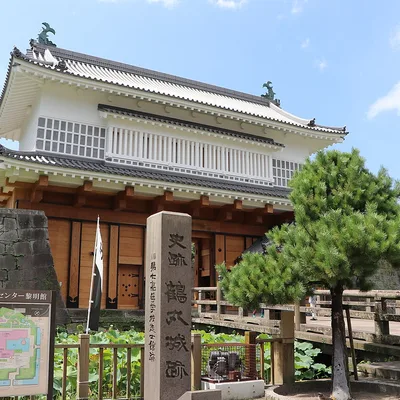
The Akagane Gate, the second-bailey ceremonial entrance, was reconstructed in 1997 in Edo timber-framing. Named for the copper plating on its doors, it forms a classic masugata square-gateway courtyard. On opening days visitors can climb to the second floor.
Cross Sumiyoshi Bridge and shoot the gate towering over the masugata courtyard from below
3.Tokiwagi Gate and the Stone-Walled Inner Bailey
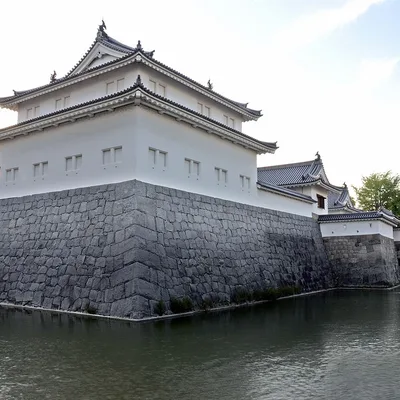
The Tokiwagi (evergreen tree) main-bailey gate, reconstructed in 1971, is a vast turret-gate named after a great pine that once stood beside it. With the early-Edo stonework of the inner bailey it shows full-masonry architecture seldom seen in Kanto.
Shoot the gate and stonework vertically from the main-bailey plaza in cherry or fresh-green seasons
Stories & Legends
Recommended For
Insider Tips
- 1.The combined ticket for the donjon, Tokiwagi Gate SAMURAI-kan, and the History Museum (800 yen for adults) saves about 300 yen versus separate admission — buy it first at the donjon counter to plan your loop most efficiently.
- 2.Ishigakiyama Ichiya-jo, the camp castle Hideyoshi raised in eighty days during the siege, sits 15 minutes by car (or about 90 minutes on foot) south of Odawara — the view of the castle from there reveals the encirclement strategy of the 1590 siege.
- 3.The Odawara Chochin Summer Festival in early August and the Hojo Five-Generations Festival in early May feature samurai parades and armor try-ons, offering the deepest immersion in the castle-town atmosphere.
Visit Information
- Access
- About 10 minutes on foot from the east exit of JR/Odakyu Odawara Station — head straight for the visible donjon to reach the castle park. Tokyo Station is 35 minutes by Kodama shinkansen.
- Time Required
- About 1.5 hours for the donjon and main bailey, 2-3 hours including the museum.
- Budget Guide
- Donjon admission JPY 510 for adults, JPY 200 for children. Three-facility combined ticket JPY 800 for adults, JPY 300 for children. (Prices as of 2024.)
Nearby Attractions
Ishigakiyama Ichiya-jo, the eighty-day camp castle Hideyoshi raised for the siege, is 15 minutes away by car and offers an unmatched comparative view. The Odawara Literature Museum and Hotoku Ninomiya Shrine are within 15 minutes on foot, and the Hakone Tozan line reaches Hakone-Yumoto Onsen in 15 minutes.
Go Deeper
Deeper details for those with the time to read on.
Timeline
- 1416
Omori Rule Begins
The Uesugi Zenshu Revolt brings down the Doi clan, and the Omori of Suruga move into Sagami and begin to develop the early castle.
- c. 1495
Hojo Soun Seizes the Castle
Ise Moritoki, later remembered as Hojo Soun, takes the castle from Omori Fujiyori and greatly expands the old fortifications — the beginning of the Later Hojo century.
- 1561
Uesugi Kenshin's Invasion
Uesugi Kenshin of Echigo besieges Odawara for about a month with a force reported at 110,000, but Hojo Ujiyasu holds and repels him.
- 1569
Takeda Shingen's Invasion
Takeda Shingen of Kai invades with 20,000 men; the castle holds, and the retreating Takeda are ambushed at the Battle of Mimasetoge.
- 1590
The Siege of Odawara
Hideyoshi arrives with over 200,000 men and the overnight castle on Mount Ishigaki; after three months Odawara surrenders almost without bloodshed and 'Odawara Hyojo' enters the language.
- 1614
Okubo Tadachika Dispossessed
Tokugawa retainer Okubo Tadachika is stripped of the domain after political defeat; rule passes through castle wardens, the Abe, and the Inaba before the Okubo are restored.
- 1632
Kan'ei Great Renovation
Lord Inaba Masakatsu rebuilds the inner enclosure as a full-masonry castle around the main bailey — a rare Kanto-region early-modern layout.
- 1703
Genroku Earthquake
The Genroku Kanto earthquake topples the donjon, turrets, and stone walls and devastates the castle town.
- 1706
Hoei Reconstruction of the Donjon
Lord Okubo Tadamasu rebuilds the donjon — the Hoei reconstruction that stood until the Meiji abolition of castles.
- 1870-1872
Meiji Demolition
The Meiji government's abolition of castles results in the demolition of the donjon and every other structure, and the site falls into long decline.
- 1938
National Historic Site
The main bailey, second bailey, Hachimanyama old citadel, and total enclosure are designated a National Historic Site and preservation begins.
- 1960
Donjon Reconstruction
Reinforced-concrete reconstruction of the donjon, undertaken for the city's 20th anniversary, becomes a postwar emblem of revival.
- 1997
Akagane Gate Reconstruction
The Akagane Gate of the second bailey is rebuilt using Edo-period timber-framing techniques, becoming the icon of the Heisei reconstruction era.
- 2006
100 Fine Castles of Japan
Selected by the Japan Castle Foundation as number 23 of the 100 Fine Castles of Japan, securing its place among Kanto's signature warring-states fortresses.
Detailed History
Odawara Castle traces its origins to a late-Heian fortified residence built by the Kobayakawa branch of the Doi clan, but documented castle-building begins after the Uesugi Zenshu Revolt of 1416, when the Omori of Suruga expanded into Sagami. Around 1495 (Meio 4), Ise Moritoki — later Hojo Soun, founder of the Later Hojo — seized the castle from Omori Fujiyori and expanded the old fortifications. Soun himself kept Nirayama Castle as his base until his death; the shift to Odawara came with his son Ujitsuna, who succeeded him around 1518. Across five generations — Ujitsuna, Ujiyasu, Ujimasa, and Ujinao — the Later Hojo extended their reach over nearly all of Kanto for almost a century. In 1561 Uesugi Kenshin of Echigo besieged Odawara with a force said to number 110,000; Ujiyasu held out for about a month and repelled him. In 1569 Takeda Shingen of Kai invaded with 20,000 troops, but the castle held and the retreating Takeda were ambushed at the Battle of Mimasetoge. Anticipating war with Hideyoshi, from 1587 the Hojo completed a roughly nine-kilometer earthwork-and-moat total enclosure — a perimeter outmatching Hideyoshi's later defenses at Osaka. In 1590 (Tensho 18) Hideyoshi arrived with over 200,000 men, raised the 'overnight castle' on Mount Ishigaki to break Hojo morale, and reduced the surrounding strongholds one by one. After three months Odawara surrendered virtually without bloodshed. Tokugawa Ieyasu's retainer Okubo Tadayo received the site, and through the Edo period it served as the seat of Odawara Domain, a 113,000-koku holding. Tadayo's son Tadachika was dispossessed in 1614; the domain passed through Abe and Inaba lords before the Okubo returned in 1686 at 103,000 koku. A major renovation from 1632 rebuilt the inner enclosure as a full-masonry castle, but the Genroku Kanto earthquake of 1703 toppled the donjon, turrets, and walls; the donjon was rebuilt in 1706 and survived until the Meiji abolition of castles. Between 1870 and 1872 every structure was demolished, and the 1923 Great Kanto earthquake collapsed most of the remaining masonry. The site was designated a National Historic Site in 1938, the donjon reconstructed in reinforced concrete in 1960, followed by Tokiwagi Gate in 1971, Akagane Gate in 1997, and Umadashi Gate in 2009 — a phased program preserving an unusually rich coexistence of medieval and early-modern remains.
Cultural Significance
Designated a National Historic Site in 1938 as the 'Odawara Castle Site', the property is prized for the rare coexistence of an early-Edo full-masonry castle in its central enclosure together with the Hachimanyama old citadel and the medieval total-enclosure earthworks. In 2006 it was selected as number 23 of the Japan Castle Foundation's 100 Fine Castles of Japan. The phrase 'Odawara Hyojo' — a council that drags on without ever reaching a decision — entered everyday Japanese from this castle's 1590 siege, when the Hojo war council oscillated endlessly between surrender and resistance. The Later Hojo ran what historians describe as an organized, near-modern domainal government — implementing land surveys, post-horse systems, populist tax policies, and temple-shrine controls that prefigured many of the institutions later refined by the Tokugawa shogunate. NHK Taiga dramas including Ogon no Hibi, Hideyoshi, Sanada Maru, and Onna Joshu Naotora repeatedly dramatize the 1590 siege of Odawara. The Hojo Five-Generations Festival in early May features the largest samurai procession in Kanagawa Prefecture, ongoing since 1965, and the Odawara Chochin Summer Festival preserves the Edo-period paper-lantern craft celebrated in the saying 'The Odawara lantern is prized over its weight'.
Architectural Details
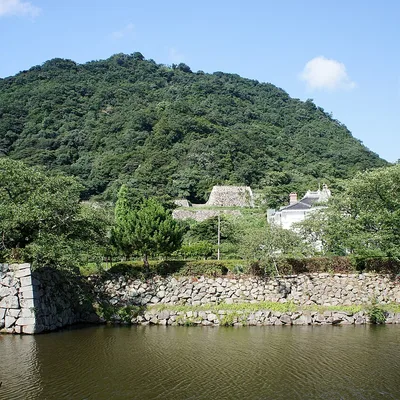
Odawara Castle is a connected-bailey hilltop castle exploiting the Hachimanyama hills, the coastline, and the Hayakawa River, with its core wrapped in three concentric defenses: the second-bailey moat, the third-bailey moat, and the great total-enclosure moat. Its defining feature is the late-Tensho total enclosure of about nine kilometers, ringing the castle-town with earthwork and dry moats from Hachimanyama to the seashore. The best-preserved sections are the Komine great cutting and the Sakurababa and Inari-mori ramparts. The early-Edo modern bailey, rebuilt in the 1632 renovation, ringed the main bailey with second and third baileys, the Byobu-iwa, Komine, and Okuramai enclosures, and four small umadashi salients — a full-masonry layout exceptional for Kanto. The current donjon, rebuilt in 1960 in reinforced concrete to evoke the Hoei reconstruction, rises three tiers and four stories to 27.2 meters, crowned with a railed gallery in the classic layered-keep style. The 1997 Akagane Gate is a turret-gate framing the masugata courtyard at the second-bailey entrance, praised for Nakajima Takeo's Edo timber-frame techniques. The 1971 Tokiwagi Gate guards the main bailey, and the 2009 Umadashi Gate completes the approach. The stonework is principally early-Edo uchikomihagi semi-dressed masonry, with older nozura-zumi and later kirikomihagi visible side by side.