Nijō Castle
元離宮二条城
中京区 · JP
Site of the Tokugawa shogunate's Kyoto might and the Meiji Restoration handover, Nijo Castle
In central Kyoto, Nijō Castle (Nijo Castle) was built in 1603 by Tokugawa Ieyasu and expanded in 1626 by Iemitsu. The Ninomaru Palace (National Treasure) is a masterpiece of Edo shoin-zukuri and the site of the 1867 Taisei Hokan. UNESCO 1994.
Best Season & Time
400 cherry trees in full bloom; nighttime illumination shows the Ninomaru Palace; peak crowds.
★★★★★
Comfortable with green and Ninomaru pond lotus; lighter crowds outside the Gion Festival.
★★★★☆
Foliage and Ninomaru Palace illumination — Kyoto's autumn favorite, late November peak.
★★★★★
Snow on Ninomaru Palace is rare; lighter crowds, but the palace interior is cold.
★★★★☆
Top 3 Highlights
1.National Treasure Ninomaru Palace
The Ninomaru Palace (National Treasure) was completed in 1626, totaling 6 buildings, 33 rooms, and over 1000 tatami. The Great Audience Hall is where Yoshinobu announced Taisei Hokan in 1867, with Kano-school wall paintings still in place.
Oblique view of the Ninomaru Palace's irimoya roof in morning side light
2.Splendid Karamon gate decoration
The Karamon (Important Cultural Property), the main gate to Ninomaru Palace, is an 1626 hinoki-bark four-legged gate decorated with vibrant carvings of cranes, pines, peonies, and dragons in gold leaf. The 2013 restoration recovered the brilliance.
Frontal view of the Karamon's overall carvings, natural light
3.Inner moat and Honmaru stone walls
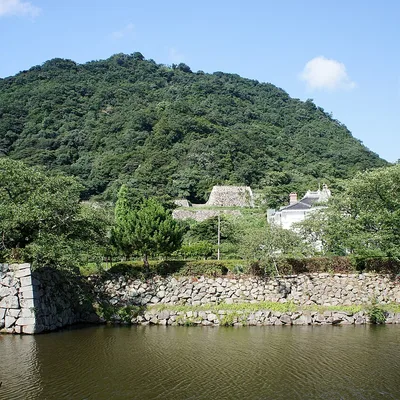
The Honmaru is enclosed by an inner moat (18-22 m × 2 m deep) and stone walls used since Ieyasu's 1601 construction — among the oldest in Kyoto. The view across the moat to the Honmaru Palace (relocated 1893) fuses Edo and Meiji periods.
Honmaru viewed across the inner moat, morning of cherry-blossom peak
Stories & Legends
Recommended For
Insider Tips
- 1.The Ninomaru Palace's wall paintings are masterpieces of the Kano Tan'yu school — 1016 panels, 954 of which are Important Cultural Property. Interior photography is forbidden; the official catalog (1500 yen) is the way to keep a record.
- 2.The Karamon completed restoration in 2013, with the 10-year-cycle repainting at peak vibrancy through 2024. The 9am opening with morning sunlight is the best photographic timing.
- 3.The illumination runs spring (cherry blossoms) and autumn (foliage), with separate ticket (2400 yen) at 18:00-21:00. The pond illumination and outer moat projection-mapping reflect modern stagecraft; advance booking on the official site is required.
Visit Information
- Access
- 2 minutes' walk from Nijojo-mae Station on the Kyoto Tozai subway line; 15 minutes by city bus 9/50/101 from JR Kyoto, 10 minutes by taxi. Direct subway access from central Kyoto makes day trips easy.
- Time Required
- 2 hours for Ninomaru + Honmaru + garden, half a day with illumination.
- Budget Guide
- Adult admission 1300 yen (Ninomaru Palace included); illumination separate 2400 yen. (As of 2024.)
Nearby Attractions
The Kyoto International Manga Museum (former Ryuchi elementary) 10 minutes' walk; Kyoto Imperial Palace (World Heritage candidate) 15 minutes; Sanjo-dori (Edo townscape) 10 minutes by 3 subway stops combine for a 'central Kyoto World Heritage and bakumatsu' itinerary, 6 minutes by subway to Kyoto Station.
Go Deeper
Deeper details for those with the time to read on.
Timeline
- 1601
Construction begins
Tokugawa Ieyasu orders Kyoto Shoshidai Itakura Katsushige to begin construction, founding the Tokugawa Kyoto stronghold.
- March 1603
First Ninomaru complete
The first Ninomaru Palace is finished; Ieyasu moves from Fushimi and the Edo shogunate is founded at Nijo Castle.
- March 1611
Ieyasu-Hideyori meeting
Ieyasu meets Toyotomi Hideyori at Nijo Castle, surfacing tensions with the Osaka camp in a historic encounter.
- Sept 1626
Kanei renovation
The third shogun Iemitsu undertakes the Kanei renovation for Emperor Gomizunoo's progress, expanding Ninomaru to its present scale.
- 1750
Keep burned
The keep is destroyed by lightning, never to be rebuilt — a typical example of Edo-era keep loss.
- 1863-1866
Iemochi visits
The 14th shogun Iemochi makes three visits to Kyoto and stays at Nijo, reactivating it for late-shogunate court negotiations.
- 14 Oct 1867
Taisei Hokan
The 15th shogun Tokugawa Yoshinobu announces Taisei Hokan in the Great Audience Hall — the historic end of the Edo shogunate.
- 1884
Imperial detached palace
The castle becomes the Imperial Nijo Detached Palace; imperial use begins as a Kyoto imperial facility.
- 1893
Honmaru relocation
Kyoto Imperial Palace's old Katsuranomiya Palace is relocated to the Honmaru, surviving as a rare court-style shoin example.
- 1939
Granted to Kyoto City
Granted to Kyoto City as 'Former Imperial Nijo Detached Palace' and opened to the public, designated Historic Site and Special Place of Scenic Beauty.
- Dec 1994
World Heritage inscription
Inscribed within 'Historic Monuments of Ancient Kyoto' (17 components), gaining international protection.
- 2013-2017
Karamon and palace restoration
The Karamon (2013) and Ninomaru Palace (2017-, ongoing) restoration projects mark continuing cultural property care.
Detailed History
Nijo Castle is the Tokugawa shogunate's Kyoto stronghold begun in 1601 by Tokugawa Ieyasu (1543-1616) under the direction of Kyoto Shoshidai Itakura Katsushige (1545-1624). The first Ninomaru Palace was completed in March 1603, the same month Ieyasu moved from Fushimi to Nijo and received his Sei-i Taishogun appointment, founding the Edo shogunate at this very site. In March 1611 Ieyasu met Toyotomi Hideyori (1593-1615) here in a key meeting that surfaced tensions with the Osaka camp. The castle served as base for the 1614-1615 Osaka Campaigns; after Ieyasu's death in 1615, Tokugawa Hidetada (1579-1632) succeeded. The third shogun Iemitsu (1604-1651) succeeded in 1624, and in September 1626 he undertook the Kanei renovation for Emperor Gomizunoo's (1596-1680) progress, expanding the Ninomaru Palace into its present 6-building, 33-room, 1000+-tatami scale and completing the Honmaru, Ninomaru garden, Karamon, Higashi-Ote-mon, Nishi-mon, and other principal buildings. The 5-day Kanei progress (6-10 September 1626) was the largest imperial visit of the Edo era. The castle subsequently served as shogunal lodging during visits to Kyoto and as the Kyoto Shoshidai and Tairo's office. On 14 October 1867 (Keio 3.10.14), the 15th shogun Tokugawa Yoshinobu (1837-1913) announced Taisei Hokan in the Great Audience Hall — the historic end of the Edo shogunate. From 1868 it served as the Daijokan-dai during the Boshin War, then as Kyoto Prefectural office (1869), Imperial Detached Palace (1872), and the Imperial Nijo Detached Palace (1884) for imperial use. In 1893 the Honmaru received the relocated Katsuranomiya Palace from Kyoto Imperial Palace as Honmaru Palace. In 1939 the castle was granted to Kyoto City as 'Former Imperial Nijo Detached Palace' and opened to the public; the Ninomaru Palace was designated a National Treasure in 1952, and UNESCO inscribed Nijo Castle within 'Historic Monuments of Ancient Kyoto' in December 1994 under criteria (ii)(iv). Major restoration continues — Karamon (2013) and Ninomaru Palace (2017-) — with around 2.3 million visitors annually.
Cultural Significance
Nijo Castle is the Tokugawa shogunate's Kyoto stronghold and a symbol of the shogunate system, embodying 265 years of Tokugawa history from the 1603 founding to the 1867 Taisei Hokan. UNESCO criteria (ii)(iv) cite the development of Edo shoin-zukuri architecture and the masterpiece of shogunate-system architecture. The 1867 Taisei Hokan is a watershed event of modern Japanese history, recurring in Shiba Ryotaro's Ryoma ga Yuku and Saigo no Shogun, and NHK's Tokugawa Yoshinobu (1998), Yae no Sakura (2013), Seiten o Tsuke (2021) — central to Japan's national historical narrative. The Kano Tan'yu school's wall paintings (1626, 1016 panels) are the apex of early-Edo wall painting, with masterpieces like 'Pine and Hawk' and 'Cherry and Peony', a key reference in art history. The 1626 Kanei Imperial Progress was the largest imperial visit of the Edo era, a symbolic case of the Edo shogunate's ko-bu-gattai (public-military reconciliation) policy. The Karamon (2013 restoration) is among the three great karamon alongside Yomeimon at Toshogu and Sankoumon at Kitano Tenmangu — a peak of early-Edo polychrome architecture.
Architectural Details
Nijo Castle is a 275,000-square-meter flatland castle with two baileys — Ninomaru (Ninomaru Palace, garden, Karamon) and Honmaru (Honmaru Palace, garden) — surrounded by inner and outer moats in a rinkaku-style plan. Principal buildings include the Ninomaru Palace (National Treasure, 1626, 6 buildings, 33 rooms, 1000+ tatami, irimoya hinoki-bark roof), Karamon (Important Cultural Property, 1626), Higashi-Ote-mon (Important Cultural Property), Honmaru Palace (Important Cultural Property, 1893, relocated from Katsuranomiya Palace), and the keep base (1750 lightning-fire). The Ninomaru Palace links Tozamurai, Shikidai, Ohiroma, Sotetsu-no-ma, Kuro-shoin, and Shiro-shoin in zigzag-staggered fashion, with the Ohiroma's Upper Chamber as the Taisei Hokan site and the Kano Tan'yu school's 'Pine and Hawk' wall paintings still in place. The Karamon (2013 restoration) is a hinoki-bark four-legged gate with vibrant carvings of cranes, pines, peonies, and dragons in gold leaf — the apex of early-Edo polychrome architecture. The Ninomaru Garden (Special Place of Scenic Beauty, by Kobori Enshu, 1626 renovation) is a strolling pond garden in the shoin-zukuri tradition.