Kōchi Castle
高知城
丸ノ内 · JP
The only castle in Japan where the original tenshu and honmaru palace still stand side by side
Rising on the 45-meter Otakasa Hill at the heart of Kōchi City, Kōchi Castle preserves an Edo-period keep, palace, gates and 15 Important Cultural Property structures — a 202,600-koku Tosa stronghold built by Yamauchi Kazutoyo, nicknamed 'Hawk Castle' for its hawk-feather roof tiles.
Best Season & Time
Cherry blossoms frame the original tenshu; 'Lights of Hospitality' illumination extends viewing into the night
★★★★★
Lush green moss between stone walls; early-morning park strolls are cool and ideal for studying the masonry
★★★☆☆
Crimson leaves play off white plaster and hawk-feather tiles, quieter than spring and prized by photographers
★★★★☆
A rare snow dusting turns the keep into a once-in-years scene; morning moat mist is a hidden Tosa winterscape
★★★☆☆
Top 3 Highlights
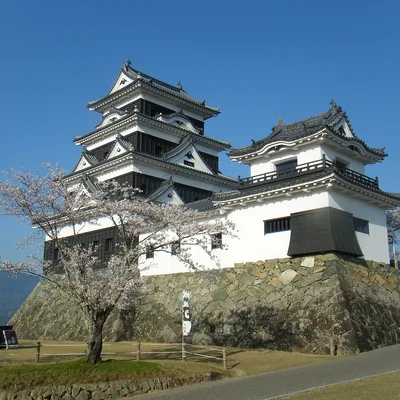
1.Original keep and palace, the only pair
An independent watchtower keep, four tiers with six floors at 18.5 meters, stands beside the Kaitokukan palace — the only castle in Japan to retain both. The 1747 wooden reconstruction reproduced the lost original, and the palace's fourteen rooms evoke Kazutoyo and Chiyo.
Frontal shot up the stone stairs from the Sannomaru lawn, best in morning side-light
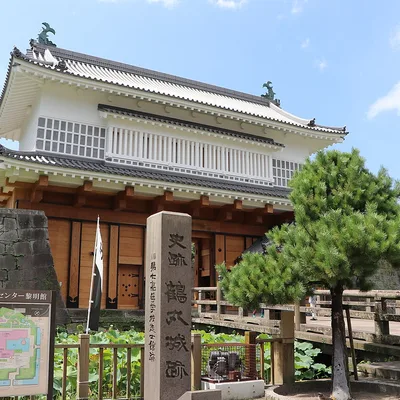
2.Ōtemon, Edo-era gate with triple killing-box
The Ōtemon main gate survives from the original Edo construction, enclosed by an uchi-masugata stone courtyard that lets defenders strike from three sides. It outlived the 1727 fire, the Meiji abolition decree and the 1945 air raid, framing the tenshu in iconic shots.
Vertical composition from beside the Itagaki Taisuke bronze, framing gate and keep together
3.Only castle with every honmaru building intact
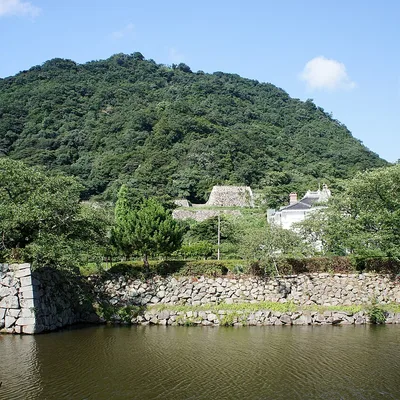
Kōchi Castle is unique in Japan for retaining every original inner-bailey building — keep, palace, storehouse, Kuroganemon gate, tamon corridors, Tsumemon bridge-gate and arrow walls — fifteen Important Cultural Properties. Free park access traces the layout from above.
Aerial or high vantage from the north or east; raking late light brings out the textures
Stories & Legends
Recommended For
Insider Tips
- 1.The Tsumemon just before the keep entrance hides a clever layout: its upper floor is a corridor bridge linking honmaru and ninomaru, while the ground floor angles defenders away from any direct approach. Pause inside to feel the engineering of the inner ring.
- 2.From the side of the Itagaki Taisuke bronze, an unmarked stone stair leads off the tourist route to a section of ninomaru wall where moss-covered Chōsokabe-era stones remain — remnants of the castle that stood before Yamauchi arrived in Tosa.
- 3.Every Sunday the 300-year-old Ōtesuji street market sets up along the 1 km approach to the castle. Arriving by 6 a.m. lets you taste Tosa produce and yuzu before the gates open — the most efficient way to combine local food and castle.'
Visit Information
- Access
- About a 25-minute walk from JR Kōchi Station, or take the tram via Harimaya-bashi to Kōchijō-mae stop and walk 5 minutes. From Kōchi Ryōma Airport, the airport bus reaches the city center in roughly 35 minutes.
- Time Required
- About 1.5 hours for the tenshu and palace; half a day with the surrounding park.
- Budget Guide
- Admission to the tenshu and honmaru palace is 420 yen for adults; under 18 free. The outer park is free of charge. (as of 2024; confirm latest fees on the official site)
Nearby Attractions
Within walking distance lie the Itagaki Taisuke birthplace and the Liberty and People's Rights Memorial, plus the 300-year-old Ōtesuji Sunday Market. A single tram ride reaches Hirome Market, Harimaya-bashi and Godaisan's Chikurin-ji temple, while a half-hour drive south brings travellers to Katsurahama Beach with the Sakamoto Ryōma statue and museum.
Go Deeper
Deeper details for those with the time to read on.
Timeline
- 1338
Founding of Otakasayama Castle
Otakasa Matsuomaru built the original fortification on the hill and hosted Prince Mitsuyoshi, seventh son of Emperor Go-Daigo, for the Southern Court cause
- 1341
Fall of the early castle
Matsuomaru lost to Northern Court generals Hosokawa Zenjō and Saeki Tsunesada; the castle was abandoned for the next two centuries
- 1587
Chōsokabe Motochika's attempt
Returning from the Kyushu campaign, the Tosa warlord tried to rebuild on Otakasa Hill, but flooding forced him to abandon the project within a few years
- 1601
Yamauchi Kazutoyo's arrival
Transferred from Kakegawa as the new 202,600-koku lord of Tosa, Kazutoyo chose to rebuild on Otakasa rather than expand cramped Urado on the coast
- 1603
Honmaru completed
Two years of breakneck construction under Dodo Tsunaie completed the honmaru; the monk Zaisen named the new castle 'Kawanakayama'
- 1610
Renamed 'Kōchiyama'
Persistent flooding led the second lord Tadayoshi to rename the castle after a Buddhist phrase suggested by the Chikurin-ji monk Kūkyō; the abbreviation 'Kōchi' soon followed
- 1611
Sannomaru and original layout finished
The technically difficult sannomaru bailey was at last completed, sealing the full original castle plan envisioned by Kazutoyo
- 1727
Kyoho great fire
A fire in the castle town consumed nearly every structure except the Ōtemon main gate; reconstruction did not begin for two years
- 1747
Present-day tenshu rebuilt
Under the eighth lord Toyoshiki, the keep was rebuilt in faithful timber reproduction of the lost original — the very structure that still stands today
- 1873
Meiji abolition spared
A jurisdictional dispute between Army and Treasury kept the site off the formal abolition list; the next year it reopened as Kōchi Park
- 1934
National Treasure designation
Fifteen surviving structures including the keep were designated National Treasures under the prewar protection law
- 1945
Kōchi air raid spared
The July firebombing devastated the surrounding city, yet the historic castle buildings miraculously survived intact
- 1950
Redesignated as ICPs
Under the new Cultural Properties Protection Law, the fifteen structures were redesignated as Important Cultural Properties of the nation
- 1959
National Historic Site
On 18 June the entire castle precinct was designated a National Historic Site, anchoring the park's preservation regime
- 2006
Top 100 Castles selection
Selected as No. 84 on the Japan Castle Foundation's list of Top 100 Castles, cementing its pilgrimage status among castle enthusiasts
Detailed History
The story begins in the Nanboku-cho era, when Otakasa Matsuomaru, a local Southern Court partisan, built Otakasayama Castle on the hill in 1338 and welcomed Prince Mitsuyoshi, the seventh son of Emperor Go-Daigo. In 1341 Matsuomaru was defeated by Northern Court forces under Hosokawa Zenjō and Saeki Tsunesada, and the castle was abandoned for centuries. In 1587 the Sengoku warlord Chōsokabe Motochika, returning from Hideyoshi's Kyushu campaign, attempted to rebuild on the hill, but the swampy delta of the Kagami and Enokuchi rivers proved untameable; by 1591 he had abandoned the site for coastal Urado Castle. After his son Morichika sided with the losing Western Army at Sekigahara in 1600 and lost his domain, Yamauchi Kazutoyo was transferred from Kakegawa Castle in 1601 as the new lord of the 202,600-koku Tosa Domain. Judging Urado too cramped, Kazutoyo chose Otakasa Hill and persuaded Tokugawa Ieyasu to pardon the imprisoned master builder Dodo Tsunaie, engaging him as overall construction supervisor for 6,000 koku. Dodo deployed the Anō stonemasons, while Yamauchi retainers, children and over 1,200 day laborers completed the honmaru and ninomaru stone walls in 1603. The keep was finished the same eighth lunar month, and the Shinnyo-ji monk Zaisen named it Kawanakayama Castle. Recurrent flooding led the second lord Tadayoshi in 1610 to rename it Kōchiyama Castle after a Buddhist phrase suggested by the Chikurin-ji monk Kūkyō, and the abbreviated 'Kōchi' name spread to the city. The difficult sannomaru bailey was finally completed in 1611, sealing the original layout. The 1727 Kyoho fire consumed nearly every structure save the Ōtemon. From 1729 the eighth lord Toyoshiki entrusted reconstruction to commissioner Fukao Tatewaki; the keep and turrets were completed by 1749 and the whole rebuilding finished in 1753. The present keep dates to 1747, faithfully reproducing the lost original. The 1873 Meiji abolition decree spared the castle thanks to a bureaucratic stalemate between Army and Treasury, and the next year it opened as a public park. The 1934 National Treasure designation, the miraculous survival of the 1945 air raid, and the 1950 redesignation under the new Cultural Properties Protection Law confirmed its protected status; the grounds became a National Historic Site in 1959 and the castle was selected as No. 84 on Japan's Top 100 Castles in 2006.
Cultural Significance
Kōchi Castle is one of only twelve castles in Japan to retain an original Edo-period tenshu, and the sole surviving example where the keep and the inner-bailey palace, the Kaitokukan, are both intact. Fifteen structures — the keep, palace, Nandokura storehouse, Ōtemon main gate, Kuroganemon iron-clad gate, Tsumemon bridge-gate, Rōkamon corridor gate, east and west tamon corridors, and eight sections of arrow-slit earthen walls — are collectively designated Important Cultural Properties. The honmaru is uniquely preserved in its entirety, making this a critical reference site for Japanese castle scholarship and an unusual chance to read the three-dimensional layout of an Edo-period daimyo's compound. The nickname 'Hawk Castle' (Takajō) derives from the resemblance of the tiles and walls to hawk feathers, a counterpart to Himeji's 'White Heron Castle' cherished by the people of Tosa for centuries. The grounds were designated a National Historic Site in 1959, listed as castle No. 84 in Japan's Top 100 Castles in 2006, and selected as scene No. 27 of the Shikoku 88 Vistas. Beyond architecture, the castle anchors the modern political geography of Tosa: it stands at the heart of the city where Itagaki Taisuke launched the Freedom and People's Rights Movement.
Architectural Details
The castle is a tiered hirayama (hilltop) castle on the 45-meter Otakasa Hill, with the honmaru at the summit and the ninomaru, sannomaru and nishinomaru stepping down the slopes; the Kagami and Enokuchi rivers form natural outer moats. The keep is an independent watchtower type, four roof tiers with six interior floors at 18.5 meters. Its plan begins with a two-storey base of 8 by 6 ken, narrows to 4 ken square on the third and fourth floors, and finishes 3 ken square on the fifth and sixth — a stepping silhouette echoing Momoyama archetypes. Chidori-hafu gables face north and south, karahafu gables east and west, and the top-floor balustrade was reportedly authorized by Ieyasu himself. Rather than sitting on a dedicated stone base, the keep stands directly on the honmaru bedrock beside the palace, an early-Keicho design making the inner bailey the final redoubt. The Kaitokukan palace is a single-storey, irimoya-roofed, hongawara-tiled structure with fourteen rooms including the lord's eight-tatami jōdan-no-ma with tokonoma, staggered shelves and concealed warrior alcove; its 'wave-relief' transoms were carved by Takechi Jinshichi, and post-1727 austerity left the interior in white plaster. Stone walls show all three classic techniques — nozurazumi, uchikomi-hagi and kirikomi-hagi — and an exposed segment of Chōsokabe stonework survives in the lower ninomaru.