Hikone Castle
彦根城
彦根市 · JP
One of Japan's five National Treasure castle keeps, seat of the Ii clan's 350,000-koku domain
A hilltop castle on Mount Konki in Hikone, Shiga, begun by Ii Naotsugu in 1603 and completed in 1622. The three-tier tenshu plus Tsuke-yagura and Tamon-yagura are National Treasures, the site itself a Special Historic Site, and Genkyu-en garden is a designated Place of Scenic Beauty.
Best Season & Time
About 1,100 cherry trees reach full bloom; keep and blossoms are illuminated together in early April
★★★★★
Fresh greenery and lotus in Genkyu-en, 20-30C weather, lighter crowds make a comfortable visit
★★★★☆
Autumn foliage in Genkyu-en frames the keep at peak in late November, with evening illumination
★★★★★
Snow-dusted views of the keep are rare and crowds the lightest, ideal for a quiet visit
★★★★☆
Top 3 Highlights
1.National Treasure tenshu with attached yagura
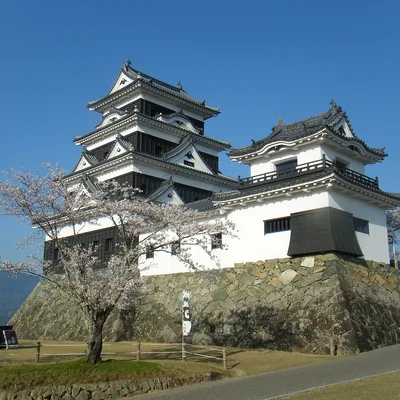
The three-tier main keep of 1606 became a National Treasure in 1952 with its Tsuke-yagura and Tamon-yagura. Its facade blends three gable styles (irimoya, kirizuma, karahafu), one of just five National Treasure keeps. Tradition links it to the Otsu keep, unconfirmed.
Viewing the keep through the Tenbin-yagura during cherry blossom season at morning light
2.Tenbin-yagura, an Important Cultural Property
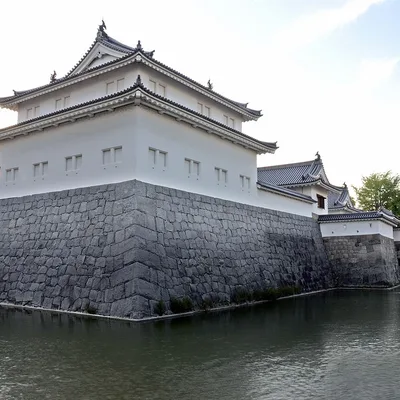
Designated an Important Cultural Property in 1951, the Tenbin-yagura is a rare symmetrical structure: two-story turrets at each end joined by a watari-yagura above a drawbridge moat, enabling fire from two directions. The 1854 repair kept the right half's gobo-zumi stone walls.
Looking up at the Tenbin-yagura from below in natural daylight
3.Genkyu-en garden and the borrowed scenery of the keep
Built in 1677 by the fourth lord Ii Naooki, Genkyu-en is a stroll-style daimyo pond garden inspired by the Eight Views of Xiaoxiang. The view of the keep across the pond is an Edo landscape masterpiece, and with the sukiya-style Rakuraku-en is a Place of Scenic Beauty.
The classic shot of the keep mirrored across the pond, afternoon light during autumn foliage
Stories & Legends
Recommended For
Insider Tips
- 1.The 800-yen combined ticket covers the tenshu, Hikone Castle Museum, and Genkyu-en, with half a day to see all three. Among the five National Treasure keeps (Matsumoto, Inuyama, Matsue, Himeji, Hikone), Hikone is the most ornate.
- 2.Genkyu-en's view of the keep across the pond is the photographers' favourite. Autumn (late November) and spring (early April) bring evening illumination and crowds; weekdays or early morning are best. Check the official site for schedule.
- 3.Two castle-town streets sit within a five-minute walk: Honmachi Castle Road (a merchants' quarter) and Yume-Kyobashi Castle Road (a reconstructed Edo townscape). Hikonyan the mascot appears three times daily in the plaza; check the website for times.
Visit Information
- Access
- A 15-minute walk from JR Hikone Station on the Biwako Line, one stop (3 minutes) from Maibara. Nagoya is 45 minutes away by Shinkansen and JR, Kyoto 30 minutes, and Osaka one hour, making it an easy Kansai day trip.
- Time Required
- About 2 hours for the keep and Genkyu-en, or half a day with the museum and town.
- Budget Guide
- Combined ticket for the keep, museum, and Genkyu-en is 800 yen for adults; Genkyu-en alone is 200 yen. Check the official website for latest prices.
Nearby Attractions
A 10-minute walk away lies Yume-Kyobashi Castle Road, a reconstructed Edo townscape lined with shops; Omi-Hachiman (Hachimanbori canal and water town) is 15 minutes by car, and Nagahama (Kurokabe Square and Hokoku Shrine) is 30 minutes by car. The classic route ties together the Ii clan domain and the castle towns of eastern Lake Biwa.
Go Deeper
Deeper details for those with the time to read on.
Timeline
- 1600
Sekigahara merit
Ii Naomasa served as a Tokugawa vanguard during the decisive 1600 battle and was rewarded with an 180,000-koku Omi domain centered on Sawayama Castle, the founding moment of the Hikone domain.
- 1602
Death of Naomasa
Ii Naomasa died from his battle wounds; his still-young heir Naotsugu took over the Ii clan.
- 1603
Construction begins
Senior retainer Kimata Morikatsu carried out Naomasa's plans, launching a tenka-bushin project involving twelve daimyo from seven provinces.
- 1606
Tenshu completed
The three-tier tenshu was finished; tradition holds it was relocated from the Otsu Castle keep, the basis for one of the future National Treasure keeps.
- 1614
Ii Naotaka inherits
Around the Osaka Winter Campaign, the sickly Naotsugu yielded leadership to his younger brother Naotaka, who accelerated the castle's completion.
- 1622
Castle completed
The Tenbin-yagura, Nishinomaru three-tier yagura, Otemon gate, and other principal buildings were finished, ending an 18-year phased construction.
- 1677
Genkyu-en built
The fourth lord Ii Naooki built Genkyu-en, a stroll-style daimyo pond garden modeled after China's Eight Views of Xiaoxiang.
- March 3, 1860
Sakuradamon Incident
Hikone lord and tairo Ii Naosuke was assassinated outside the Sakurada Gate of Edo Castle, ending the Ansei Purge and triggering decisive bakumatsu turmoil.
- 1878
Imperial preservation
Slated for demolition under the castle abolition order, the keep was saved by imperial decree during Emperor Meiji's Hokuriku tour on Okuma Shigenobu's advice.
- 1951
Important Cultural Properties
Hikone Castle site was designated a National Historic Site, and the tenshu, Tsuke-yagura, Tamon-yagura, Tenbin-yagura and other structures (six in total) became Important Cultural Properties.
- 1952
National Treasure designation
The tenshu together with the Tsuke-yagura and Tamon-yagura were elevated to National Treasures, placing Hikone among the five castles (Matsumoto, Inuyama, Matsue, Himeji, Hikone) with a National Treasure keep.
- 1956
Special Historic Site
Hikone Castle site was elevated to Special Historic Site status, securing the highest level of cultural heritage protection for the entire grounds.
- 1992
World Heritage tentative list
Inscribed on Japan's UNESCO World Heritage tentative list, continuing as the second Japanese castle candidate after Himeji.
Detailed History
Hikone Castle began with Ii Naomasa (1561-1602), one of the Tokugawa Four Heavenly Kings, who served as a vanguard in 1600 and was awarded a 180,000-koku domain in northern Omi, taking over Sawayama Castle, former seat of Ishida Mitsunari. Disliking Sawayama's medieval layout, Naomasa planned a new castle but died in 1602 from his battle wounds. Because his heir Ii Naotsugu (1590-1662) was a child, the senior retainer Kimata Morikatsu carried out Naomasa's vision, beginning construction on Mount Konki in 1603. The project was a tenka-bushin (nationwide public work) mobilising twelve daimyo from seven provinces including Owari and Echizen. The three-tier tenshu was completed in 1606 and Naotsugu moved in. Tradition holds the keep was relocated and rebuilt from the Otsu Castle keep, but this has never been historically confirmed. Around the Osaka Winter Campaign in 1614 the sickly Naotsugu was succeeded by his younger brother Ii Naotaka (1590-1659). A third construction phase from 1616 added the palace, and by 1622 the Tenbin-yagura, the Nishinomaru three-tier yagura, the Otemon gate, and other major structures were complete. By 1633 the Ii held the largest fudai-daimyo domain of 350,000 koku. Hikone was the seat of the Ii for fourteen generations across the Edo period. The bakumatsu lord Ii Naosuke (1815-1860) served as tairo, concluded the 1858 Japan-US Treaty of Amity and Commerce, led the Ansei Purge, and was assassinated in 1860 in the Sakuradamon Incident. After the Meiji Restoration the keep was scheduled for demolition under the castle abolition order but saved by imperial decree during Emperor Meiji's 1878 Hokuriku tour on Okuma Shigenobu's advice, then granted to the last lord Ii Naonori. The castle was donated to Hikone City in 1944. In 1951 the site became a National Historic Site and six structures including the keep were Important Cultural Properties; in 1952 the tenshu plus its Tsuke-yagura and Tamon-yagura became National Treasures, placing Hikone among the five castles whose keep holds that status. The site was promoted to Special Historic Site in 1956, and the Umaya stables joined the Important Cultural Properties list in 1963. UNESCO World Heritage tentative-list inscription followed in 1992; Shiga and Hikone continue to pursue full inscription as Japan's second castle World Heritage Site after Himeji.
Cultural Significance
Hikone was seat of the Ii clan, head of the fudai daimyo with a 350,000-koku domain, and ranks among the five castles (Hikone, Matsumoto, Inuyama, Matsue, Himeji) whose keep is a National Treasure, a flagship of the twelve surviving original keeps and an emblem of the Edo shogunate order. The 1952 designation rests on the keep's preservation of early Edo design and quality on par with the other four. The Ii were the leading house of the Tokugawa Four Heavenly Kings, famed since the Sekigahara campaign for the akazonae (all-red equipment) of their warriors, and produced six tairo during the Edo period. Ii Naosuke, who led the Ansei Purge of 1858-59, remains a debated figure in modern historiography, dramatized in Shiba Ryotaro's novel Hana no Shogai and in NHK Taiga dramas Hana no Shogai (1963), Tokugawa Yoshinobu (1998), and Reach Beyond the Blue Sky (2021). Genkyu-en and Rakuraku-en, modeled after China's Eight Views of Xiaoxiang in Hunan, served as a regional centre of Confucian and Chinese-poetry culture. Hikonyan, the mascot introduced in 2007 for the castle's 400th anniversary, became a nationally beloved figure as an early yuru-chara hit and a major tourism draw.
Architectural Details
Hikone sits on Mount Konki (about 50 m), a hilltop fortress defended by three concentric water moats and earthen ramparts. The principal structures are the tenshu (National Treasure, 1606), the Tsuke-yagura and Tamon-yagura (both National Treasures), and as Important Cultural Properties the Tenbin-yagura, the Nishinomaru Sanju-yagura, the Taiko-mon yagura, the Ni-no-maru Sawaguchi Tamon-yagura, and the Umaya stables (designated 1963), together with Genkyu-en and Rakuraku-en (Place of Scenic Beauty). The three-tier irimoya-zukuri tenshu is traditionally said to have been moved and rebuilt from the Otsu Castle keep, though this is unconfirmed. Among the five National Treasure keeps it is the most decoratively elaborate, combining three gable types (irimoya, kirizuma, karahafu), with kato-mado (cusped windows) on the top floor and a roofline alternating chidori-hafu and karahafu gables. The Tenbin-yagura, with symmetrical two-story turrets at either end joined by a watari-yagura over a drawbridge moat, allows two-directional fire and is the strategic linchpin of the defense; tradition links it to the Nagahama Castle main gate but this is unverified. Genkyu-en (Place of Scenic Beauty, built 1677 by Ii Naooki) is a stroll-style daimyo pond garden after the Eight Views of Xiaoxiang, and Rakuraku-en is a sukiya-style daimyo residence with palace and tea-room buildings.