Sites of Japan’s Meiji Industrial Revolution: Iron and Steel, Shipbuilding and Coal Mining
明治日本の産業革命遺産 製鉄・鉄鋼、造船、石炭産業
Twenty-three sites across eight prefectures tracing Japan's stunning leap into heavy industry
Scattered across eight prefectures and eleven cities, this 2015-inscribed World Heritage property gathers 23 component sites tracing Japan's iron and steel, shipbuilding, and coal mining boom from the 1850s to 1910.
Best Season & Time
Hagi castle town cherry blossoms and mild weather around Nirayama make outdoor circuits genuinely pleasant
★★★★★
Calmer seas cut Hashima cancellations and crisp weather suits long walks in Nagasaki, Kitakyushu, and Hagi
★★★★★
Strong winds cancel Hashima tours often, but inland buildings like the Yawata First Head Office stay visitable
★★★☆☆
Rainy-season storms and typhoons force frequent Hashima cancellations; heatstroke care essential outdoors
★★☆☆☆
Top 3 Highlights
1.Hashima Coal Mine, the iconic Battleship Island
The man-made island off Nagasaki (ID1484-018, nicknamed Gunkanjima or Battleship Island) housed over 5,000 miners at its 1959 peak. Coal extraction ran from 1870 to 1974, leaving concrete tenement ruins shaped like a warship silhouette.
Telephoto framing from the Nomozaki sunset viewpoint, warship silhouette on the western horizon
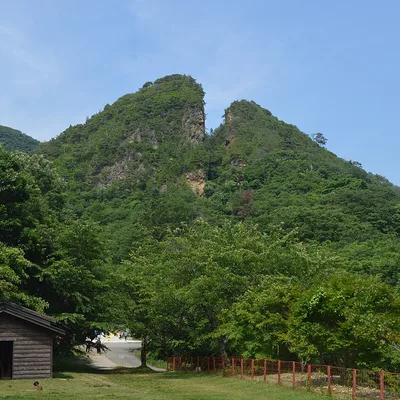
2.Nirayama Reverberatory Furnace, only complete survivor
Started in 1853 by Egawa Tarōzaemon Hidetatsu and completed in 1855, the Nirayama Reverberatory Furnace (ID1484-009) in Izunokuni, Shizuoka, is the only fully preserved Bakumatsu-era reverberatory furnace in the world, with twin paired furnaces and 16-metre brick chimneys.
From the southern walkway, look up at the chimneys; afternoon backlight sharpens the brickwork
3.Shōkasonjuku Academy and the Meiji Restoration cradle
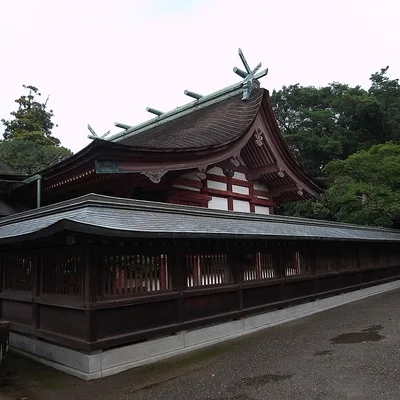
The modest Hagi schoolhouse (ID1484-005) was led by Yoshida Shōin from 1857 and trained Meiji statesmen including Takasugi Shinsaku, Itō Hirobumi, and Yamagata Aritomo. Two simple tatami rooms still stand under a thatched roof as the cradle of modern Japan.
Front southeast view; soft morning light brings out the thatched-roof texture
Stories & Legends
Recommended For
Insider Tips
- 1.The 23 sites span eight prefectures; the full set realistically takes 5-7 days. Group visits into Nagasaki (Hashima, Glover, Kosuge, Mitsubishi), Hagi (5 sites), and Kitakyushu plus Omuta (Yawata, Miike) for a sane schedule.
- 2.Several operators run Hashima Island landing tours, but annual cancellations average around 30 percent due to sea conditions, so keep 2-3 buffer days. Winter cancellations exceed 50 percent — check operator running records before booking flights.
- 3.The Imperial Steel Works First Head Office, Repair Shop, and Former Forge Shop sit inside active Nippon Steel premises and cannot be entered. Dedicated public viewpoints are the only outside vantage; viewing hours are limited so confirm official notices first.
Visit Information
- Access
- Nagasaki area uses JR Nagasaki Station plus trams and boats; Hagi is about 70 minutes by bus from Shin-Yamaguchi Station; Kitakyushu from JR Kokura, Omuta from JR Omuta, Nirayama 25 minutes on foot from Izuhakone Railway. A rental car is far more efficient.
- Time Required
- Half a day to a full day per area; visiting all 23 sites realistically takes 5-7 days.
- Budget Guide
- Hashima Island tours JPY 4,000-5,000; individual site admissions JPY 0-500; rental car around JPY 6,000 per day (as of 2024; confirm latest fees on each operator's official site).
Nearby Attractions
Around Nagasaki the property pairs naturally with the Hidden Christian Sites of the Nagasaki Region and the Atomic Bomb Museum. The Hagi area extends to Hagi Castle ruins and the castle town's samurai-residence streets. Kitakyushu connects to the TOTO Museum, Kamaishi to the Iron History Hall, and the Izu Nirayama site to the nearby Egawa Residence.
Go Deeper
Deeper details for those with the time to read on.
Timeline
- 1851
Shūseikan project launches
Satsuma domain lord Shimazu Nariakira begins the Shūseikan project in Kagoshima, building reverberatory furnaces, a machine factory, and spinning mills.
- 1853
Nirayama Furnace construction starts
Immediately after Perry's arrival, Egawa Tarōzaemon Hidetatsu starts building the Nirayama Reverberatory Furnace in Izu, completing it in 1855 to begin Western-style pig iron smelting.
- 1857
Yoshida Shōin teaches at Shōkasonjuku
Yoshida Shōin takes over the Shōkasonjuku Academy in Hagi, training Takasugi Shinsaku, Itō Hirobumi, Yamagata Aritomo and other future leaders of the Meiji Restoration.
- 1858
Mietsu Naval Dock established
The Saga domain sets up the Mietsu Naval Dock and goes on to build the steamship Ryōfū Maru, laying the foundation of modern Japanese naval capability.
- 1868
Takashima Coal Mine begins extraction
Full-scale coal extraction starts at the Takashima Coal Mine off Nagasaki, introducing British mining techniques through the involvement of Thomas Blake Glover and others.
- 1870
Hashima coal mining starts
Serious undersea coal mining begins on Hashima Island off Nagasaki, the starting point of the artificial island and dense concrete tenement skyline that would follow.
- 1887
Miike Port and Misumi West Port open
Miike Port in Omuta, Fukuoka opens as the shipping hub for the Miike Coal Mine, and Misumi West Port in Uki, Kumamoto is also developed in the same year.
- 1901
Imperial Steel Works fires up
The Imperial Steel Works (Yawata Steel Works) in present-day Kitakyushu begins blast-furnace operations, fully achieving modernization of Japan's iron and steel industry.
- 1905
Mitsubishi No.3 Dry Dock completed
The Mitsubishi No.3 Dry Dock is completed at the Nagasaki shipyard, then one of the largest in East Asia and a major upgrade to Japan's ability to build big ships.
- 1909
Giant Cantilever Crane installed
A British-made Giant Cantilever Crane is installed at the Mitsubishi Nagasaki Shipyard; it remains in active duty as a working piece of industrial heritage.
- January 2009
Added to UNESCO Tentative List
The cluster is added to Japan's UNESCO Tentative List under the name 'Modern Industrial Heritage Sites in Kyushu and Yamaguchi — Forerunners of Non-Western Industrialization'.
- January 2014
Cabinet locks in 23 sites
A Cabinet understanding fixes the property at eight areas and 23 component sites and submits the nomination dossier as 'Sites of Japan's Meiji Industrial Revolution: Kyushu-Yamaguchi and Related Areas'.
- May 2015
ICOMOS recommends inscription
ICOMOS recommends inscription and proposes the present name limiting the scope to heavy industry — 'Sites of Japan's Meiji Industrial Revolution: Iron and Steel, Shipbuilding and Coal Mining'; Japan accepts.
- 5 July 2015
World Heritage inscription
Inscribed at the 39th World Heritage Committee as Japan's first property to include living operational facilities, after intense Japan-Korea negotiations over forced-labour wording.
- 2020
Information Centre opens
The Industrial Heritage Information Centre opens in Shinjuku, Tokyo as the official venue presenting the histories of the 23 component sites and the wartime labour debate.
Detailed History
The story of the Sites of Japan's Meiji Industrial Revolution begins with the late-Tokugawa crisis triggered by Commodore Perry's 1853 arrival. That same year Egawa Tarōzaemon Hidetatsu began constructing a reverberatory furnace at Nirayama in Izu, completing it in 1855 and opening Japan's Western-style pig-iron smelting era. In 1857 Yoshida Shōin took over the small Shōkasonjuku Academy in Hagi and trained the young men — Takasugi Shinsaku, Itō Hirobumi, Yamagata Aritomo — who would become the core of the Meiji Restoration. The Saga domain established the Mietsu Naval Dock in 1858 and built the steamship Ryōfū Maru there, while the Satsuma domain had begun developing its Shūseikan industrial complex from 1851. Coal mining intensified after 1868: the Takashima Coal Mine in 1868, Hashima in 1870. Miike Port opened in 1887, the Imperial Steel Works at Yawata broke ground in 1899 and lit its first blast furnace in 1901, achieving full-scale iron and steel modernization. Shipbuilding facilities followed in rapid sequence: the Mitsubishi Former Pattern Shop (1898), the Mitsubishi No.3 Dry Dock (1905), and the Mitsubishi Giant Cantilever Crane (1909). The World Heritage push started in 2006 when the Kyushu Regional Governors' Conference adopted preservation as a shared policy theme, and a preliminary tentative-list proposal was submitted to the Agency for Cultural Affairs that year. The site cluster entered the official tentative list in January 2009 under the name 'Modern Industrial Heritage Sites in Kyushu and Yamaguchi', and a January 2014 Cabinet understanding finalized the lineup at eight areas and 23 sites under the title 'Sites of Japan's Meiji Industrial Revolution: Kyushu-Yamaguchi and Related Areas'. ICOMOS issued an inscription recommendation in May 2015 and simultaneously proposed the current name, ‘Sites of Japan’s Meiji Industrial Revolution: Iron and Steel, Shipbuilding and Coal Mining’, explicitly limiting the scope to heavy industry — Japan agreed. The property was inscribed on 5 July 2015 at the 39th session of the World Heritage Committee. Because the cluster includes operational facilities outside the protection of Japan's Cultural Properties Law, the nomination was led by the Cabinet Secretariat rather than the Agency for Cultural Affairs — a first for a Japanese cultural property.
Cultural Significance
This is Japan's first World Cultural Heritage property to include living operational facilities, inscribed under criteria (ii), (iii), and (iv) as a case of early industrialization in a non-Western country. The 23 sites carry layered legal protections: many are designated Historic Sites (Hagi and Nirayama Reverberatory Furnaces, Shōkasonjuku Academy, Hashino, Mietsu Naval Dock, Hashima and others); Important Cultural Properties include Glover House and Office, the Shūseikan machine factory, Miike facilities, and the Onga River Pumping Station; and operational structures such as the Mitsubishi No.3 Dry Dock, the Giant Cantilever Crane, and the Yawata Steel Works Repair Shop were still in active industrial use at inscription. Hashima, popularly Gunkanjima or Battleship Island, has become an icon of industrial-ruin photography and appears repeatedly in film and games. Inscription drew opposition from South Korea and China on the grounds that seven sites used Korean conscripts and Chinese prisoners-of-war as forced labour during World War II. Japan committed to explaining that 'there were a large number of Koreans and others who were brought against their will and forced to work under harsh conditions', and the inscription text records this in a footnote. The Industrial Heritage Information Centre in Shinjuku, Tokyo presents the full context including the labour issue.
Architectural Details
This property is a serial nomination of 23 component sites in eight areas across eight prefectures. Four components illustrate its architectural range. The Nirayama Reverberatory Furnace (Izunokuni, Shizuoka) was begun in 1853 by Egawa Tarōzaemon Hidetatsu and completed in 1855. It is the only fully preserved Bakumatsu-era reverberatory furnace, with twin paired furnaces (four flues in two coupled stacks) and brick chimneys intact for Western-style pig-iron smelting. Shōkasonjuku Academy (Hagi, Yamaguchi) is the modest wooden schoolhouse where Yoshida Shōin taught from 1857. Two tatami rooms under a thatched roof produced Takasugi Shinsaku, Itō Hirobumi, and Yamagata Aritomo. The Imperial Steel Works at Yawata (Kitakyūshū) broke ground in 1899 and lit its first blast furnace in 1901. Its First Head Office, Repair Shop, and Former Forge Shop are inscribed but sit inside active Nippon Steel premises with only external viewpoints — a defining feature of Japan's first World Heritage with operating facilities. The Mitsubishi No.3 Dry Dock (1905) and Giant Cantilever Crane (1909) at Nagasaki remain in active use. Hashima (Gunkanjima, off Nagasaki) began full coal extraction in 1870; concrete tenement ruins on the man-made island form a warship-like silhouette. The Mietsu shipyard (Saga) and Hashino iron site (Kamaishi, Iwate) round out the 23 components.