Amami-Ōshima Island, Tokunoshima Island, northern part of Okinawa Island, and Iriomote Island
奄美大島、徳之島、沖縄島北部及び西表島
鹿児島県 · JP
Where the Iriomote cat and Amami rabbit roam — two million years of island evolution
Inscribed in 2021 as Amami-Ōshima Island, Tokunoshima Island, northern part of Okinawa Island, and Iriomote Island — a serial UNESCO Natural Heritage property along the Ryukyu arc, recognized for the biodiversity that two million years of isolation built into its subtropical rainforest.
Best Season & Time
Fresh mangrove green and the wildlife breeding season — the year's prime window for animal-spotting
★★★★★
Peak snorkeling, but typhoons and heat limit treks to dawn or dusk — a beach-and-reef season
★★★☆☆
Typhoons recede, nights cool — guided night tours showcase the most active nocturnal endemics
★★★★☆
Around 20C feels mild, migratory birds pass through, and forests reach their quietest moment
★★★★☆
Top 3 Highlights
1.Paddling the Primeval Mangroves of Iriomote
The Nakama and Urauchi river basins of Iriomote hold Japan's largest mangrove forests. Kayaking between Ohirugi, Mehirugi, and Yaeyama-hirugi stands reveals a tidal world where exposed prop roots turn the riverbed into a stilt-rooted maze.
Shoot from the upper Nakama River downstream at dawn low tide with a wide lens
2.Trekking Kinsakubaru Old-Growth on Amami
In the heart of Amami-Oshima, Kinsakubaru holds a subtropical evergreen canopy of 130-year-old Itajii oaks and towering Hikage-hego tree ferns — core habitat for the Amami rabbit, with a Jurassic feel from giant ferns and aerial roots.
Shoot vertically toward the tree-fern canopy on an overcast morning for the most dramatic light
3.Endemic Wildlife of the Yanbaru Forest
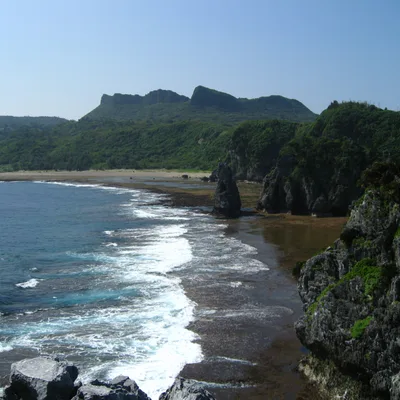
Northern Okinawa's Yanbaru is home to the flightless Okinawa rail and the critically endangered Okinawa woodpecker. Karst pinnacles at Daisekirinzan and the fern gully at Hiji Otaki concentrate what is justly called the 'Galapagos of the East'.
Backlit fern shots along the Hiji Otaki boardwalk just after sunrise work especially well
Stories & Legends
Recommended For
Insider Tips
- 1.On Iriomote, time your Nakama or Urauchi mangrove kayak around a spring low tide so exposed prop roots become walkable mid-trip. Tide tables shift the experience dramatically — book the day before with a guide who can re-time the run.
- 2.Kinsakubaru old-growth on Amami has required a certified guide since 2021. Half-day tours run roughly 5,000 yen per person via Naze-based operators, and a wet pre-dawn start gives the best chance of spotting the Amami rabbit.
- 3.For Okinawa rails, the Kuina-no-mori captive-rearing facility in Kunigami's Oku district lets you see the bird up close, while staff share informal intel on roadkill hot spots and recent wild sightings not in any guidebook.
Visit Information
- Access
- Amami-Oshima is reached by air from Naha or Kagoshima. Iriomote is a 40-45 minute high-speed ferry from Ishigaki Port (itself a short flight from Naha). The Yanbaru area of northern Okinawa is about a 2-hour drive from Naha. Rental cars are essential on every island.
- Time Required
- Plan 1-2 nights per island; a full four-island loop wants a week or more.
- Budget Guide
- Mangrove kayak tours run JPY 6,000-12,000 per person; half-day guided treks from JPY 5,000; lodging averages around JPY 10,000 per night (prices as of 2024).
Nearby Attractions
Iriomote pairs naturally with Kabira Bay and the Ishigaki limestone caves on neighbouring Ishigaki Island via the same Ishigaki Airport route. The Yanbaru area combines well with Kouri Island and the Churaumi Aquarium, both about an hour by car. On Amami-Oshima, Honohoshi beach and the kokuto shochu distilleries make worthwhile add-ons.
Go Deeper
Deeper details for those with the time to read on.
Timeline
- ~2 million BP
Island Isolation
During the early Pleistocene the Ryukyu arc separates from the Asian mainland, and relict endemics such as the Amami rabbit begin independent evolution
- 1965
Iriomote Cat Discovered
Yukio Togawa identifies a specimen on Iriomote, leading to formal description of a new species hailed as a major 20th-century zoological discovery
- 2003
Candidate Site Selected
A Ministry of the Environment / Forestry Agency study panel names the 'Ryukyu Islands' a candidate alongside Shiretoko and Ogasawara
- Jan 2013
Tentative List Decision
Japan's inter-ministerial council on World Heritage formally decides to add 'Amami-Ryukyu' to the country's Tentative List submission
- Feb 2016
Tentative List Inscribed
Components are clarified as the four islands of Amami-Oshima, Tokunoshima, northern Okinawa, and Iriomote, and the property enters the UNESCO Tentative List
- Sep 2016
Yanbaru National Park
Yanbaru National Park is newly designated across Kunigami, Ogimi, and Higashi villages of northern Okinawa, while Iriomote-Ishigaki National Park is expanded earlier the same year
- Mar 2017
Amami Gunto National Park
Amami Gunto National Park is created, adding Kikai, Okinoerabu, and Yoron Islands to Amami-Oshima and Tokunoshima and consolidating protections
- May 2018
IUCN Deferral
IUCN recommends deferral citing fragmentary boundaries and the unsettled status of returned Northern Training Area land, and Japan withdraws the nomination
- Sep 2018
Boundary Revisions
About 2,800 hectares of returned military land is added to the proposed area, and the criterion is narrowed from ecosystems (ix) to biodiversity (x)
- Feb 2019
Re-Nomination
The Japanese government resubmits the revised nomination to the World Heritage Centre, and IUCN returns for fresh field evaluation that October
- 26 Jul 2021
World Heritage Inscription
The 44th World Heritage Committee, held online during the pandemic, inscribes the four-island serial property as Japan's fifth Natural World Heritage Site
Detailed History
The campaign to list these four islands began in 2003, when the Ministry of the Environment and the Forestry Agency jointly convened a study committee on candidate sites. Alongside Shiretoko and Ogasawara, the panel selected the 'Ryukyu Islands' as a candidate. Shiretoko was inscribed in 2005 and Ogasawara in 2011, but the Ryukyu nomination stalled — landowner consent, the US military's Northern Training Area on Okinawa, and an unresolved scope slowed progress. In January 2013 the government's inter-ministerial council decided to add 'Amami-Ryukyu' to the Tentative List, but because the submission identified the area only by latitude and longitude, the World Heritage Centre deferred and asked for clarification. By that December the Ministry had confirmed the components: Amami-Oshima and Tokunoshima in Kagoshima Prefecture plus the northern part of Okinawa Island (Kunigami, Ogimi, and Higashi villages) and Iriomote in Okinawa Prefecture — four islands across two prefectures. The resubmission of February 2016 secured the Tentative List entry; in March 2016 Iriomote-Ishigaki National Park was expanded to cover all of Iriomote, and on September 15 of the same year Yanbaru National Park was newly designated. On March 7, 2017, Amami Gunto National Park was created, adding Kikai, Okinoerabu, and Yoron Islands to the protected fold. The February 2017 nomination dossier carried, at UNESCO's request, the present descriptive title so that the specific components were unambiguous. IUCN's October 2017 field evaluation flagged discontinuous boundaries and the unsettled Northern Training Area land, and in May 2018 it recommended 'deferral' — Japan withdrew. In June 2018 some 3,700 hectares of returned military land were folded into Yanbaru National Park; that September the scientific committee added about 2,800 hectares to the proposed area and narrowed the criterion from ecosystems (ix) to biodiversity (x) alone. The revised nomination went forward in February 2019, and IUCN returned for fieldwork that October. The COVID-19 pandemic delayed the 44th World Heritage Committee, which finally met online on July 26, 2021 — when the four-island serial property was inscribed, making it Japan's fifth Natural World Heritage Site after Yakushima, Shirakami-Sanchi, Shiretoko, and Ogasawara.
Cultural Significance
The 42,698-hectare property contains some 1,819 vascular plants, 21 terrestrial mammals, 394 birds, 21 amphibians, 36 reptiles, and 267 inland fish. About 10 percent of vascular plants (189 species), 62 percent of mammals (13), 86 percent of amphibians (18), and 64 percent of reptiles (23) are endemic. The IUCN Red List roster reads like an evolutionary roll call: the Iriomote cat, the Amami rabbit, the Okinawa-Amami-Tokunoshima spiny rats, the Ryukyu long-furred rat, the Okinawa rail and woodpecker, Lidth's jay, the Ryukyu black-breasted leaf turtle, Kuroiwa's ground gecko, Anderson's crocodile newt, and Ishikawa's frog. Legal protection rests on a multilayer framework: the Natural Parks Act (Amami Gunto, Yanbaru, and Iriomote-Ishigaki National Parks); the Basic Act on Biodiversity; Natural Monument designations; and the Act on the Conservation of Endangered Species. A property peculiarity: along the southeast face on Okinawa, about 25 km of the boundary lacks a formal buffer zone because the adjacent land is a residue of the Northern Training Area where access is restricted — effectively a de facto buffer. Community-led conservation — Amami habitat night-monitoring, Iriomote's 'wildcat patrol' against roadkill, mongoose eradication run with residents — was cited by IUCN as central to outstanding universal value.