Yanbaru National Park
やんばる国立公園
国頭郡 · JP
Where the Okinawa rail darts through subtropical forest — a UNESCO Natural Heritage park
Across the villages of Kunigami, Ōgimi, and Higashi at the northern tip of Okinawa Island, Yanbaru National Park protects a subtropical evergreen forest home to the Okinawa rail and other species found nowhere else on earth. Designated in 2016, it became a UNESCO Natural World Heritage site in 2021.
Best Season & Time
Fresh green leaves and white iju blossoms; breeding season for the Okinawa rail boosts sighting chances
★★★★★
Beach plus forest combo at its peak — but watch for typhoons and heat; aim for very early-morning hikes
★★★☆☆
Comfortable temperatures for hiking, and migrating grey-faced buzzards fill the sky in vast flocks
★★★★☆
Mild 15-20°C draws mainland visitors escaping the cold; evergreen forest stays lush all winter
★★★★☆
Top 3 Highlights
1.Daisekirinzan: The Tropical Karst Landscape
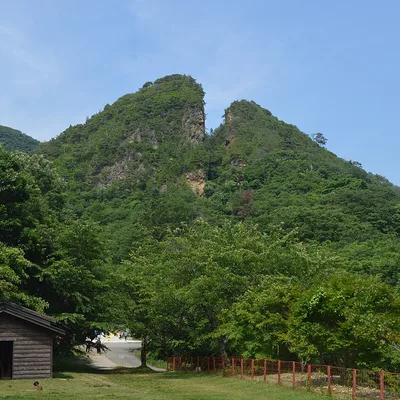
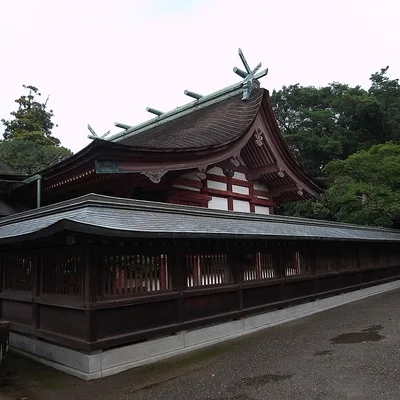
In northern Kunigami, Daisekirinzan is a tropical karst formed when limestone laid down 200 million years ago was eroded by rain into a forest of stone pillars. Trails thread through the scene, which also enshrines Asumui, one of Okinawa's oldest sacred sites.
Use a wide-angle lens from the Churaumi Observation Deck for limestone pillars against the ocean
2.The Subtropical Evergreen Forest of Itajii
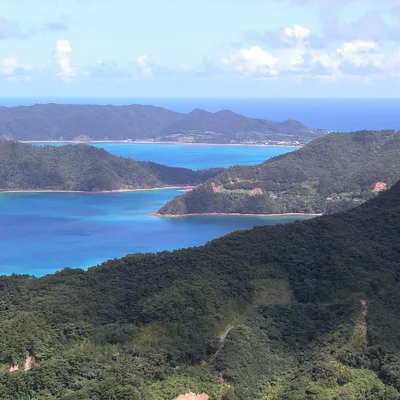
Dominated by itajii (Castanopsis sieboldii) oaks, the subtropical forest blankets most of the park, with 300-year-old giants, tree ferns, and an understory of cycads. This rare woodland — where tropical and temperate worlds meet — is the cradle of Yanbaru's endemic species.
Shoot the canopy from the Hiji Falls trail or the Fukuji Dam viewing platform looking down
3.Cape Hedo and the Northernmost Tip of Okinawa Island
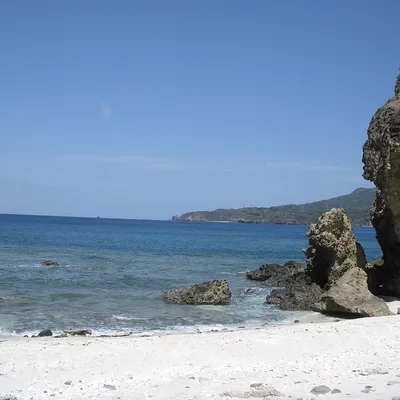
At the northern tip of Kunigami, Cape Hedo is a headland where 100-meter limestone cliffs plunge into the East China Sea and the Pacific. On clear days, Yoron Island 22 km away is visible. The cape is also a postwar landmark with a monument to the campaign for reversion to Japan.
Frame the Headline Monument against Yoron Island in the distance at golden hour
Stories & Legends
Recommended For
Insider Tips
- 1.Best chance of spotting the Okinawa rail is along Route 58 and Prefectural Route 2 between 5 and 7 a.m. Stop by the Yanbaru Wildlife Center the day before to check sighting reports, and drive under 40 km/h after dark to avoid roadkill.
- 2.The 40-minute one-way trail to Hiji Falls is a real hike but lined with excellent panels on endemic plants. Free walking sticks are loaned at the trailhead; long sleeves and trousers are local-standard kit because rocks turn treacherous in wet weather.
- 3.Cape Hedo, Kayauchi-Banta cliffs, and Daisekirinzan form a half-day loop in northern Kunigami. Railings at Kayauchi-Banta are low, so keep children back; stock up on water and snacks at the Michi-no-eki rest stop first, as no shops lie further north.
Visit Information
- Access
- About 2 hours by car from Naha Airport via the Okinawa Expressway and Route 58 (~110 km to Kunigami Village Hall). Public transport is sparse — a rental car is effectively mandatory for park visits.
- Time Required
- One full day for the highlights, or one or two nights to add proper hiking.
- Budget Guide
- Park entry is free as of 2024. Daisekirinzan admission: 1,200 yen for adults. Hiji Falls Campground entrance: 500 yen for adults.
Nearby Attractions
Kouri Island, a scenic small island linked by bridge, is a 30-minute drive south-west. The Churaumi Aquarium, a must-see in Okinawa, is one hour away by car and pairs well with a park day. Mangrove canoe trips run on the Gesashi River on Yanbaru's east coast, and Okuma Beach in Ōgimi is a quieter alternative to busy southern resorts.
Go Deeper
Deeper details for those with the time to read on.
Timeline
- 1981
Okinawa rail discovered
An entirely new species of rail, Gallirallus okinawae, was found in Kunigami Village, drawing world biologists' eyes to Yanbaru
- 15 September 1983
Yambaru long-armed scarab found
One of the world's largest stag beetles, Cheirotonus jambar, was discovered in the inner forests of Kunigami Village
- 15 April 1996
National park concept floated
Environment Agency Director-General Iwatare Sukio proposed using returned US military land for a national park
- April 1999
Yanbaru Wildlife Center opens
Established at Hiji in Kunigami Village to lead research, protection, and public education on Yanbaru's endemic species
- 4 October 2010
Listed as candidate for new park
Ministry of Environment review designated Yanbaru as an 'area of exceptional national distinction' and a candidate for designation
- 15 September 2016
Yanbaru National Park designated
Gazetted on the anniversary of the Yambaru long-armed scarab discovery, becoming Japan's 33rd national park
- 29 June 2018
Northern Training Area land added
About 3,700 ha of returned US military Northern Training Area land was formally incorporated into the park boundary
- 26 July 2021
Inscribed as UNESCO World Heritage
Inscribed as part of 'Amami-Ōshima Island, Tokunoshima Island, northern part of Okinawa Island, and Iriomote Island'
Detailed History
The story of the Yanbaru landscape begins around 200 million years ago, when ancient coral reefs were uplifted into the limestone plateau that today's karst pillars of Daisekirinzan have been carved from. From Ryūkyū Kingdom times this rocky place was venerated as Asumui, a sacred site of the highest rank. After Okinawa's reversion to Japan in 1972, the subtropical evergreen forests of Yanbaru began to attract international scientific attention. The 1981 discovery of an entirely new bird, the Okinawa rail (Gallirallus okinawae), drew global biologists' eyes here, and on 15 September 1983 one of the world's largest stag beetles, the Yambaru long-armed scarab (Cheirotonus jambar), was found in the inner forests of Kunigami — a date later enshrined as the park's anniversary. On 15 April 1996, Environment Agency Director-General Iwatare Sukio publicly floated the idea of turning land due to be returned from the US military's Northern Training Area into a national park. On 9 March 2007 the Ministry of the Environment revised — for the first time in 36 years — the criteria for designating parks, adding biodiversity, broadleaf evergreen forest, and coastal ecosystems alongside the older 'scenic value' axis. In a 2010 nationwide review Yanbaru was singled out as an 'area of exceptional national distinction' and listed among five candidates for new designation. On 20 June 2016, after a Central Environment Council recommendation, designation was formally approved; on 15 September 2016, anniversary of the scarab discovery, the park was officially gazetted as Japan's 33rd national park, the third in Okinawa, and the first sharing a boundary with a US military base. Its initial area covered 13,622 ha of land and 3,670 ha of sea. On 29 June 2018 about 3,700 ha of returned Northern Training Area land was added. On 26 July 2021 the 44th UNESCO World Heritage Committee (online) inscribed 'Amami-Ōshima Island, Tokunoshima Island, northern part of Okinawa Island, and Iriomote Island' as a Natural World Heritage Site, with the strictest zones of Yanbaru forming a serial component — Japan's fifth natural heritage site and Okinawa's first listing in 21 years.
Cultural Significance
Yanbaru National Park is unusual among Japan's national parks in that its core purpose is to protect a subtropical biodiversity hotspot rather than safeguard a famous scenic view. The endemic species concentrated here — the Okinawa rail, the Okinawa woodpecker, the Yambaru long-armed scarab, the Okinawa spiny rat, and many more — have led biologists to rank Yanbaru's forests alongside Madagascar and the Galápagos as a 'museum of island evolution'. At the same time, Yanbaru has long supplied lumber and firewood to Shuri and Naha under the Ryūkyū Kingdom and beyond, and Kunigami Village remains Okinawa's only designated forestry production zone. The tightening of timber rules under park designation has created real tension between conservation and rural economy, and balancing the two is the single biggest local challenge. The park is also unusual geographically: it directly abuts the US military's Northern Training Area, so debates over MV-22 Osprey training and PFAS contamination at former base sites play out on its edges, embedding Okinawa-specific political fault lines into a nature reserve. The park's theme — 'Yanbaru's Subtropical Forest: Mountains and the lives that nurture diverse life' — sets out the principle that wild nature and the rural communities living alongside it should be sustained together.