Yakushima
屋久島
屋久島町 · JP
Ancient Yakusugi cedars and moss-clad primeval forest on Japan's first natural Heritage island
Yakushima, off Kagoshima Prefecture in the Osumi archipelago, holds Kyushu's highest peak Miyanouradake (1,935 m) and primeval Yakusugi cedar groves over a thousand years old. It was inscribed in 1993 as one of Japan's first natural UNESCO World Heritage Sites.
Best Season & Time
Fresh greenery and Yakushima rhododendrons lift the moss forest as the Jomon Sugi trail enters prime form.
★★★★★
Deep greens and loggerhead nesting at Nagata-hama, though rainy-season downpours raise hiking difficulty.
★★★☆☆
Temperatures settle ideal for hiking and crisp air delivers the sharpest panoramic views from Mount Miyanoura.
★★★★★
Summits need snow and ice gear while the quiet coast stays mild, pairing well with onsen and easy sightseeing.
★★☆☆☆
Top 3 Highlights
1.Jomon Sugi — Millennium-Class Yakusugi Giant
Standing in old-growth Yakusugi forest at around 1,300 m, Jomon Sugi is the largest known Yakusugi cedar. Its presence was publicised in 1966 by Kamiyaku Town staff, and the tree is now Yakushima's symbol. The viewing deck is a serious 4-5 hour one-way hike.
From the observation deck, frame the full tree with a telephoto lens in soft morning light.
2.Moss-Clad Primeval Forest with Yakusugi
Around Shiratani Unsuikyo and the Arakawa area, over six hundred moss species blanket ground, fallen logs and boulders thanks to the wet climate. The atmosphere is widely linked with Princess Mononoke and steps you into another realm unique to Yakushima.
Shoot after rain, framing Taiko-iwa or mossy logs from above for a magical mood.
3.Alps on the Sea — Yakushima from the Water
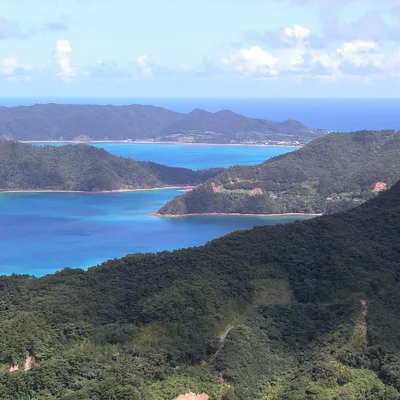
About 89 km of coastline ring a nearly circular island that vaults from sea level to 1,935 m at Miyanouradake. From hydrofoils and ferries out of Kagoshima Port, Ibusuki Port or Tanegashima, the granite massif and Kyushu's highest peak rise dramatically across the strait.
From the open deck use a telephoto lens for the full massif, ideally in early-morning frontal light.
Stories & Legends
Recommended For
Insider Tips
- 1.A day hike to Jomon Sugi is about 22 km round-trip and over 10 hours, typically starting around 4 a.m. A certified local guide and an overnight stay the night before are effectively essential.
- 2.Shiratani Unsuikyo lets you experience the moss forest in 3-5 hours, much gentler than the Jomon Sugi trail; the most atmospheric light comes just after rain, so some photographers actively choose rainy forecasts.
- 3.The mountains receive 4,000-10,000 mm of rain a year, so waterproofing is the top priority. Full Gore-Tex outerwear and a fast-drying base layer often decide between a comfortable hike and a miserable one.
Visit Information
- Access
- From Kagoshima Port the Toppy hydrofoil takes 2-3 hours and the car ferry Yakushima 2 takes about 4 hours; flights from Kagoshima Airport reach Yakushima Airport in roughly 35 minutes. Local buses, rental cars and hiker shuttles serve the island.
- Time Required
- One day for a Jomon Sugi day hike, or 2-3 days adding Shiratani Unsuikyo and coast.
- Budget Guide
- Round-trip flights run roughly 20,000-30,000 yen and lodging is 7,000-15,000 yen per night. A full-day Jomon Sugi guided tour costs about 12,000-18,000 yen.
Nearby Attractions
Tanegashima, around 20 km east and linked by hydrofoil, pairs naturally with the Tanegashima Space Center for a side trip. Kuchinoerabu-jima, an active volcanic island also under Yakushima Town, has wild scenery and is reachable as a day visit. Many travellers fold the island into a southern Kyushu loop via Kagoshima Port with Ibusuki Onsen or Sakurajima.
Go Deeper
Deeper details for those with the time to read on.
Timeline
- Approx. 15.5 million years ago
Granite intrusion
A massive granite body intruded into what is now central Yakushima, becoming the basement on which Kyushu's highest summit later rose.
- Approx. 7,300 years ago
Kikai Caldera mega-eruption
A vast eruption at the Kikai Caldera to the south is believed to have blanketed much of Yakushima in pyroclastic flow and ash.
- 702
Listed under Tane Province
The Shoku Nihongi records Yakushima within the old Tane Province, marking its first appearance in Japanese written history.
- Late 16th century
Timber survey for Hoko-ji
For Toyotomi Hideyoshi's Hoko-ji Daibutsuden, Ishida Mitsunari directed Shimazu Yoshihisa to survey Yakushima's timber, and shipments are believed to have reached Osaka from Satsunan waters.
- 17th century
Industrial Yakusugi felling
Satsuma's domain government began industrial-scale logging of Yakusugi, and by the Meiji era almost all prime cedars on the island had been cut down.
- 1966
Jomon Sugi nickname takes hold
Staff of the former Kamiyaku Town spread word of the largest ancient Yakusugi, and the nickname Jomon Sugi gradually entered common use across Japan.
- 1980
Biosphere Reserve designation
Under UNESCO's Man and the Biosphere programme, 18,958 hectares of Yakushima were designated a Biosphere Reserve.
- 1985
Mount Miyanoura waters selected
Spring water from Mount Miyanoura in central Yakushima joined the Environment Agency's One Hundred Famous Waters, recognising the island's water under heavy rainfall.
- May 1993
Nagata-hama Ramsar listing
Nagata-hama, ten hectares of beach hosting the largest loggerhead sea turtle nesting site in the North Pacific, was registered under the Ramsar Convention.
- December 1993
UNESCO Natural Heritage inscription
Yakushima was inscribed alongside Horyu-ji, Himeji Castle and Shirakami-Sanchi in Japan's very first World Heritage cohort, and as the country's first natural site.
- 2007
Japan's Top 100 Geological Sites
Yakushima's granite mountains and river landscapes were selected for Japan's Top 100 Geological Sites, prompting renewed appreciation of its geological value.
- 2017
Typhoon Noru hits the island
Typhoon Noru, also numbered as Typhoon No. 18, struck Yakushima directly, with one death and other damage reported on the island.
- November 2023
Osprey accident in nearby waters
A U.S. military V-22 Osprey tilt-rotor went down in waters near Yakushima, with seven crew killed and one person reported missing in the incident.
Detailed History
Human activity on Yakushima reaches back to the Jomon period, and 6th-century Chinese records in the Book of Sui describe envoys to the Liuqiu region, an area thought to take in waters around the island. The Shoku Nihongi of 702 records the island within the old Tane Province. Through Edo times the Shimazu lords of Satsuma governed it as part of Osumi Province. Yakusugi cedar yields large amounts of antimicrobial resin in response to fierce winds and rainfall, and from medieval times its durable timber was prized for building and shipbuilding. When Toyotomi Hideyoshi commissioned the Daibutsuden hall at Kyoto's Hoko-ji, Ishida Mitsunari instructed Shimazu Yoshihisa to survey Yakushima's timber, and shipments are believed to have reached Osaka from the Satsunan waters. From the 17th century the domain industrialised Yakusugi felling, and by the Meiji era almost all prime cedars had been logged out. Trees of millennium-class age, with warped grain that could not be milled on the mountain, were left standing and many still survive today. On the logged terrain, seedlings grew into beautiful secondary forests over 300-400 years; today, millennium-class giants and deformed trees are called Yakusugi, while younger second-growth trees are called Kosugi. After 1868 the island became part of Kagoshima Prefecture and its population peaked in the 1960s. In 1966 the existence of a colossal ancient Yakusugi was made widely known, and the nickname Jomon Sugi gradually took hold. In 1980 the island was designated a UNESCO Biosphere Reserve under the Man and the Biosphere programme, covering 18,958 hectares. In May 1993 Nagata-hama, a ten-hectare beach hosting the largest loggerhead sea turtle nesting site in the North Pacific, was registered under the Ramsar Convention; in December that year the island was inscribed, alongside Horyu-ji, Himeji Castle and Shirakami-Sanchi, as part of Japan's very first World Heritage cohort and the country's first natural site. Typhoon Noru hit in 2017, leaving one dead, and in November 2023 a U.S. military V-22 tilt-rotor went down in waters off the island, with seven crew killed and one reported missing.
Cultural Significance
Yakushima carries an unusual three international designations: UNESCO Biosphere Reserve in 1980, Ramsar listing of Nagata-hama in May 1993, and inscription as a UNESCO Natural World Heritage Site in December 1993. The Heritage zone covers 107.47 square kilometres, about 21 percent of the island, taking in the central range, Yakusugi old-growth forests and the western forest road area, valued as a temperate relict forest with strikingly old ecological roots. Yakushima National Park covers around 42 percent of the island, protecting the vertical gradient from coastline to summit as a single landscape. Nagata-hama, the North Pacific's largest loggerhead sea turtle nesting beach, has drawn international attention as a symbol of marine biodiversity. Yakushima is also widely cited as the visual inspiration for the forest in Hayao Miyazaki's Princess Mononoke, and its Yakusugi and moss forests have shaped Japanese views of nature across generations. The novelist Fumiko Hayashi captured the climate by saying it rains thirty-five days out of every month on Yakushima, a line that still echoes in literature and tourism.
Architectural Details
Yakushima's natural architecture rests on a granite massif climbing from sea level to the 1,935 m summit of Miyanouradake (Mount Miyanoura), draped in old-growth Yakusugi forest. The central mountains arose from an enormous granite intrusion about 15.5 million years old, and a long history of uplift and intense rainfall has carved steep slopes and candle-stub rock spires. The island is nearly circular, around 28 km across and 89 km in circumference, and ridgelines from 1,000 to 1,900 m have earned the nickname Alps on the Sea. Yakusugi (Cryptomeria japonica) is the keystone species of the temperate conifer forest above 600 m: millennium-class giants are called Yakusugi, younger second-growth trees Kosugi. Notable individuals include Jomon Sugi, the Wilson Stump, Yayoi-sugi, Daio-sugi, Meoto-sugi and Sandai-sugi. The Jomon Sugi trail runs about 22 km round-trip from the Arakawa trailhead, mixing an old tramway with mountain paths; Shiratani Unsuikyo offers a 3-5 hour loop via Taiko-iwa; and Yakusugi Land threads several routes through millennium cedars on suspension bridges. Prefectural Route 77 rings the coast, and along the Western Forest Road the World Heritage laurel forest reaches almost to the shoreline.