Buddhist Monuments in the Hōryū-ji Area
法隆寺地域の仏教建造物
斑鳩町 · JP
Buddhist Monuments in the Hōryū-ji Area — Japan's first World Heritage Site
In Ikaruga, Nara Prefecture, the Buddhist Monuments in the Hōryū-ji Area gather 48 structures of Horyu-ji and Hokki-ji as Japan's first UNESCO World Cultural Heritage site, preserving seventh-century Asuka architecture in what is widely considered the oldest surviving wooden ensemble on earth.
Best Season & Time
Cherry blossoms around the Saiendo with the pagoda as backdrop, with the 11 April Shoryo-e memorial rite
★★★★★
Fresh pine greens against white walls and a quiet precinct in early morning before the crowds arrive
★★★☆☆
Ginkgo and maple around the Yumedono coincide with the 22 October memorial and autumn treasure unveilings
★★★★★
Snow on the pagoda over a frozen Kagamiike pond and far fewer visitors for slow architectural contemplation
★★★★☆
Top 3 Highlights
1.Five-Storied Pagoda — Oldest Wooden Tower
Roughly 32.5 meters tall and built in the late seventh century, the pagoda has weathered 1,300 years thanks to a flexible central pillar absorbing seismic motion. Each roof tier diminishes upward, anchoring the West Precinct as Japanese Buddhist architecture's starting point.
Frame the pagoda alongside the Kondo through the Chumon gate in southern morning light
2.The Kondo Main Hall Housing the Shaka Triad
Centerpiece of the West Precinct, the Kondo is a hip-and-gable hall housing the bronze Shaka Triad of 623 by Kuratsukuri-no-Tori, plus Yakushi Nyorai and the Four Heavenly Kings. A 1949 fire damaged its wall paintings, yet its frame is among the world's oldest wood structures.
Compose Kondo with the pagoda along the central axis from inside the Chumon at oblique morning light
3.The Yumedono — Octagonal Hall of Prince Shotoku
At the heart of the East Precinct stands the Yumedono, an octagonal hall built in 739 by the monk Gyoshin on the site of Prince Shotoku's Ikaruga Palace. It enshrines the secret Kuse Kannon (revealed in spring and autumn), an eight-sided plan that embodies Shotoku devotion.
Photograph the Yumedono from the east through the four-pillar gate during spring or autumn openings
Stories & Legends
Recommended For
Insider Tips
- 1.The Yumedono's secret Kuse Kannon is revealed only during the spring opening (11 April - 18 May) and the autumn opening (22 October - 22 November); if you wish to encounter the heart of Shotoku devotion, time your visit around these dates.
- 2.The clay Nio guardians flanking the Chumon date from 711 — Japan's oldest extant clay statuary — and the gate columns show pronounced entasis (a central swelling) that some scholars trace back to ancient Greek temples via the Silk Road.
- 3.The combined ticket covers the West Precinct, Daihozoin treasure halls and the East Precinct with the Yumedono; the Daihozoin holds the Kudara Kannon, Tamamushi Shrine and Yumetagai Kannon among many National Treasures, so allow 2-3 hours.
Visit Information
- Access
- From JR Nara take the JR Yamatoji Line for 12 minutes to Horyuji Station, then walk roughly 20 minutes or take a Nara Kotsu bus for 8 minutes. From Osaka, JR Yamatoji Rapid covers the trip in about 45 minutes; a bus from Kintetsu Koriyama runs around 30 minutes.
- Time Required
- Two to three hours for the West, East and Daihozoin precincts combined.
- Budget Guide
- Combined admission (West, Daihozoin, East) JPY 1,500 for adults and JPY 750 for elementary-school students. Parking JPY 500. (Prices as of 2024.)
Nearby Attractions
Chugu-ji, a 15-minute walk away, holds the National Treasure Bodhisattva Hanka. Hokki-ji's three-storied pagoda — a constituent of the same World Heritage Site — sits a 10-minute drive away, as does Horinji's three-storied pagoda, making the famed Ikaruga three pagodas. 30 minutes by train reaches Nara for Todai-ji, Kofuku-ji and Kasuga Taisha.
Go Deeper
Deeper details for those with the time to read on.
Timeline
- 601
Ikaruga Palace Begins
In the ninth year of Empress Suiko, Prince Shotoku begins building the Ikaruga Palace as his residence on the plain of Ikaruga in Yamato.
- 607
Horyu-ji Founded
Prince Shotoku and Empress Suiko found Horyu-ji (the Wakakusa precinct) to fulfil the late Emperor Yomei's unfulfilled temple vow.
- 622
Death of Prince Shotoku
Prince Shotoku dies at forty-nine; his consort Tachibana-no-Oiratsume commissions the Tenjukoku Shucho tapestry in his memory.
- 670
Wakakusa Precinct Burns
On the night of 30 April, lightning destroys the original Wakakusa precinct, setting the stage for the eventual rebuilding.
- 693-711 (approx.)
West Precinct Rebuilt
Between the late seventh and early eighth centuries the present Kondo, pagoda, Chumon and Cloister are rebuilt, today the oldest extant wooden ensemble.
- 706
Hokki-ji Pagoda Completed
The three-storied pagoda of Hokki-ji is completed in Keiun 3, dated by sorin inscription as the world's oldest extant three-storied pagoda.
- 739
Yumedono Built
In Tenpyo 11 the monk Gyoshin builds the Yumedono on the site of the Ikaruga Palace, enshrining the secret Kuse Kannon.
- 1374
Shoryoin Rebuilt
The growth of the Shotoku cult through the Kamakura and Muromachi periods leads to the rebuilding of the Shoryoin enshrining the Prince's image.
- 1878
Imperial Treasures Donation
In the eleventh year of Meiji, Horyu-ji donates over three hundred treasures to the imperial household, today the Horyu-ji Treasures gallery.
- 1897
Ancient Shrines and Temples Law
The Meiji 30 Law for the Preservation of Ancient Shrines and Temples designates the Kondo and pagoda as specially protected structures.
- January 1949
Kondo Wall Paintings Damaged
A fire during conservation damages the Kondo's first-storey wall paintings, prompting the 1950 Cultural Properties Protection Law.
- 1985
Showa Restoration Complete
The half-century Showa-era major restoration concludes, with the West Precinct dismantled and reassembled in stages.
- December 1993
World Heritage Inscription
The seventeenth UNESCO World Heritage Committee in Cartagena inscribes Horyu-ji with Himeji Castle as Japan's first World Heritage Sites.
- 2021-2022
1,400th Memorial of Prince Shotoku
Buddhist sects across Japan hold cross-sectarian rites and special exhibitions to commemorate the 1,400th anniversary of the Prince's death.
Detailed History
Horyu-ji's origins begin in 601, when Prince Shotoku chose Ikaruga as the site of his residence, the Ikaruga Palace. His father Emperor Yomei had vowed to build a temple for his recovery but died before fulfilling it; Prince Shotoku and Empress Suiko founded Horyu-ji (the Wakakusa precinct) in 607 to fulfil that vow, as recorded in the Horyu-ji Garan Engi of 747. The Prince died at forty-nine in 622, and his consort Tachibana-no-Oiratsume commissioned the Tenjukoku Shucho tapestry in his memory. On the night of 30 April 670, lightning destroyed the Wakakusa precinct, triggering a long debate between non-rebuilding and rebuilding theories that 1939 excavations of the Wakakusa site settled in favour of rebuilding, the original Shitennoji-style plan confirmed below ground. Between the late seventh and early eighth centuries the present West Precinct — Kondo, Five-Storied Pagoda, Chumon and Cloister — was reconstructed on a slightly shifted north-south axis, retaining the stamp of Chinese Southern-Northern Dynasties and early Tang architecture. Around 728 the monk Gyoshin grieved at the ruin of the former Ikaruga Palace, and in 739 he built the Yumedono of the East Precinct, the octagonal hall enshrining the secret Kuse Kannon said to match the Prince's stature. From the Heian period onward Horyu-ji was one of the seven great Nara temples; the Kamakura-period rise of the Shotoku cult brought the Shoryoin and Shariden. The Meiji 1868 haibutsu kishaku scattered many treasures, and in 1878 over three hundred were donated to the imperial household. The 1897 Ancient Shrines Law designated the Kondo and pagoda as specially protected structures, and the Showa restoration began in 1929. On 26 January 1949 a fire during conservation damaged the first-storey wall paintings of the Kondo, prompting the 1950 Cultural Properties Protection Law and making 26 January Japan's Cultural Property Fire Prevention Day. The Showa restoration completed in 1985. On 11 December 1993 the seventeenth UNESCO World Heritage Committee in Cartagena, Colombia inscribed Horyu-ji with Himeji Castle as Japan's first two World Heritage Sites.
Cultural Significance
Horyu-ji preserves the most tangible evidence of Japan's reception of Buddhism in the late sixth and early seventh centuries (formal transmission traditionally dated to 538 or 552) and of Prince Shotoku's role in shaping early centralised governance through the Seventeen-Article Constitution and Twelve-Rank Cap and Robe system. The 1993 inscription was made on UNESCO criteria (i), (ii), (iv) and (vi), and the complex stands as a living witness to the East Asian transmission of Chinese Southern-Northern Dynasties and Sui-Tang architecture through the Korean peninsula. Horyu-ji owns eighteen architectural National Treasures and more than twenty in fine arts, including the Shaka Triad (Tori Busshi, 623), Kudara Kannon, Kuse Kannon, Yumetagai Kannon, the Tamamushi Shrine and the Tenjukoku Shucho — Asuka-period masterpieces almost unmatched in Japan. Shotoku devotion, exemplified by his portrait on the 10,000-yen note from 1958 to 1986, has shaped Jodo Shinshu, Nichiren Shu and Tendai; the 1,400th memorial of his death in 2021-2022 saw cross-sectarian commemorations nationwide. The site has shaped literature and art — Natsume Soseki's Yume Juya, Shiba Ryotaro's Taishi no Uta, Inoue Yasushi's Nukata-no-Okimi, and many films and TV series — testifying that it remains a living symbol of Japanese cultural identity.
Architectural Details
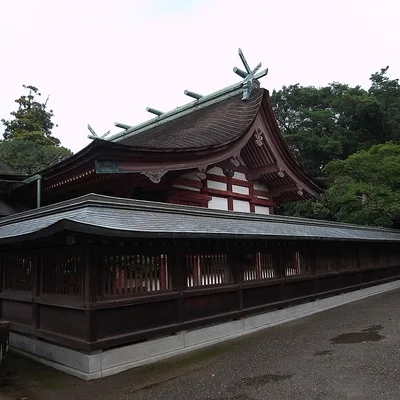
The core of the West Precinct — Kondo, Five-Storied Pagoda, Chumon and Cloister — was built in the late seventh and early eighth centuries and is widely considered the oldest extant ensemble of wooden architecture in the world. The Kondo is a five-bay by four-bay double-storey hip-and-gable hall with deep eaves supported by 'cloud bracket' and 'cloud arm' assemblies of the Asuka idiom, inherited from Chinese Northern-Southern Dynasties architecture. The pagoda rises about 32.5 meters above a 6.4-meter-square first storey, each roof tier diminishing upward in elegant proportion; its central shinbashira is not rigidly bound to the brackets and allows oscillating play, giving the tower remarkable earthquake resistance. The Chumon has an unusual four-bay two-door composition with a column at centre, flanked by the clay Nio guardians of 711. The cloister columns show pronounced entasis regarded by some as a Silk Road echo of the Greek Parthenon. The Yumedono of 739 is an octagonal hall about 4.7 meters per side housing the 3.8-meter Kuse Kannon beneath a pyramidal roof. The Hokki-ji three-storied pagoda of 706 follows the inverted Horyu-ji plan; its sorin inscription records the Keiun-3 date and identifies it as the world's oldest extant three-storied pagoda.