Burgos Cathedral
ブルゴス大聖堂
ブルゴス · ES
Spain's only standalone UNESCO World Heritage cathedral, a pure French Gothic gem in Castile.
Rising in Burgos, Castile and León, Spain, this French Gothic cathedral begun in 1221 is dedicated to the Virgin Mary, holds the tomb of Reconquista hero El Cid, and in 1984 became the only Spanish cathedral inscribed by UNESCO as a standalone monument.
Best Season & Time
Mild weather and soft raking light bring out the limestone's whiteness, alongside Holy Week processions.
★★★★★
After peak tourism, clear high-pressure light carves the deepest shadows across façade carvings.
★★★★★
Christmas decorations and a low sun throw long columns of light into the nave, with relatively few visitors.
★★★★☆
Dry hot days, but evening sound and light shows make this the season for atmospheric night-time visits.
★★★☆☆
Top 3 Highlights
1.Twin Towers and Stone Tracery of the West Façade
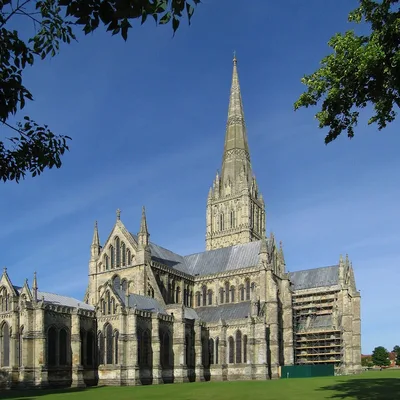
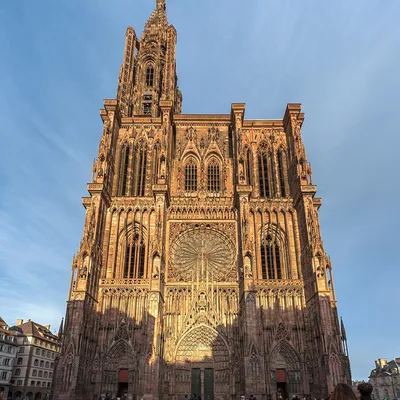
The three-storey west front carries three pointed-arch portals, a delicate rose window, and twin bell towers crowned by hexagonal openwork spires completed by Juan de Colonia in the 15th century, a high point of pure French Gothic with a clear German accent.
Frontal view looking up from Plaza Santa María; late afternoon light turns the stone golden.
2.Latin Cross Nave and Star-Vaulted Crossing
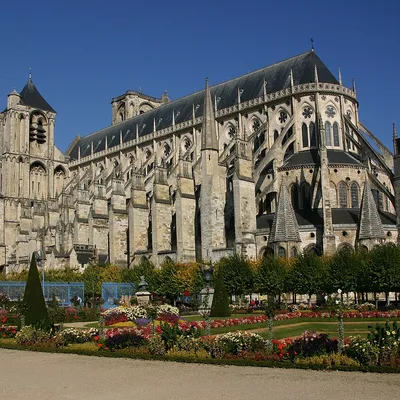
Built on a Latin cross plan with an interior elevation modelled on Bourges Cathedral, the nave culminates in a star-shaped openwork vault above the crossing. Fifteen lateral chapels and a 14th-century north-west cloister extend one of the supreme Gothic spaces.
Vertical framing toward the high altar; mid-morning side light brings the nave piers to life.
3.Cimborrio, the Lantern Tower over the Crossing
Completed in 1567, the cimborrio (lantern tower) above the crossing carries Flamboyant Gothic openwork tracery that seems to hold up the sky and pours light down onto El Cid's tomb beneath. This silhouette is what makes Burgos Cathedral instantly recognisable on any skyline.
Sky-framed shot from the narrow lanes east of the old town; aim for a clear blue sky for contrast.
Stories & Legends
Recommended For
Insider Tips
- 1.Rather than starting at the west front, enter through the north-side Puerta de la Coronería with its 12 Apostles, then move via the cloister into the nave; the route lets you read the building's architectural evolution in roughly chronological order.
- 2.Directly beneath the cimborrio lies a discreet stone slab marking the tomb of El Cid and Jimena. Most visitors walk past it, yet at certain hours the light falling from the lantern windows lines up with the slab in the cathedral's most quietly dramatic moment.
- 3.The combined ticket linking the cathedral with the Museo de la Evolución Humana, sold at the Burgos tourist office, is cheaper than buying each entry separately. Camino pilgrims should also present their credencial; discounts may still apply at the door.
Visit Information
- Access
- About 1 hour 40 minutes from Madrid by AVE high-speed train to Burgos-Rosa de Lima station, then roughly a 25-minute walk or city bus ride to the cathedral, which faces Plaza Santa María in the heart of the old town. A taxi from the station to the old town takes about 10 minutes.
- Time Required
- Allow 2 to 3 hours to fully explore the main nave, 15 side chapels, and the cloisters.
- Budget Guide
- Adult entry is roughly 9-12 euros, with pilgrim and combined-ticket discounts. A one-day Madrid round-trip by AVE plus entry is about 80-110 euros (2024 reference).
Nearby Attractions
Within walking distance lie the Museum of Human Evolution, the church of San Nicolás de Bari, the ruined Burgos Castle on its hilltop site, and the Cartuja de Miraflores monastery. As a major staging post on the Camino de Santiago, the entire walled old town invites a deep stroll through layered Castilian history alongside the cathedral.
Go Deeper
Deeper details for those with the time to read on.
Timeline
- 1075
Burgos becomes a bishopric
King Alfonso VI of León and Castile, under the authority of Pope Gregory VII, raised Burgos to the status of bishopric and vowed to build a cathedral dedicated to the Virgin Mary.
- 1096
Romanesque cathedral completed
By the close of the 11th century, the small Romanesque cathedral on the former royal palace site was finished; it would later be torn down to make way for the new Gothic building.
- 20 June 1221
Gothic cathedral founded
King Ferdinand III of Castile and Bishop Maurice of Burgos laid the foundation stone, and Pope Honorius III granted indulgences to all who contributed to the construction effort.
- 1260
High altar consecrated
After the first major campaign of works, the apse and chevet were complete enough for the high altar to be consecrated, establishing a usable liturgical core despite long pauses to come.
- 1417
Juan de Colonia invited
Returning from the Council of Constance, the Bishop of Burgos brought the Cologne architect Juan de Colonia to the city, opening the campaign that would produce the cathedral's openwork stone spires.
- 1567
Cimborrio completed
Under the direction of Juan de Vallejo, the lantern tower (cimborrio) above the crossing was finished, effectively closing roughly 346 years of work on the cathedral's main body.
- 18th century
Sacristy and Saint Thecla Chapel added
A new sacristy and the Chapel of Saint Thecla were appended to the fabric, while the Gothic portals of the main west façade were partly remodelled toward their present appearance.
- 1919
Tombs of El Cid and Jimena moved here
The remains of El Cid Campeador, hero of the Reconquista, and of his wife Jimena were translated to the cathedral, and their tomb was placed directly beneath the cimborrio.
- 31 October 1984
UNESCO World Heritage inscription
UNESCO inscribed the cathedral on the World Heritage List under criteria (ii), (iv) and (vi) (ID 316), making it the only Spanish cathedral listed as a standalone monument.
- 21st century
Stone conservation campaigns
In response to the slow weathering of the limestone façades caused by air pollution, the tracery and spires of the cathedral have been gradually cleaned and consolidated in successive restoration campaigns.
Detailed History
The history of Burgos Cathedral begins in 1075, when King Alfonso VI of León and Castile elevated Burgos to the rank of bishopric under the authority of Pope Gregory VII and vowed to build a cathedral dedicated to the Virgin Mary. The original building was a small Romanesque chapel completed by the end of the 11th century, but by around 1200 Burgos had become a symbolic capital of the kingdom and its chapter counted more than thirty canons, so the modest building grew too small. The decision to raise a new cathedral was therefore made in the early 13th century. On 20 June 1221 King Ferdinand III of Castile and Bishop Maurice of Burgos laid the foundation stone, and Pope Honorius III granted indulgences to donors. The first master builder is believed to have been an anonymous French architect brought to Burgos by Bishop Maurice, although a 1227 document mentions the canon John of Champagne as a candidate. During the second campaign of the 13th century, in the 1240s and 1250s, the old Romanesque cathedral was demolished and the new Gothic building rose on its foundations. In the 15th century, after the Council of Constance of 1417, Bishop Alonso de Cartagena, the renowned scholar Alfonsus a Sancta Maria, invited Juan de Colonia of Cologne to Burgos, and the open-work stone spires and the Chapel of the Constable were added, opening the era of Flamboyant Gothic. In the 16th century the cimborrio above the crossing was completed in 1567 under Juan de Vallejo, effectively concluding work on the main body of the cathedral. In the 18th century the sacristy and the Chapel of Saint Thecla were appended, and the Gothic portals of the main façade were partly remodelled toward their present form. In 1919 the remains of the Reconquista hero El Cid Campeador, Rodrigo Díaz de Vivar, and of his wife Jimena were translated here, and the couple's tomb was placed directly beneath the cimborrio. On 31 October 1984 UNESCO inscribed Burgos Cathedral as a World Heritage Site (ID 316) under criteria (ii), (iv) and (vi).
Cultural Significance
Burgos Cathedral is the only Spanish cathedral inscribed as a World Heritage Site in its own right, not as part of a wider historic centre or building complex. This sets it apart from other great Spanish cathedrals such as those of Salamanca, Santiago de Compostela, Ávila, Córdoba, Toledo, Alcalá de Henares, Cuenca and Seville, which were inscribed as components of urban or architectural ensembles. Burgos was recognised solely for the universal value of its pure Gothic architecture. The cathedral is also bound to the Spanish national imagination as the burial place of El Cid, the hero of the Reconquista celebrated in the epic Cantar de Mio Cid, lending it the character of a sacred site of national identity. Standing on the Camino Francés, the French branch of the road to Santiago de Compostela, it can also be read in the parallel context of the pilgrimage routes' cultural heritage. As such, Burgos Cathedral represents the most refined flowering of European Gothic on the Iberian Peninsula, a place where architectural history, religious history and national history intersect within a single building.
Architectural Details
Burgos Cathedral is a French Gothic-style church built on a Latin cross plan, with a main nave, side aisles, 15 lateral chapels, a 14th-century cloister to the north-west, and the archbishop's residence to the south-west, all linked into a single complex. The building material is limestone from the nearby Hontoria de la Cantera quarry, whose pale tone defines the cathedral's whitish skin. The west front is arranged in three storeys, flanked by two square bell towers crowned by hexagonal openwork stone spires that Juan de Colonia completed in the 15th century. The façade follows the pure French Gothic idiom of Paris and Reims, while the interior elevation looks instead to Bourges Cathedral. The 13th-century Sarmental and Coronería portals are Gothic in style, whereas the 16th-century Pellejería portal shows Plateresque Renaissance influence. The cimborrio above the crossing is a masterpiece of Flamboyant Gothic openwork tracery that pours light down onto the tomb of El Cid and Jimena below. The Colonia family (Juan, Simón and Francisco), Juan de Vallejo and Gil de Siloé contributed sculpture and architecture, and the slow transition from Gothic to Plateresque coexists within a single building fabric.