Tokyo National Museum
東京国立博物館
上野公園 · JP
Japan's oldest national museum and the supreme guardian of 89 National Treasures
Founded in 1872 in Tokyo's Ueno Park, the Tokyo National Museum is Japan's oldest museum. Five pavilions hold some 120,000 Japanese and Asian works — the most comprehensive collection of East Asian cultural heritage on earth.
Best Season & Time
Cherry blossoms front Honkan with spring special exhibitions and Hanami concerts — the year's absolute peak.
★★★★★
Garden special opening with autumn foliage and major fall exhibitions — the deepest pull of cultural autumn.
★★★★★
Air-conditioned interior offers refuge from Tokyo heat; Friday/Saturday evening hours are uncrowded.
★★★★☆
New Year 'hatsu-mode at the museum' draws lion dances and taiko drums to the Honkan plaza.
★★★★☆
Top 3 Highlights
1.Honkan — flagship of Teikan-style architecture
Designed by Watanabe Jin in 1937, the reinforced-concrete Honkan with tiled gabled roof defines the 'Teikan style' fusing Western structure with Japanese silhouette. The National Treasure Room rotates one masterpiece every four to eight weeks.
Frame the symmetrical hipped-and-gabled facade from the front roundabout in vertical composition.
2.Hyokeikan — Neo-Baroque Meiji jewel
Designed by Katayama Tokuma and opened in 1909 for the future Taisho Emperor's wedding, the Hyokeikan is a stone-and-brick Neo-Baroque masterwork. A central dome, bronze lion guardians, and lavish stucco mark it as Japan's finest surviving Meiji Western museum.
Compose the bronze lions in the foreground with the central dome compressed by a telephoto lens.
3.Toyokan — Asian art along the Silk Road
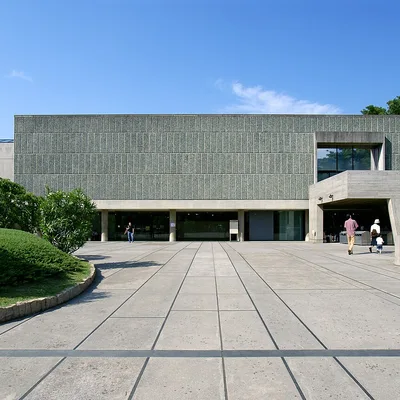
Designed by Taniguchi Yoshiro and opened in 1968 (renovated 2013), Toyokan houses Chinese, Korean, Indian, Southeast Asian, and West Asian art. Highlights include Gandhara Buddhist sculpture and Dunhuang mural fragments — a continental tapestry unmatched in Japan.
Capture the horizontal modernist facade from the ground entrance with a wide pull-back composition.
Stories & Legends
Recommended For
Insider Tips
- 1.The classic route is Honkan 2F 'Highlights of Japanese Art' chronologically, then 1F crafts and swords — about 2-3 hours. The National Treasure Room rotates a single masterpiece every 4-8 weeks, so repeat visits reward seasonal pilgrimages.
- 2.The Japanese garden behind Honkan opens only in spring and autumn, revealing five teahouses, stone lanterns, and a koi pond — a hidden gem accessible with the standard admission ticket and no surcharge during these special openings.
- 3.Friday and Saturday extended hours (until 8 PM) draw fewer visitors and allow rare photography of the illuminated Honkan facade. Combined with Ueno Park's seasonal light-ups, you get Tokyo culture and seasons in a single day.
Visit Information
- Access
- About 10 minutes on foot from JR Ueno Station's Park Exit, or 15 minutes from Tokyo Metro Ginza/Hibiya line Ueno Station. Keisei Ueno Station is also 15 minutes' walk. Inside Ueno Park, the museum pairs naturally with Ueno Zoo and the surrounding museum quarter.
- Time Required
- 2-3 hours for Honkan alone; half a day (4-5 hours) or more to cover all five pavilions
- Budget Guide
- Adult admission JPY 1,000 (as of 2024); special exhibitions JPY 1,500-2,500 extra; transport JPY 500; lunch JPY 1,500. Total JPY 3,000-5,000. Confirm rates on the official site.
Nearby Attractions
Inside Ueno Park alone you can reach the National Museum of Nature and Science, the National Museum of Western Art (a Le Corbusier UNESCO site), Ueno Zoo, Tokyo Metropolitan Art Museum, Ueno Toshogu Shrine, Kanei-ji temple, and Shinobazu Pond — all on foot. The Ameyoko shopping arcade is a 10-minute walk away.
Go Deeper
Deeper details for those with the time to read on.
Timeline
- 1872
Founding at Yushima Seido
The Ministry of Education's Museum Department holds Japan's first modern exhibition at the Yushima Seido shrine, drawing 150,000 visitors over seven weeks. TNM marks this as its founding year.
- 1882
Opening in Ueno
The two-story brick Honkan designed by Josiah Conder opens in Ueno on 20 March, with an imperial visit by Emperor Meiji. The attached zoo (forerunner of Ueno Zoo) opens the same day.
- 1889
Renamed Imperial Museum
Sister Imperial Museums established in Kyoto and Nara, creating Japan's three-museum system. Okakura Tenshin heads the art division; TNM's identity as a history-and-fine-arts museum solidifies.
- 1909
Hyokeikan opens
The Neo-Baroque Hyokeikan by Katayama Tokuma opens to commemorate the future Taisho Emperor's marriage; later designated an Important Cultural Property as a Meiji-era architectural treasure.
- 1923
Honkan lost to Great Kanto Earthquake
Conder's Honkan and two adjacent pavilions suffer catastrophic damage. For more than a decade, all museum operations are confined to the Hyokeikan alone.
- 1938
Teikan-style Honkan opens
Watanabe Jin's design, selected from 273 competition entries, opens in November. The hybrid Western-Japanese Teikan style is born, and the building later becomes an Important Cultural Property.
- 1945
Closed during Tokyo Firebombing
The 10 March Tokyo air raids force closure. Treasures evacuated to rural Gunma and Fukushima escape destruction; the museum reopens to the public on 24 March 1946.
- 1947
Renamed National Museum
On the day Japan's new constitution takes effect, the Imperial Household Museum becomes the National Museum, transferring from the Imperial Household Ministry to the Ministry of Education.
- 1965
Tutankhamun exhibition
The Tutankhamun exhibition draws 2.95 million visitors, igniting a national museum boom. The 1974 Mona Lisa show (1.51 million) cements TNM at the center of postwar Japanese culture.
- 1968
Toyokan opens
Designed by Taniguchi Yoshiro, the Toyokan opens to house non-Japanese Asian art, enabling systematic display of Silk Road art and Gandhara Buddhist sculpture for the first time.
- 1999
Heiseikan and new Horyuji Hall
The Heiseikan (archaeology and special-exhibition venue) and the rebuilt Gallery of Horyuji Treasures open, completing the five-pavilion configuration that defines TNM today.
- 2007
Joins NICH umbrella organization
TNM joins the new National Institutes for Cultural Heritage and is operated jointly with Kyoto, Nara, and Kyushu National Museums, yielding administrative efficiencies and visitor-centered reform.
- 2022
150th anniversary
TNM's 150th-anniversary 'National Treasures of Japan' exhibition assembles all 89 platform-collection National Treasures under one roof — a once-in-a-generation gathering for art lovers nationwide.
Detailed History
The Tokyo National Museum traces its origin to 10 March 1872 (Meiji 5), when the Ministry of Education's Museum Department staged Japan's first modern public exhibition inside the Taiseiden hall of Yushima Seido. Centered on works prepared for the 1873 Vienna World's Fair, the event extended to seven weeks under demand, drawing 150,000 visitors. The 'Museum of the Ministry of Education' was created that year, and in 1873 it was absorbed into the Grand Council's Exhibition Bureau, moving to Uchiyamashita-cho. In 1875 it became 'the Museum' under the Home Ministry, and in 1876 Machida Hisanari — a former Satsuma samurai who championed cultural-property protection through the haibutsu kishaku years — became its first director. After the 1877 First National Industrial Exhibition at the former Kanei-ji site in Ueno, the Grand Council approved relocation there. In 1881 a brick Honkan by British architect Josiah Conder was completed, and on 20 March 1882 the museum opened with an imperial visit by Emperor Meiji; an attached zoo (forerunner of Ueno Zoo) opened the same day. In 1889 it became the 'Imperial Museum' with sister institutions in Kyoto and Nara, and Okakura Tenshin headed the art division. In 1900 it became 'Tokyo Imperial Household Museum,' and a Neo-Baroque gallery by Katayama Tokuma was planned to mark the future Taisho Emperor's wedding. Completed in 1908 and opened in 1909, this is the surviving Hyokeikan (Important Cultural Property). The 1923 Great Kanto Earthquake damaged Conder's Honkan and adjacent halls, forcing a decade of operations from the Hyokeikan alone. In 1928 a reconstruction committee held a design competition; from 273 entries, Watanabe Jin's submission was selected. Construction ran 1932-1937, and the museum reopened in November 1938 — the surviving Teikan-style Honkan is itself an Important Cultural Property. On 10 March 1945 the Tokyo Firebombing forced closure, but treasures had been evacuated to Gunma and Fukushima and survived; reopening came on 24 March 1946. In May 1947 the museum was renamed 'National Museum' as the new constitution took effect, transferring to the Ministry of Education, and in 1952 it acquired its current name. Postwar additions include Toyokan (1968), the rebuilt Gallery of Horyuji Treasures (1999), and Heiseikan (1999). Since 2007 it has been operated by the National Institutes for Cultural Heritage.
Cultural Significance
As of April 2025 the Tokyo National Museum holds 89 National Treasures, 653 Important Cultural Properties, and 319 Horyuji Devoted Treasures within a total collection of about 120,000 items — roughly 10 percent of Japan's art-and-craft National Treasures and 6 percent of Important Cultural Properties. These numbers position TNM as the operational core of Japan's cultural-property protection regime. Together with the Kyoto, Nara, and Kyushu National Museums it forms the 'Four National Museums' run by the National Institutes for Cultural Heritage, with TNM as flagship. Architecturally, both the Honkan (1938) and Hyokeikan (1909) are designated Important Cultural Properties, making the complex itself a layered record of modern Japanese architecture. Its blockbuster exhibitions have shaped postwar cultural memory: the 1965 Tutankhamun show drew 2.95 million, the 1974 Mona Lisa exhibition 1.51 million, the 2017 Unkei exhibition 600,000, and the 2022 'National Treasures of Japan' show — staged for the 150th anniversary — gathered all 89 platform-collection National Treasures in a once-in-a-generation event. The museum has served as a location for Tenchi Meisatsu, Rurouni Kenshin, and NHK productions, projecting TNM beyond art-historical circles. Within Ueno Park it stands at the symbolic heart of Japan's national cultural infrastructure.
Architectural Details
The Honkan (Watanabe Jin, completed 1938) is a two-story steel-reinforced concrete building of 21,764 square meters that established the 'Teikan style' synthesis of Western structure with Japanese silhouette: hipped-and-gabled tiled roofs sit atop a strictly symmetrical Western body. Inside, the grand central staircase finished in stone with marble balustrades guides visitors between the upper-floor chronological survey of Japanese art and the lower-floor crafts and swords galleries, so a single circuit traces the full sweep of Japanese art history. The Hyokeikan (Katayama Tokuma, opened 1909) is a stone-and-brick Neo-Baroque pavilion with a three-dome composition — a central dome flanked by two wing domes — and remains the most theatrical example of late-Meiji court architecture: bronze lions flank the entrance, the dome interior is painted with celestial allegory, and the floors are inlaid marble mosaic. The Toyokan (Taniguchi Yoshiro, opened 1968) is a low-slung modernist concrete volume emphasizing horizontal lines and integrating a stone garden to evoke East Asian abstraction. The Heiseikan (Yasui Architects, 1999) is a contemporary granite-clad building housing archaeology galleries and the special-exhibition hall. Together, the Honkan's hipped tile crown and the Hyokeikan's triple dome punctuate the Ueno Park skyline as TNM's enduring silhouettes.