Mohenjo-daro
モヘンジョダロ
ラーカナ地区 · PK
2500 BC Indus megacity, planned grid and undeciphered script of earliest urbanism
On the Indus alluvium of southern Sindh, Pakistan, Mohenjo-daro was a planned city of 2500-1900 BC and one of the largest of the Indus Civilization, with grid streets, the Great Bath, fired-brick drainage, and the undeciphered Indus script. UNESCO 1980; the name means 'Mound of the Dead'.
Best Season & Time
Comfortable 20-30°C; the desert region stays cool, the best season for ruins exploration.
★★★★★
Above 45°C with monsoon flood risk; the ruins may be inundated, visiting not recommended.
★☆☆☆☆
Comfortable 25-35°C; visitor numbers rise from late October as the touring season begins.
★★★★☆
5-20°C with cool mornings; daytime is comfortable, peak season with full facilities.
★★★★★
Top 3 Highlights
1.Grid Plan and Drainage
Streets run on cardinal directions in a strict grid; each house had a well and toilet, and covered public sewers ran beneath the lanes. By 2500 BC the urban planning and sanitation infrastructure surpassed contemporary Egypt and Mesopotamia, the world's earliest example.
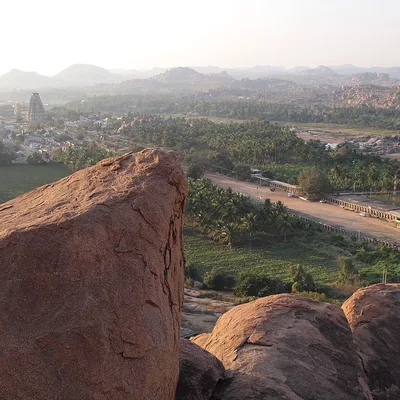
From the stupa mound looking southeast at the Lower City grid, early-morning side light
2.Later Buddhist Stupa
Atop the highest mound stands a Buddhist stupa about 14 m tall, built in the Kushan era (2nd-5th c. CE), some 2000 years after the Indus city's collapse. It rests directly on the city's earliest layers (2500 BC), and served as the marker for the 1922 rediscovery.
From the southwest with the stupa over the Lower City ruins, afternoon side light
3.Priest-King and Indus Script
The 17.5 cm soapstone seated 'Priest-King' (1927, DK Area) with trefoil robe and meditative eyes is the icon of Indus Civilization. Over 2500 seal impressions show the undeciphered Indus script of 400-700 signs, still a mystery for archaeologists worldwide.
Frontal view at the National Museum of Pakistan, natural light
Stories & Legends
Recommended For
Insider Tips
- 1.Climate change and salt damage are accelerating brick decay, with rope barriers expanding around closed sectors. Check the latest UNESCO conservation status before visiting; less than 10% of the area has been excavated, with the bulk still buried.
- 2.An on-site Mohenjo-daro Museum displays a Priest-King replica and seal collection. The original Priest-King and Dancing Girl statues are housed at the National Museum of Pakistan (Karachi) and the National Museum of India (New Delhi), split by Partition.
- 3.Sindh interior is at the Pakistani government's travel-advisory level. Independent travel is discouraged; use guided tours from Lahore or Karachi. Photography permits require advance application from the Department of Archaeology.
Visit Information
- Access
- Domestic flight from Karachi to Mohenjo-daro Airport in 1 hour (a few weekly flights), then 30-minute drive. By road from Larkana City, 1 hour by car.
- Time Required
- Half a day for ruins and museum, 3-4 hours for Citadel/Lower City/stupa.
- Budget Guide
- Foreign admission about 500 PKR (~$3), museum included. Guides about 2000 PKR. (As of 2024.)
Nearby Attractions
Larkana (Sindh's 4th city, Bhutto family hometown) 1 hour by car, Sehwan Sharif (Sufi shrine) 4 hours, and Karachi (National Museum's Priest-King replica) 6 hours combine for a definitive 'Indus Civilization and South Asian antiquity' itinerary.
Go Deeper
Deeper details for those with the time to read on.
Timeline
- c. 7000 BC
Mehrgarh culture
Agricultural culture begins in Balochistan, the long preparatory phase that gives rise to Indus Civilization.
- c. 2600 BC
Urbanization
Harappa and Mohenjo-daro blossom as cities, marking the mature Harappan phase of the Indus Civilization.
- c. 2500 BC
Mohenjo-daro founded
Foundations of the principal structures are laid; planned city and water infrastructure complete; population reaches 30,000-40,000.
- c. 1900 BC
Decline begins
Climate desiccation and Indus channel shifts trigger decline; urban maintenance collapses and population disperses.
- c. 1500 BC
City abandoned
Mohenjo-daro is fully abandoned; the urban civilization of the Indus Valley reaches its historical end.
- 2nd-5th c. CE
Stupa built
A Kushan-era Buddhist stupa about 14 m tall is built atop the highest mound and becomes the future excavation marker.
- 1922
Rediscovery
R. D. Banerji of the ASI rediscovers the 'Mound of the Dead'; large-scale excavations under Marshall begin.
- 1924
World debut
'Illustrated London News' introduces Mohenjo-daro to the world; the existence of the Indus Civilization is established.
- 1927
Priest-King unearthed
The 17.5 cm soapstone 'Priest-King' is found in DK Area, becoming the iconic artifact of the Indus Civilization.
- 1947
Partition
Partition places Mohenjo-daro in Pakistan; finds are split between the two countries' national museums.
- 1980
UNESCO inscription
Inscribed on the World Heritage List under criteria (ii) and (iii), becoming an internationally protected site.
- 2008-present
Emergency conservation
Salt damage and climate-driven brick decay accelerate; UNESCO and conservation bodies maintain emergency response.
Detailed History
Mohenjo-daro was a major city of the Indus (Harappan) Civilization that emerged around 2500 BC on the lower Indus alluvium, with an estimated population of 30,000-40,000 and an area of about 250 hectares. The civilization's roots stretch back through Mehrgarh (7000 BC, Balochistan) and a long agricultural lineage, blossoming as urban civilization around 2600 BC. The city was bipartite: a citadel on the west and a lower city on the east. The citadel held the Great Bath (12 m × 7 m × 2.4 m, with bitumen waterproofing), granary, and assembly hall; the lower city had a strict grid (main streets 10 m wide) and 2-3-storey fired-brick houses. Each house had a well and toilet, and covered public sewers ran beneath, achieving sanitation infrastructure beyond contemporary Egypt and Mesopotamia. Over 2500 seal impressions bear the Indus script of 400-700 signs, undeciphered, with Dravidian and proto-Indo-Aryan hypotheses unresolved. The 'Priest-King' (1927, DK Area, 17.5 cm) and 'Dancing Girl' (1926, HR Area, 10.5 cm bronze) icons emerged from the digs. Decline began around 1900 BC, with the city abandoned by 1500 BC, through climate desiccation, Indus channel shifts, Saraswati disappearance, disease, and the now-discredited Aryan invasion thesis. In the 2nd-5th c. CE, a Kushan-era stupa (about 14 m tall) was built atop the highest mound. R. D. Banerji rediscovered the site in 1922 for the Archaeological Survey of India; Sir John Marshall led 1922-1931 large-scale excavations, and the 1924 'Illustrated London News' presentation established the civilization in the world. Partition (1947) placed it in Pakistan; UNESCO inscribed it in 1980. Since 2008, salt damage and climate-driven brick decay have prompted UNESCO emergency response and ongoing conservation collaboration.
Cultural Significance
Mohenjo-daro is one of two pillars (with Harappa) of the Indus Civilization, central to understanding its urban planning, social organization, and writing system. UNESCO criteria (ii)(iii) cite its masterpiece urban planning and the unique testimony to a vanished civilization. Contemporaneous with Mesopotamia (Ur, Uruk) and Egypt (pyramids), it lacks palaces, royal tombs, and monuments suggesting kingship; the absence of clear elite stratification fuels alternative social models — egalitarian city, theocracy, or merchant republic. The undeciphered Indus script is the world's foremost archaeological mystery; decipherment would rewrite human civilizational history. After Partition (1947), Harappa fell within Pakistan, with finds split between the National Museum of India and the National Museum of Pakistan; the Dancing Girl's ownership remains a long-running issue. Climate-archaeology and ancient-DNA research are advancing the decline question; ancient DNA analysis since the 2010s has clarified Harappan vs. Indo-Aryan genetic divergence, prompting revision of the 'Aryan invasion' thesis. Indo-Pakistani textbooks position the city as a national-identity source, while UNESCO collaboration positions it as a shared heritage.
Architectural Details
Mohenjo-daro covers about 250 hectares (under 10% excavated) and is bipartite: a citadel (about 400 × 200 m) on the west and a lower city on the east. The citadel's highest point holds a Kushan-era Buddhist stupa (about 14 m), with the Great Bath, granary, and assembly hall below. The Great Bath (12 × 7 × 2.4 m) is the world's earliest known public bath, with fired-brick floor and gypsum-mortar plus natural-bitumen waterproofing, and with inflow/outflow channels probably for ritual ablution. The lower city follows a strict grid, with main streets 10 m wide running north-south and east-west, and rectangular blocks. Houses are fired-brick (28 × 14 × 7 cm standard) of 2-3 storeys, each with a well and toilet, and covered public sewers run beneath. The 1:2:4 brick ratio is shared across Indus sites (Harappa, Chanhu-daro, etc.), implying unified measurement and social organization. Finds include over 2500 seals, the 'Priest-King' soapstone statue, the 'Dancing Girl' bronze, animal toys, and child carts. The Indus script of 400-700 signs appears on seals, copper plates, and pottery in short texts (avg. 5-6 signs); the absence of long inscriptions is a major decipherment obstacle.