Spiš Castle
スピシュスキー城
ジェフラ · SK
Central Europe's largest 3.9-hectare castle ruin — a UNESCO sky fortress on a travertine bluff
Begun in 1120 as a frontier stronghold of the Kingdom of Hungary, Spiš Castle was expanded over four centuries by the Zápolya, Thurzó and Csáky lords, then gutted by a mysterious 1780 fire. UNESCO inscribed its 3.9-hectare ruin in 1993 as part of the Spiš Castle cultural ensemble.
Best Season & Time
Fresh meadow green against the white travertine bluff is photographically irresistible, with fewer crowds
★★★★★
Comfortable 20-25°C weather coincides with weekend medieval festivals — popular with families and re-enactors
★★★★☆
Golden grasslands ringing the ruin make this a favourite of landscape photographers before October closure
★★★★☆
Reservation-only from November, fully shut in deep winter; snowy views only from surrounding roads
★★☆☆☆
Top 3 Highlights
1.The Vast Ruin Crowning the Travertine Bluff
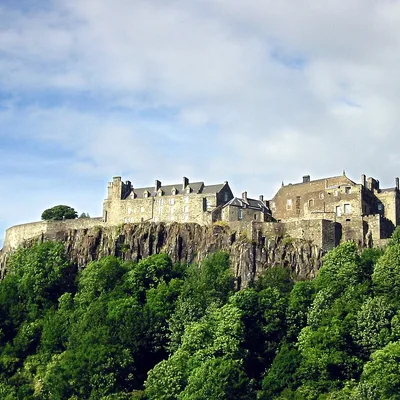
At 634 metres above sea level, the 3.9-hectare ruin covers the entire summit with three concentric ring walls and two extramural settlements. From the surrounding meadows the silhouette of the broken keep still announces the medieval power that guarded Hungary's northern marches.
Frame the whole site from highway P536 to the north, mid-morning when low sun rakes the walls
2.Roofless Inner Courtyard and Romanesque Palace
After the 1780 fire stripped every timber roof, the courtyard became an open-air museum: a 13th-century Romanesque palace, Late Gothic remodellings under the Zápolyas and Renaissance ranges added by the Thurzós, reading like a textbook of Central European castle stonework.
Climb to the upper bailey viewing platform and shoot the courtyard from above in morning side-light
3.The Late Gothic Chapel of Saint Elisabeth
Added by the Zápolyas around 1470, the Chapel of Saint Elisabeth of Hungary survives in remarkably good condition. Its ribbed vault and carved tracery evoke the court culture that flourished under king Matthias Corvinus, when Spiš was a wealthy aristocratic seat.
Compose a vertical shot through the eastern arch towards the altar; light is best around midday
Stories & Legends
Recommended For
Insider Tips
- 1.Park in Spišské Podhradie at the foot of the hill and walk the twenty-minute switchback path up — you gain a sense of how steep the bluff is, and pick up angles impossible by car. Tickets (about 10 euros in 2024) are sold at the gate.
- 2.The site opens daily May through October, by advance reservation in April and November, and shuts in deep winter. As of 2026 the castle is closed for major reconstruction works — always verify dates on the official Spiš Museum site (snm.sk) before visiting.
- 3.Fifteen minutes by car brings you to Spišská Kapitula, a fortified town with a 12th-century cathedral, and five minutes the other way is the Žehra church with 13th-century frescoes. All three are part of the same UNESCO inscription — visit them together.
Visit Information
- Access
- About one hour (70 km) by car from Košice International Airport, or four hours (380 km) from Bratislava. The nearest railway stop is Spišské Podhradie, a roughly 30-minute walk uphill to the main gate.
- Time Required
- Allow two to three hours for the ruin, half a day with associated UNESCO sites.
- Budget Guide
- Adult admission about 10 euros, children half price. Parking around 3 euros. A combined ticket covers all three sites. Verify current rates on the official site.
Nearby Attractions
Spišská Kapitula, the fortified ecclesiastical town with its 12th-century cathedral, lies fifteen minutes by car. The Church of the Holy Spirit in Žehra, with its 13th-century frescoes, is just five minutes away. Thirty minutes brings you to Levoča and Master Pavol's altarpieces.
Go Deeper
Deeper details for those with the time to read on.
Timeline
- 1120
First documented
The earliest written reference to a stone castle on the travertine bluff dates from this year, marking foundation as a Hungarian frontier fortress
- mid-13th c.
Romanesque palace built
A two-storey Romanesque palace and three-nave basilica are completed, making Spiš the administrative centre of northern Hungary
- 1241-1242
Mongol invasion withstood
The stone fortifications repel Batu Khan's Mongol armies — Spiš is one of very few Hungarian castles not to fall, securing its later prestige
- 14th c.
Second settlement added
A second extramural settlement is added outside the original walls, doubling the defended area and forming the concentric perimeter pattern
- 1412
Treaty of Lubowla
Hungary pawns sixteen Spiš towns to Poland to relieve its finances, but the castle itself remains a Hungarian royal possession until 1464
- 1464
Acquired by the Zápolyas
King Matthias Corvinus grants the castle to the Zápolya family, who rebuild it, raise the curtain walls and add a third settlement
- c.1470
Chapel of Saint Elisabeth
A Late Gothic chapel is added by the Zápolyas, its ribbed vaults and carved tracery still preserved in remarkably good condition today
- 1531-1635
Thurzó family ownership
The wealthy mining family Thurzó converts the upper castle into a Late Renaissance aristocratic residence during the 16th-17th centuries
- 1638
Csákys take over
The Csáky family acquires the castle but soon abandons the hilltop for more comfortable valley manors at Hodkovce and Spišský Hrhov
- 1780
Ruined by fire
A fire of disputed origin — tax-dodging arson, lightning or a soldiers' moonshine still — destroys the roofs and reduces the castle to ruin
- 1970
Conservation begins
Systematic archaeological investigation and conservation work starts under the Spiš Museum at Levoča, gradually consolidating walls and chapels
- December 1993
UNESCO inscription
Listed as 'Spišský Hrad and the Associated Cultural Monuments' alongside Spišská Kapitula and Žehra, recognising the integrated medieval landscape
- 2009
Levoča extension
The religious town of Levoča and its Late Gothic Master Pavol altarpieces are added to the World Heritage inscription as a serial extension
Detailed History
Spiš Castle's recorded history begins in the early twelfth century: the earliest written reference dates from 1120, when Hungarian royal authority rebuilt an older Slavic hill-fort into a stone fortress at the northern frontier of the kingdom. By the second half of the thirteenth century a two-storey Romanesque palace and a three-nave Romanesque-Gothic basilica chapel anchored an administrative and cultural centre serving all of Szepes County. When Batu Khan's Mongol armies swept westward in 1241-1242, the stone walls of Spiš proved sturdy enough to repel the invaders — one of relatively few Hungarian castles to do so, and a symbol of royal recovery in the late thirteenth century. A second extramural settlement was added in the fourteenth century, doubling the defended area. In 1412 the Treaty of Lubowla saw sixteen Spiš towns pawned to Poland to ease Hungary's chronic finances, but the castle itself remained a royal possession. From 1464 the fortress belonged to the Zápolya family, one of the most powerful aristocratic houses of late medieval Hungary, whose scion John Zápolya was crowned king of Hungary in 1526. Under the Zápolyas the castle was rebuilt completely: curtain walls heightened, a third settlement added, and around 1470 the Late Gothic Chapel of Saint Elisabeth constructed. During the sixteenth and seventeenth centuries the upper castle was converted into a Late Renaissance family residence. The mining-magnate Thurzós held the property from 1531 to 1635, followed by the Csákys from 1638, who in the early eighteenth century left the windswept hilltop for valley manors at Hodkovce and Spišský Hrhov. In 1780 a fire of disputed origin — arson to dodge the roof tax, a lightning strike, or an accident during a soldier's clandestine still — destroyed the timber elements, and the castle fell into ruin. The Czechoslovak state nationalised the site in 1945. In 1970 a long-term programme of archaeological investigation and conservation began under the Spiš Museum at nearby Levoča, a division of the Slovak National Museum. UNESCO inscribed Spiš Castle in December 1993, and the inscription was extended in 2009 to include Levoča, the late Gothic religious centre famous for its altar carvings. Around 170,000 people visited in 2006; as of 2026 the castle is temporarily closed for major reconstruction.
Cultural Significance
Spiš Castle is the largest castle ruin in Central Europe (3.9 hectares) and a rare physical record of the political crossroads of medieval Hungary, the Kingdom of Poland and Habsburg Austria. Its 1993 UNESCO inscription — 'Levoča, Spišský Hrad and the Associated Cultural Monuments' — is a serial property: the castle itself sits alongside Spišská Kapitula, a fortified ecclesiastical town with a twelfth-century cathedral; Žehra village with its tiny Church of the Holy Spirit and remarkable thirteenth-century wall paintings; and (added in 2009) the historic town of Levoča, celebrated for the late Gothic high altar of the Church of Saint James, carved by Master Pavol. Together these monuments illustrate how a single feudal landscape could nurture military, ecclesiastical, urban and artistic culture in parallel. Architecturally the castle is a textbook of Romanesque, Gothic and Renaissance work superimposed over four centuries on a single site. Its open silhouette has made it a sought-after filming location, including Dragonheart (1996), The Lion in Winter (2003), and The Last Legion (2007). In 2012 the castle was named in the TripAdvisor 'Bucket List' Top 25 Castles in the World, a recognition that continues to draw international visitors to a corner of Slovakia once at the very edge of the Latin Christian world.
Architectural Details
Spiš Castle is a hilltop fortress built on a travertine outcrop 634 metres above sea level, with three concentric perimeters reflecting four major construction phases between the twelfth and fifteenth centuries. The upper castle is built around a two-storey Romanesque palace and an adjoining three-nave basilica chapel of the thirteenth century, complemented by the Late Gothic Chapel of Saint Elisabeth (circa 1470) and Late Renaissance residential ranges of the sixteenth and seventeenth centuries. The second perimeter wall was added in the fourteenth century and the third in the fifteenth, each enclosing its own extramural settlement — a textbook example of concentric medieval fortification. Building stone is dominated by the local travertine, supplemented by nearby sandstone; the walls preserve the full evolution of medieval masonry, from massive Romanesque rubble cores to the ribbed vaults of the Gothic and moulded openings of the Renaissance. The northern curtain wall reaches some twenty metres in height, and combined with the steep slopes was essentially unbreachable by pre-gunpowder armies. A circular bergfried keep stands at the highest point, and the irregular pentagonal courtyard reflects the rocky summit. After the 1780 fire all roofs were lost; today the castle is conserved as a partly roofed ruin.