Hohenzollern Castle
ホーエンツォレルン城
Bisingen · DE
The ancestral seat of imperial Hohenzollern, a Neo-Gothic dream crowning the Swabian Jura
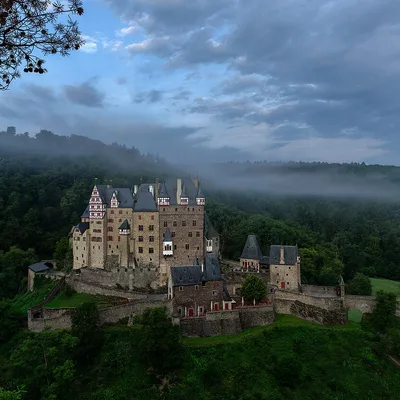
Perched atop Mount Hohenzollern at 855 metres in central Baden-Württemberg, this third iteration was rebuilt in Gothic Revival style from 1846 to 1867 by Prussian King Frederick William IV as a dynastic memorial. White spires rising from morning mist draw 350,000 visitors annually.
Best Season & Time
Post-snowmelt green hills open around the castle in pleasant temperatures with manageable crowds
★★★★☆
Concerts and weddings fill the courtyards, while evening illumination wraps the spires in festive light
★★★★☆
Hills turn vivid against Neo-Gothic walls and sea-of-clouds dawn probability peaks for photographers
★★★★★
Snow-covered spires form the legendary Ice Castle silhouette, the year's best chance for photographers
★★★★★
Top 3 Highlights
1.Spires floating above the sea of morning clouds
Standing alone on an 855-metre promontory of the Swabian Jura, the castle is wrapped in early-morning fog that turns the Neo-Gothic spires into floating islands. Some 50 kilometres south of Stuttgart, it ranks among Germany's most spectacular castle vistas
Hike to Zellerhorn viewpoint across the valley at 6-7 a.m. for the autumn fog phenomenon
2.Winter snow transforming the castle into an Ice Citadel
The 855-metre summit is snow-covered from late December through February, when white Neo-Gothic spires and crystalline winter landscape combine into the Ice Castle look often compared to Disney silhouettes. Early-morning conditions yield the sharpest contrast for photographers
Shoot from Zellerhorn side November to February with telephoto for the full snow castle view
3.St Michael's Chapel from the medieval second castle
The Chapel of St Michael at Sankt-Michaels-Bastion is the only structure surviving from the 1454-1461 second castle and still serves as the active burial vault of the House of Hohenzollern. Inserted into the third castle's splendour, it preserves five centuries of dynastic prayer
Frame chapel and main castle from the bastion entrance at a 45-degree angle for both in one shot
Stories & Legends
Recommended For
Insider Tips
- 1.Interior access and the viewing terrace are separately ticketed, and the guided tour runs at scheduled times with English departures limited to a few daily slots. Book online to skip the long queues, especially on autumn weekends
- 2.The Zellerhorn viewpoint on the opposite hill is reached via a thirty-minute walk from a free parking area and offers the iconic sea-of-clouds angle used by professional photographers, well worth the detour
- 3.Shuttle bus 306 from Hechingen Station runs reduced winter timetables and should be checked in advance, while drivers can park at the foot and take the dedicated shuttle. The footpath gains 300 metres of elevation
Visit Information
- Access
- About one hour drive south of Stuttgart (50 kilometres), or shuttle bus 306 from Hechingen Station (approximately 20 minutes). From the lower parking area, take the shuttle bus or hike a 30-minute trail up to the castle entrance.
- Time Required
- Two to three hours for interior and terrace, half a day with surrounding trails.
- Budget Guide
- Castle tour around 25 euros for adults and 15 euros for children, shuttle bus about 2 euros. Day trip total from Stuttgart roughly 40-60 euros (as of 2024).
Nearby Attractions
The town of Hechingen at the foot of the mountain (5 minutes by car) preserves smaller Hohenzollern-related landmarks. Stuttgart (1 hour north) offers the Wilhelma zoo and Mercedes-Benz Museum, while Lichtenstein Castle further along the Swabian Jura (1 hour drive) pairs naturally with Hohenzollern as a Romantic castle day-trip duo.
Go Deeper
Deeper details for those with the time to read on.
Timeline
- around 1040
First castle built
The Counts of Zollern erect the first hilltop fortress on Mount Hohenzollern, later praised in chronicles as the crown of all castles in Swabia
- 1061
First mention of the Zollern family
The Zollern family name appears for the first time in the chronicle of Bertold of Reichenau, marking the dynasty's entry into recorded history
- 1218
Dynastic split
Elder son Conrad I moves to Franconia and founds the Brandenburgian-Prussian cadet line, while younger son Friedrich II keeps the Swabian county and the mountain castle
- 1267
Castle named Castro Zolre
The first castle is recorded by name in historical sources as Castro Zolre, with contemporary chroniclers describing it as the crown of all castles in Swabia
- 1423
Destruction of the first castle
After a year-long siege by the Swabian League of Cities, the first castle is utterly destroyed and the dynastic seat passes into ruin
- 1454 to 1461
Construction of the second castle
A larger and sturdier second castle is constructed as a Catholic Hohenzollern refuge, with the Chapel of St Michael surviving to this day
- 1634
Capture during the Thirty Years' War
Württemberger troops capture the castle during the Thirty Years' War, after which it passes under Habsburg control for approximately a century
- 1744 to 1745
French occupation
During the War of the Austrian Succession, French troops occupy the castle in the winter of 1744 to 1745, returning it to Habsburg hands afterwards
- 1798
Second castle abandoned
The last Austrian owner leaves the castle and the second structure falls into ruin, with only the Chapel of St Michael remaining usable
- 1819
Decision to rebuild
Prussian Crown Prince Frederick William IV climbs Mount Hohenzollern during a journey toward Italy and vows to rebuild the ancestral seat
- 1846 to 1867
Construction of the third castle
Architect Friedrich August Stüler completes the third castle in Gothic Revival style over twenty-one years, creating the dynastic monument still standing today
- 1945
Crown Prince Wilhelm's residence
The deposed Crown Prince Wilhelm, son of the last German Emperor Wilhelm II, briefly resides in the castle after World War II
- Present
300,000 annual visitors
The castle today welcomes more than 300,000 annual visitors and serves as a major filming location for international productions
Detailed History
Hohenzollern Castle traces back to the early 11th century when the Counts of Zollern built the first hilltop fortress over an earlier Alemannic settlement. The House of Hohenzollern first appears in chronicles in 1061, and the castle is first mentioned in 1267 as Castro Zolre, praised as the crown of all castles in Swabia. In a 1218 dynastic split, elder son Conrad I inherited Franconian lands and the burgraviate of Nuremberg, founding the line that became Prussian kings and German emperors, while younger son Friedrich II kept the Swabian county to guard the mountain seat. The first castle was destroyed in 1423 after a year-long siege by the Swabian League of Cities. A second, sturdier castle was built from 1454 to 1461 as a refuge for the Catholic Swabian Hohenzollerns; during the Thirty Years' War it was captured by Württemberger troops in 1634 and then passed under Habsburg control for roughly a century. During the War of the Austrian Succession, French troops occupied it in winter 1744 to 1745, and it began to fall into ruin after the last Austrian owner departed in 1798. By the early 19th century only the Chapel of St Michael remained usable. The current third castle owes its existence to Crown Prince Frederick William IV of Prussia, who climbed Mount Hohenzollern in 1819 during a journey toward Italy and later wrote that making Hohenzollern habitable again was one of his deepest desires. After ascending the throne, in 1846 he commissioned Friedrich August Stüler, heir of Karl Friedrich Schinkel, to design an ornate residence drawing on English Gothic Revival and Loire Valley châteaux. Engineer-officer Moritz Karl Ernst von Prittwitz designed the entryway, and after twenty-one years the third castle was completed in 1867. Although envisioned as a dynastic memorial, no Hohenzollern monarch lived there permanently and the three German Emperors never occupied it; only in 1945 did the deposed Crown Prince Wilhelm briefly reside there. Today the castle holds the imperial crown of Wilhelm II, personal effects of Frederick the Great and dynastic portraits, welcoming over 350,000 visitors annually and serving as a filming location.
Cultural Significance
Hohenzollern Castle occupies a uniquely symbolic place in German history as the ancestral seat of the dynasty that ruled Brandenburg-Prussia and the German Empire from 1871 to 1918. Where the first and second castles had been functional medieval strongholds, the third castle built from 1846 to 1867 was conceived as a Romantic dynastic monument embodying Frederick William IV's nostalgic vision of medieval kingship. Together with Ludwig II's Neuschwanstein and the Stolzenfels rebuild, Hohenzollern is one of the three great Neo-Gothic castle projects of 19th-century Germany and a pinnacle of German Romantic architecture. Its collections include the imperial crown of Wilhelm II, personal effects of Frederick the Great, and a letter from US President George Washington thanking Baron von Steuben for service in the American Revolutionary War, offering rare artefacts of Prussian and transatlantic political history. The chapel crypt within St Michael's Bastion holds the remains of the last Crown Prince Wilhelm (1882-1951), Louis Ferdinand of Prussia (1907-1994) and other key figures, so the castle still functions as an active Hohenzollern mausoleum alongside its public museum role. In contemporary German culture it ranks alongside Neuschwanstein as the country's most beloved castle silhouette and frequently tops national polls of the most beautiful castles.
Architectural Details
The third castle of 1846 to 1867 was designed by Friedrich August Stüler, a student of Karl Friedrich Schinkel, combining English Gothic Revival with Loire Valley silhouettes. The design exploits the isolated 855-metre summit, arraying the central keep with conical spires, flanking towers and a geometric curtain wall along natural rock undulations. The entryway was entrusted to engineer-officer Moritz Karl Ernst von Prittwitz, Prussia's leading fortifications expert, whose approach road and gates exemplify 19th-century Romantic military architecture. Exterior walls use local sandstone in dressed masonry, with characteristic Neo-Gothic pointed arches, rose windows and clusters of pinnacles. Three principal halls — the Count's Hall, the King's Hall and the Empress's Hall — narrate chapters of the Hohenzollern lineage, Prussian royal house and German imperial family through sculpture, painting and ceiling decoration. The sculptural programme was led by sculptor Gustav Willgohs, with statues of historical rulers lining the curtain wall as a three-dimensional dynastic genealogy. The Chapel of St Michael, the only structure surviving from the 1454-1461 second castle, is a small late-Gothic stone chapel that still functions as the family burial vault.