Taxila
タキシラ
ラーワルピンディー県 · PK
The Heart of Gandharan Buddhism — Ancient South Asia's Oldest University City of Stupas and Ruins
At the crossroads of three trade routes in Pakistan's Punjab, Taxila thrived for a thousand years as the capital of Achaemenids, Mauryans, Indo-Greeks, and Kushans. UNESCO-inscribed in 1980, it is the cradle of Gandharan Buddhist art.
Best Season & Time
Pleasant 20-28C days, dry weather, clear skies — the absolute best season for the Gandharan plain
★★★★★
Cool mornings, comfortable afternoons, and far fewer tourists — a fine window to explore at leisure
★★★★★
Crisp 10-18C daytime and morning mists lend the stupas an otherworldly mood — quiet off-peak
★★★★☆
Punishing 40C+ heat, with June-August monsoon flooding trails — not advised for ruin walks
★★☆☆☆
Top 3 Highlights
1.The Towering Dharmarajika Stupa of Emperor Ashoka
Built by Emperor Ashoka in the 3rd century BCE, this 15m-tall, 50m-wide stupa anchors Pakistan's oldest Buddhist complex. Votive stupas and monastery cluster around the dome, with seven parasols symbolizing the Buddhist cosmos and Corinthian columns hinting at Hellenistic fusion.
Capture the stupa from the south-east at dawn for the classic vertical silhouette
2.Sirkap's Double-Headed Eagle Stupa
Sirkap, founded in the 2nd century BCE as the Indo-Greek capital, lays out a Hellenistic grid across the river. Along its main avenue stands a small stupa carved with double-headed eagles — a motif fusing Indian, Greek, and Iranian traditions, emblematic of Gandharan syncretism.
Shoot from the central avenue with a side angle to catch the relief in raking light
3.The Hilltop Jaulian Monastery
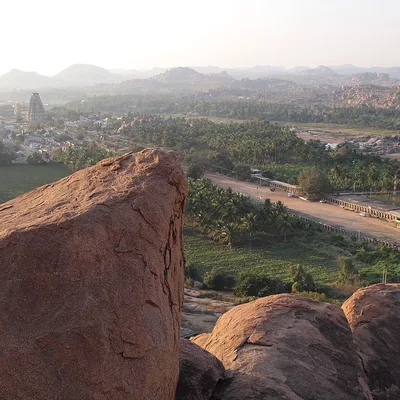
On a hill above the valley, Jaulian is a remarkably preserved 2nd-century Kushan monastery. The main stupa is ringed by votive stupas and courtyard cells, and the famed Greco-Indian meditating Buddha was unearthed here — once a foremost center of South Asian Buddhist learning.
Use a wide-angle lens from the monastery hilltop to capture the full panorama down to the valley
Stories & Legends
Recommended For
Insider Tips
- 1.The Taxila Museum holds Sir John Marshall's century of excavations — its meditating Buddhas, Hellenistic sculptures, and Sirkap gold work are world-class. Visit it before or after the ruins for full context.
- 2.Hire a private car and guide from Islamabad for the day: the three main sites (Dharmarajika, Sirkap, Jaulian) lie kilometers apart on rural roads with limited transport, so independent visits waste hours.
- 3.To see all sites in one day, start at Dharmarajika around 7am, hit Sirkap and Jandial late morning, and save Jaulian for afternoon — this order maximizes shade and gives the best photographic light.
Visit Information
- Access
- About 35 km west of the capital Islamabad, around 50 minutes by car. From Rawalpindi it's a 35-minute drive northwest. The site lies just off the historic Grand Trunk Road, in the modern town of Taxila in Rawalpindi District.
- Time Required
- Half a day for the three main sites and museum; a full day for every ruin.
- Budget Guide
- Foreign visitor entrance fees are around 700 PKR (roughly USD 3) per site as of 2024; a private car with driver from Islamabad costs about USD 60-100 for the day.
Nearby Attractions
Khanpur Dam, about 30 minutes by car, is a scenic reservoir surrounded by green hills and other minor Gandhara-era ruins. Within an hour you can pair the visit with Islamabad's monumental Faisal Mosque or the bustling old city bazaars of Rawalpindi for a contrasting modern-meets-ancient day.
Go Deeper
Deeper details for those with the time to read on.
Timeline
- c. 1000 BCE
Founding
The earliest settlement of Taxila is established as the capital of the ancient Gandhara region, making it one of South Asia's oldest cities.
- 518 BCE
Absorbed by Achaemenids
Darius I of Persia incorporates Taxila as a satrapy of the Achaemenid Empire, drawing the region into a pan-Asian imperial network.
- 326 BCE
Alexander the Great Arrives
King Ambhi (Taxiles) submits peacefully to Alexander, and Taxila becomes the strategic base for the Battle of the Hydaspes against Porus.
- c. 321 BCE
Mauryan Empire
Chandragupta Maurya brings Taxila under Mauryan control, positioning it as the empire's most important northwestern city.
- 3rd c. BCE
Ashoka and the Dharmarajika Stupa
Emperor Ashoka builds the Dharmarajika Stupa and Taxila becomes a major Buddhist center of the Mauryan world.
- 185 BCE
Sirkap Founded
The Greco-Bactrian king Demetrios I founds the grid-planned city of Sirkap across the river, making it the Indo-Greek capital.
- 25 BCE
Indo-Parthian Capital
Gondophares establishes Taxila as the capital of the new Indo-Parthian kingdom, separating it from Parthia proper.
- 76 CE
Kushan Empire and Gandharan Art
Under Kushan rule, the great monasteries are built and Hellenistic-Buddhist Gandharan art enters its golden age here.
- 5th c. CE
Hephthalite Invasion
Nomadic Hephthalites devastate the Buddhist monasteries, and Taxila collapses as a trading and learning center.
- 712 CE
Umayyad Conquest
The Umayyad invasion of Sindh delivers the final blow, and Taxila lies buried beneath the sand for nearly fifteen centuries.
- 1872
Rediscovered
British archaeologist Alexander Cunningham rediscovers the buried Taxila ruins, launching modern archaeology in the region.
- 1913-1934
Marshall's Excavations
Sir John Marshall's two decades of excavation uncover Gandharan masterpieces and establish the Taxila Museum.
- 1980
UNESCO World Heritage
UNESCO inscribes the Taxila ruin complex as a World Cultural Heritage Site, granting international protection.
Detailed History
Taxila's origins trace to roughly 1000 BCE as the central city of ancient Gandhara, and by the Vedic period of the 6th-5th centuries BCE it had become capital of the Mahajanapada kingdom of Gandhara. Around 518 BCE it was absorbed as a satrapy of the Achaemenid Persian Empire under Darius I, marking south Asia's earliest entry into a pan-Asian imperial system, though virtually no Achaemenid architecture has been recovered. In 326 BCE Alexander the Great crossed the Indus, and King Ambhi — Taxiles to the Greeks — allied with the Macedonian and surrendered the city peacefully, giving Alexander a vital base to defeat Porus at the Hydaspes. Around 321 BCE Chandragupta Maurya founded the Mauryan Empire and Taxila came under his sway; under his grandson Ashoka in the 3rd century BCE the city became one of Asia's great Buddhist centers. The Dharmarajika Stupa was built then and traditionally enshrines relics of the Buddha himself. After the Mauryan collapse around 185 BCE, the Greco-Bactrian king Demetrios I built the grid-planned city of Sirkap on the opposite bank, and through the Indo-Greek period Taxila reached new heights of Hellenistic-Buddhist fusion. The Scythians expelled the last Greek king around 90 BCE, and by 25 BCE Gondophares founded the Indo-Parthian Kingdom with Taxila as its capital. With the founding of the Kushan Empire in 76 CE, Taxila entered the golden age of Gandharan art: Jaulian and other monasteries were built, and the iconic humanlike Buddhas that would shape all later Buddhist iconography from China to Japan were first created here. An earthquake around 30 CE damaged Dharmarajika, but it was restored under Kanishka in the 2nd century. In the 5th century CE, Hephthalite invasions reduced the monasteries to ruins, and the city declined. The Umayyad invasion of 712 CE delivered the final blow, and Taxila lay buried for nearly fifteen hundred years. In 1872 Alexander Cunningham rediscovered the site, and from 1913 to 1934 Sir John Marshall's excavations filled the Taxila Museum with Gandharan masterworks. UNESCO inscribed the complex in 1980. In 2010 the Global Heritage Fund listed Taxila among twelve sites at risk; subsequent Pakistani preservation has since returned it to a 'well-preserved' rating, and visitor numbers have rebounded.
Cultural Significance
Taxila is widely regarded as one of South Asia's earliest universities, drawing students from across the subcontinent to study Vedic philosophy, medicine, strategy, and linguistics. Tradition holds that Chandragupta, the theorist Kautilya (author of the Arthashastra), and the grammarian Panini all studied here. Modern scholars debate whether it was a 'university' in the institutional sense — many argue it was a constellation of teachers' private academies rather than an organized college system, but few question its centrality as a hub of ancient South Asian learning. What most distinguishes Taxila is its role as the birthplace of Gandharan art — the tradition where Hellenistic naturalism, brought east by Alexander's successors, fused with Buddhist devotional needs to produce, for the first time anywhere, realistic humanlike Buddhas. These Gandharan Buddhas became the ancestors of every Buddhist icon across China, Korea, and Japan; the Shaka Triad of Horyu-ji in Nara descends in style from these workshops. UNESCO's 1980 inscription was thus an international affirmation of Taxila as a root of Buddhist civilization. The Chinese pilgrim Xuanzang referred to the city as 'Takshashila' in his 7th-century Records of the Western Regions, and Buddhist pilgrims from Japan, Korea, Thailand, and Sri Lanka still travel to the site today.
Architectural Details
The Taxila complex preserves urban and monastic architecture from successive layers up to the 5th-century destruction, allowing visitors to trace the evolution of South Asian city planning and Buddhist building in real stone and brick. The oldest stratum, Bhir Mound, is an irregular Achaemenid-to-Mauryan urban form with single-story houses of limestone laid in mud mortar. The Dharmarajika Stupa is a hemispherical brick dome (50 m wide, 15 m tall) clad in limestone ashlar with a stacked seven-parasol harmika rising from the summit, surrounded by concentric rings of chapels and cells; Corinthian capitals on the relic-shrine pilasters reveal direct Hellenistic transmission. Sirkap adopts the Hippodamian grid plan, with houses, temples, and stupas arranged along a north-south central avenue; the dwellings are limestone brick faced with mud plaster, some with Greek-style peristyle courtyards. The Jandial temple, built in the 2nd century BCE by Greco-Bactrians, features four Ionic columns supporting a classic Greek temple portico — possibly serving Zoroastrian worship. The Jaulian monastery groups rectangular cells around a courtyard, the main stupa flanked by votive stupas and niches, with surfaces clad in lime-stucco reliefs of Buddhas and Jataka scenes.